
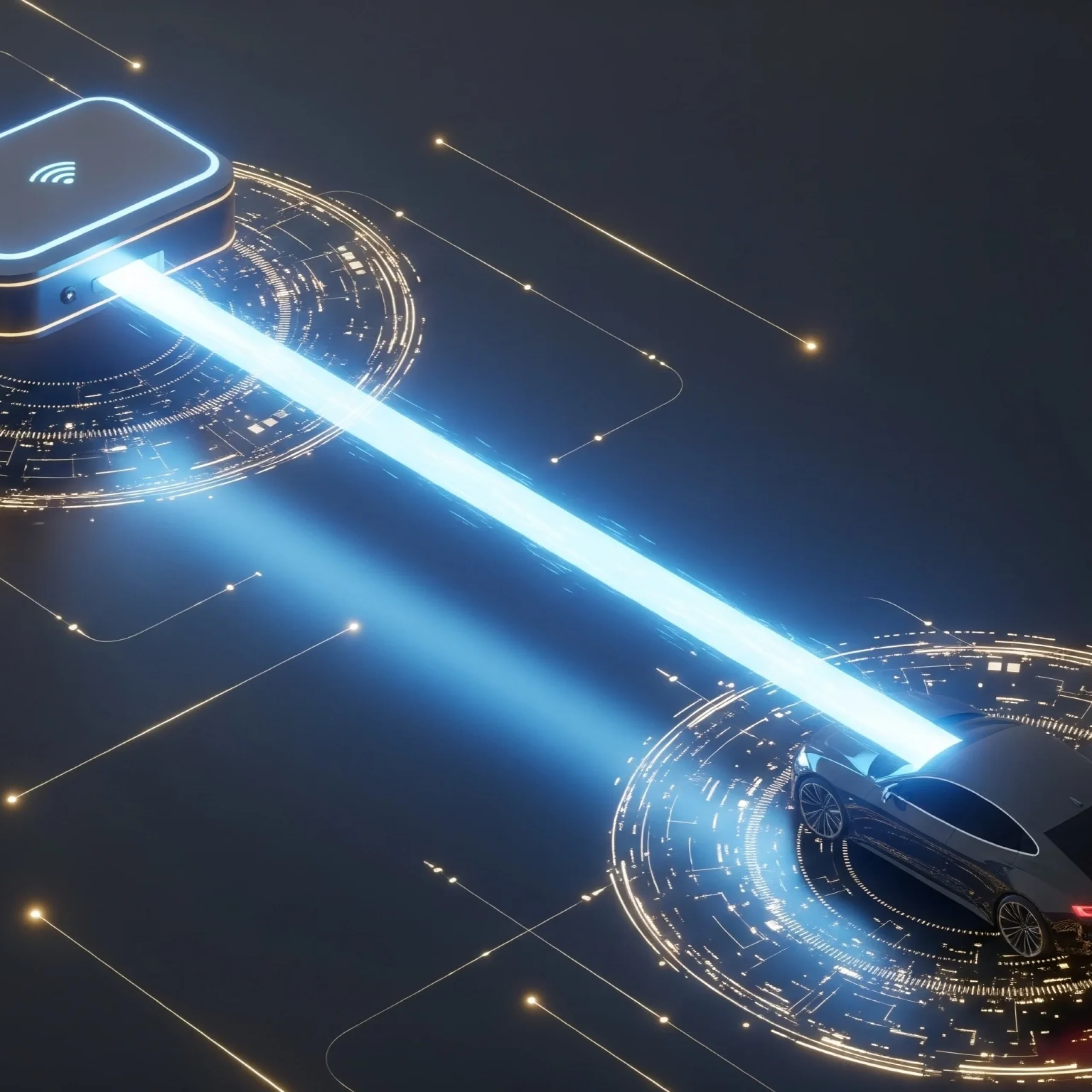
In a world where wires are gradually becoming a thing of the past, wireless power transmission (WPT) has always been a dream. However, it has recently faced a serious problem: instability. Transmission efficiency dropped significantly when the device changed position or load level. This made WPT unsuitable for large-scale use, such as charging electric vehicles on the move. But recently, scientists from Chiba University in Japan announced a breakthrough. They have developed a system that maintains stable power transmission regardless of conditions. This opens the door to new possibilities and could be a key step in creating the energy networks of the future.
Why is stability key?
Traditional wireless power transfer (WPT) systems operate on resonance. The sender and receiver must be in perfect alignment relative to each other for transmission to be effective. Any change, whether device movement or a change in power consumption, disrupts the resonance and, consequently, leads to a sharp drop in efficiency. Voltage fluctuations in such systems can reach 18%, which is unacceptable for most devices. This made WPT unreliable and limited its use to charging smartphones at a single point. Japanese researchers solved this problem by teaching the system to adapt to changes in real time.
The role of AI in the new method
The key to the breakthrough was the integration of artificial intelligence and machine learning into the process. Instead of relying on static parameters, the new system uses AI for the following purposes:
- Forecasting and Analysis The system creates a virtual model that predicts how changes in position or load will affect energy transfer.
- Real-time optimization: AI instantly adjusts transmission frequency and power to maintain a constant and stable voltage level.
- Adaptive Operation The system can efficiently transfer energy to both small devices (smartphones) and large ones (electric vehicles) without losing its efficiency.
Using this approach, scientists were able to reduce voltage fluctuations to less than 5%, a significant improvement. At the same time, transmission efficiency increased to an impressive 86.7%, making this technology truly promising.
The Future of Wireless Power Transmission: From Electric Vehicles to Space
This breakthrough has far-reaching implications. It opens the door to a wide range of applications previously thought unattainable:
- Charging roads: Integrating technology into road surfaces could allow electric vehicles to be charged while driving, solving the problem of limited range.
- Smart Cities: Drones, delivery robots, and other devices operating in urban environments will be able to be charged without having to connect them to wires.
- Space energy: The long-term goal is wireless energy transmission from space. Launching solar panels into orbit will allow for the collection of energy, regardless of weather or time of day, and its transmission to Earth. While this is a very ambitious project, the new method developed by Japanese scientists is an important step in this direction.
The development from Chiba University is a shining example of how AI can solve real-world physical problems. It’s not just a scientific achievement, but a true catalyst for future technologies that could forever change our approach to energy.


0 Comments