
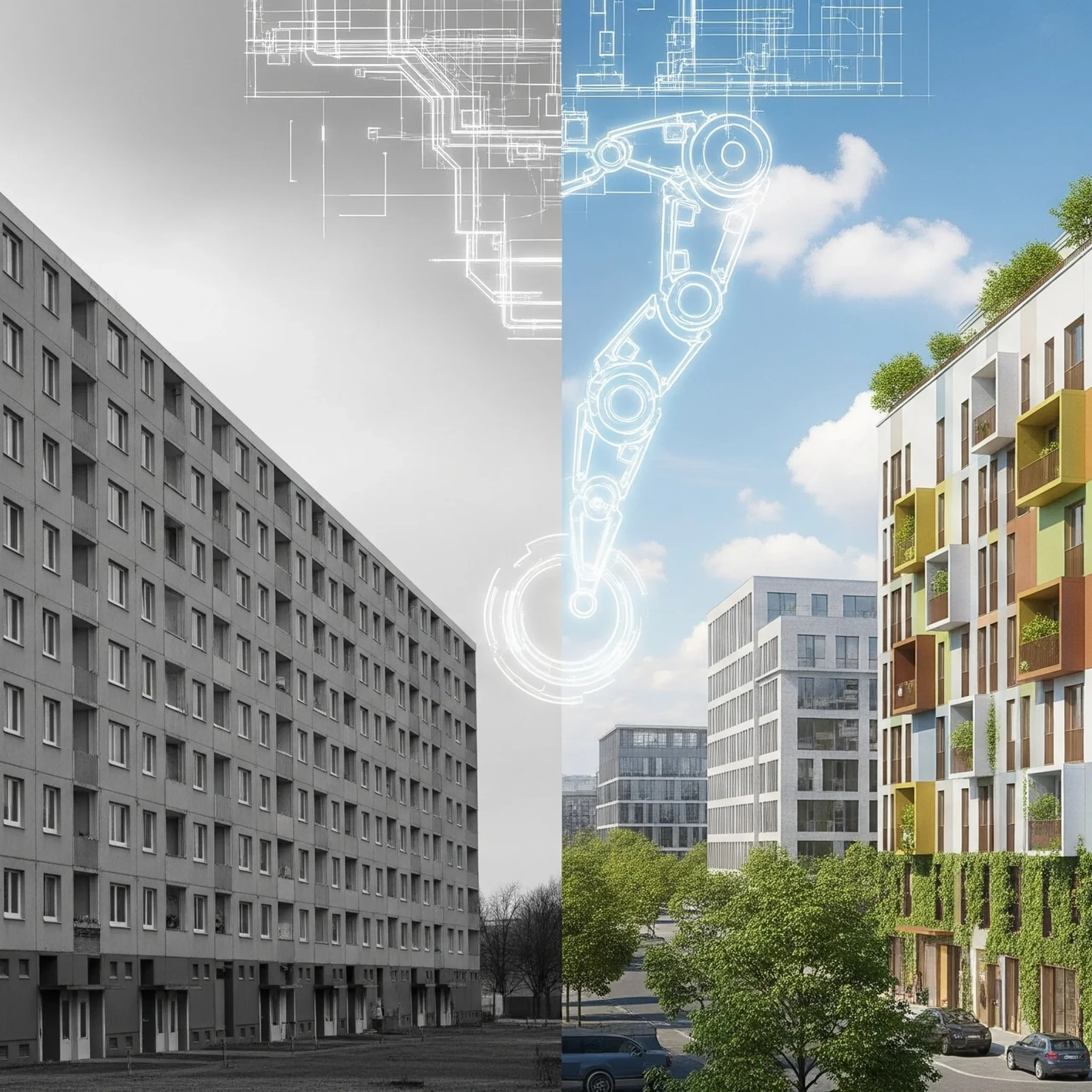
Germany, renowned for its economic stability and high-quality engineering, is facing a serious challenge: a severe housing crisis. Property prices are steadily rising, and the pace of traditional construction is failing to keep pace with demand. In response, the country is considering an unexpected but pragmatic solution: a return to prefabricated construction methods. It may seem like a step back in time, but modern modular homes bear little resemblance to the monotonous and low-quality prefabricated houses common decades ago. They represent an innovative approach to mass housing construction.
From history to the present: what’s different about the new “panelka” buildings?
For many, panel construction evokes images of the monotonous, drab housing estates of the Soviet era. Back then, speed and minimal cost were paramount, often at the expense of quality, insulation, and aesthetics. Modern panel homes in Germany represent a completely different philosophy. Panels are manufactured in high-tech factories, where every element is crafted with precision and under strict quality control. This allows for the integration of windows, doorways, insulation, and even utility systems into the panels before they reach the construction site.
How can modern methods help resolve the housing crisis?
The main advantage of rapid prefabricated home construction is, of course, speed. While traditional construction of a single home takes months or even years, the basic structure of modular homes can be built in just a few weeks. This is critically important given the country’s need for thousands of new apartments annually.
- Automated production in factories significantly reduces the cost of labor and materials, making housing more affordable.
- Energy efficiency: New technologies allow the creation of panels with high thermal insulation properties, which helps reduce heating costs and meets strict German standards.
- Minimal environmental impact: Factory manufacturing reduces construction waste and noise on the construction site.
- Factory inspection ensures that every element meets standards, minimizing the risk of errors on site.
Challenges and Prospects of Panel Apartments in Germany
Despite all the advantages, a return to this type of construction is met with skepticism. The main concern is the creation of monotonous neighborhoods that could repeat the problems of the past. Therefore, architects and urban planners are actively working to ensure that modern panel buildings offer a variety of designs, align with local architectural styles, and blend harmoniously into the urban landscape. Thanks to the modular system, buildings can have different configurations, facades, and layouts, thus avoiding monotony.
This approach demonstrates profound innovation in German construction. It’s not simply a return to old methods, but a complete modernization using new materials, technologies, and design approaches. If this strategy is successful, it could become a model for other countries also facing a shortage of affordable housing.
In summary, Germany’s decision to return to prefabricated housing is a bold step, demonstrating pragmatism in addressing social problems. This isn’t a step back in time, but rather the use of proven principles combined with modern technologies to create affordable housing quickly and efficiently. If the plan succeeds, it could not only solve the housing crisis but also mark a new chapter in the history of European urban development.



0 Comments