
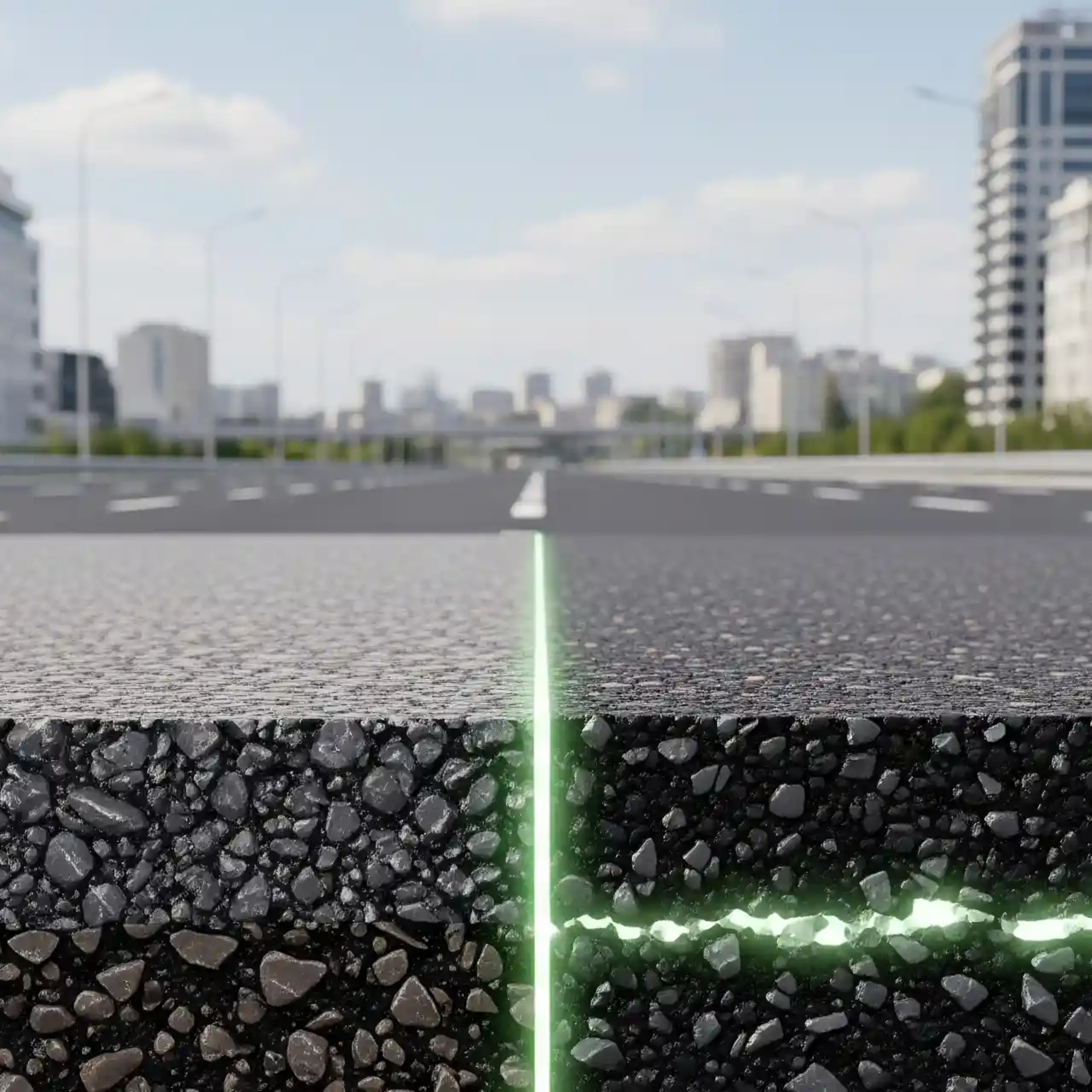
Road condition is a key indicator of infrastructure development in any country. For Ukraine, where road construction and maintenance are constantly underway, the quality and durability of road surfaces is a pressing issue. In their search for new, effective solutions, Ukrainian specialists turned to South Korea’s experience. This collaboration led to the first implementation of a unique Korean technology that could completely change the approach to road construction. Instead of the traditional, expensive crushed stone, a different, equally durable, but significantly cheaper material is now used.
Korean Secret: What is EcoSteel Ascon?
The innovative Korean technology in question is called EcoSteelAscon. Its key feature is the use of steel slag, a byproduct of steel production. Rather than being simply a waste product, this material could become an ideal substitute for natural aggregate, which is the main, but also the most expensive, component of asphalt concrete.
The slag used in this technology is highly dense and durable, allowing for the creation of durable asphalt. Its use not only improves road surface performance but also reduces construction costs. This makes this new asphalt component a true breakthrough from both a technical and economic perspective.
Ecology and the economy: a double win
One of the most important advantages of EcoSteelAscon technology is its environmental friendliness. Reusing steelmaking slag helps combat industrial waste, reducing environmental impacts and minimizing the need for natural resource extraction. This is an example of a circular economy, where waste from one production facility becomes valuable raw material for another.
From an economic perspective, using slag significantly reduces the cost of road construction. Given the constantly rising prices of aggregate, the use of this inexpensive yet durable alternative material could lead to millions in road savings nationwide. This construction innovation allows for the construction of more, higher-quality roads at lower costs.
Ukrainian test: first test segment
To test the effectiveness of the Korean technology in Ukrainian climate conditions, a decision was made to construct a test section. The experiment is being conducted on the O100607 Zalissia-Zavorychi road in the Kyiv region, where 750 meters of track were constructed using EcoSteelAscon technology. This is the first time this method has been used in Ukraine.
Along with the test section, a 150-meter section was constructed using standard technology and traditional materials. This will allow for monthly monitoring of both sections, comparing their wear resistance, strength, and response to weather conditions. The results of this experiment will be key in deciding on the wider implementation of this technology for road repairs in Ukraine.
Prospects for Technology in Ukraine: The Future of Roads
Successful test results could open a new chapter in domestic road construction. If the new asphalt component proves reliable, EcoSteelAscon technology could be implemented nationwide. This will not only improve the quality of road surfaces but also accelerate construction, which is vital for the country’s recovery.
This technology, which has been successfully used in South Korea for over 10 years, has every potential to become key to Ukraine’s road infrastructure. It meets modern sustainable development requirements, offering environmentally friendly and cost-effective solutions. It exemplifies how international cooperation can yield significant benefits, addressing both infrastructure and environmental challenges. This is an important step toward creating a high-quality and durable road network.
Key facts about the technology:
- Main component: Steel slag instead of crushed stone.
- Name: The innovative development was named EcoSteelAscon.
- Place of implementation: Test section on the road O100607 Zalesye – Zavorichi in the Kyiv region.
- Advantages: High strength, environmentally friendly and cost-effective.
- Monitoring: The experimental plot will be monitored monthly to assess longevity.



0 Comments