
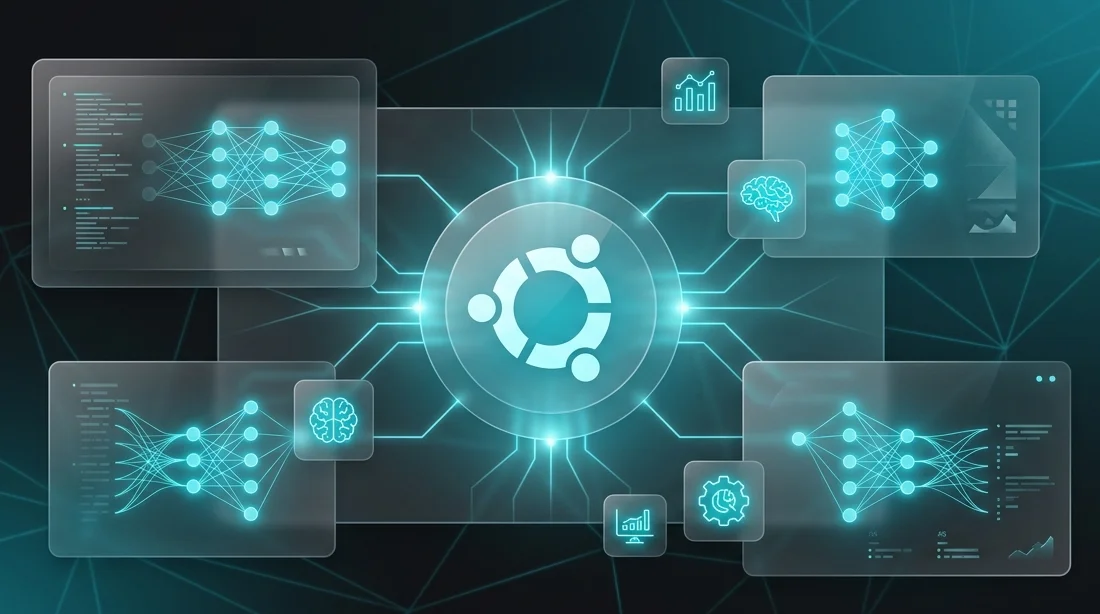
The Era of Artificial Intelligence in the Ubuntu Ecosystem
AI integration has become a key vector for modern technology development. As a leading platform for developers, Ubuntu is actively implementing solutions to simplify work with neural networks. Canonical has introduced a comprehensive approach to deploying AI models. This allows users to access professional-grade tools without complex system configuration.
Hardware Support and the AI PC Concept
Modern processors from Intel and AMD include specialized Neural Processing Units (NPUs). Ubuntu provides full support for this hardware for local request execution. This significantly increases data privacy. Using local power reduces dependence on cloud services. Thanks to driver optimization, machine learning performance has increased by an order of magnitude.
Ubuntu AI Toolkit and New Capabilities
The Ubuntu AI Toolkit was created for specialists. It is a set of certified software components. It includes popular frameworks like PyTorch and TensorFlow. All tools are delivered as stable packages. This guarantees no dependency conflicts. Developers can focus on creating algorithms instead of system administration. Containerization makes scaling projects extremely simple.
The Future of Open Source and AI
Canonical continues to invest in open standards. This is necessary to create a universal interface for AI interaction. Ubuntu is becoming the foundation for innovation in robotics and IoT. Integrating intelligent features directly into the GNOME shell will improve the daily user experience. Automation of routine tasks is becoming available to every Linux user.
Conclusions and Outlook
The AI PC market is growing rapidly. Ubuntu holds a strategic position in it. Using open source allows for quick adaptation to new challenges. Users get a stable and secure platform for experimentation. The cost of deploying such infrastructure remains minimal due to the lack of OS licensing fees. Ubuntu confidently maintains its title as the main OS for the engineers of the future.

0 Comments