
- The Challenge of Automated Data Scraping and Privacy Risks
- What is ShieldFont and How Optical Protection Works
- Core Technical Capabilities of the Typeface
- Comparative Accuracy Benchmarks Against OCR Engines
- Practical Use Cases and Deployment Scenarios
- Key Deployment Areas
- Integrating ShieldFont into Web Projects
- CSS Integration Method
- Key Advantages and Current Limitations
- Future Developments in Typographic Anti-Scraping
The Challenge of Automated Data Scraping and Privacy Risks
The rapid advancement of optical character recognition (OCR) systems and large language models has introduced new challenges for digital privacy. Automated web scrapers continuously extract text content from public and private sources, processing scanned documents and building training datasets without explicit consent. Standard text-on-image protection methods are no longer sufficient, as modern computer vision algorithms easily decode traditional typefaces despite visual noise.
Traditional CAPTCHA mechanisms and IP blocking techniques often fail against distributed bot networks. Publishers, legal professionals, security analysts, and casual users are searching for effective solutions to protect text assets from unauthorized harvesting by AI algorithms. To address this growing concern, the ShieldFont typeface was designed to offer a novel approach to typographic security.
What is ShieldFont and How Optical Protection Works
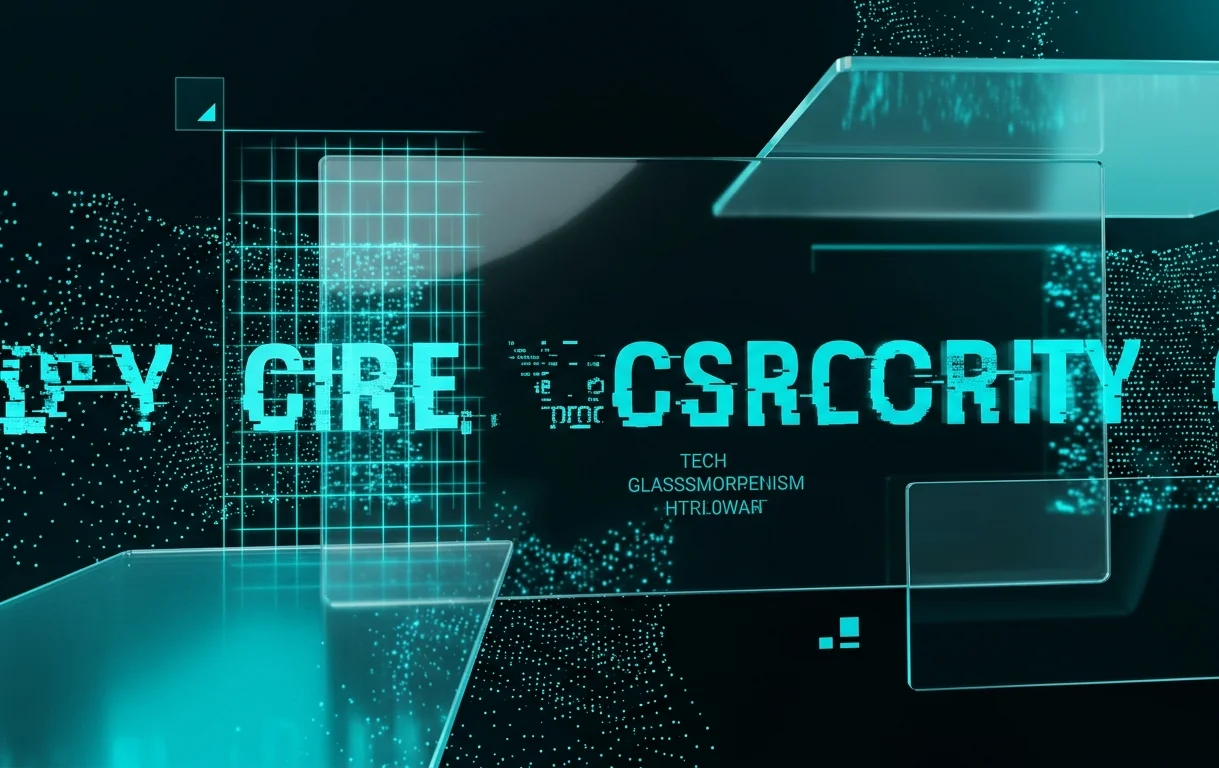
ShieldFont is a specialized vector typeface created using micro-distortion techniques and alternative glyph mappings. The foundational principle relies on creating a visual imbalance between human visual perception and machine vision processing algorithms.
Each glyph inside ShieldFont features precise microscopic contours that confuse neural networks. For human readers, characters remain perfectly clear and legible due to standard proportions and essential anchor points. However, when analyzed by OCR pipelines, the algorithm detects random visual artifacts or misidentifies characters as entirely different Unicode values.
Core Technical Capabilities of the Typeface
- Dynamic Unicode Mapping: Internal font metrics redirect standard character codes into randomized vector arrays.
- Micro-contour Noise Injection: Sub-pixel stroke additions below 1px disrupt OCR focus while remaining invisible to humans.
- Adaptive Kerning Shifts: Modified letter spacing algorithms prevent accurate word boundary segmentation by automated parsers.
- Universal Web Compatibility: Native support for TTF, OTF, and WOFF2 formats ensures smooth cross-platform integration.
Comparative Accuracy Benchmarks Against OCR Engines
To measure security effectiveness, researchers conducted extensive tests using leading text extraction tools and vision-capable multimodal AI models. The benchmark results demonstrate a substantial decline in machine reading precision.
Practical Use Cases and Deployment Scenarios
ShieldFont applications extend far beyond personal blogs or individual article protection. The tool provides robust defense mechanisms across corporate security, legal compliance, and digital publishing sectors.
Legal firms can utilize the typeface to publish case files publicly without exposing sensitive records to competitor analysis tools. Media houses and research institutions can shield premium content from unauthorized AI scraping bots without degrading user experience.
Key Deployment Areas
- Research Analytics Protection: Safeguarding proprietary reports and market analyses from automated collection.
- Sensitive Web Content Display: Hiding contact details from email harvesting bots without cumbersome CAPTCHAs.
- PDF Document Security: Producing downloadable documents that resist standard text extraction software.
- Portfolio and CV Protection: Preventing automated scraping of professional credentials and project descriptions.
Integrating ShieldFont into Web Projects
Deploying ShieldFont on a website requires no server-side extensions or complex script dependencies. The typeface operates as a standard web font, enabling straightforward CSS configuration.
For enhanced protection levels, security specialists recommend combining ShieldFont with subtle canvas pattern overlays or variable CSS weight adjustments. This introduces supplementary barriers against advanced vision models.
CSS Integration Method
To implement the font, web developers load the lightweight WOFF2 file and declare font rules inside stylesheet files:
The font loading process uses standard @font-face definitions specifying paths and typeface names. Once declared, styling can be applied directly to targeted content containers, tables, or confidential text blocks.
Key Advantages and Current Limitations
The primary advantage of ShieldFont lies in its free open-source distribution model, encouraging global developer contributions to counter evolving OCR models. The font maintains minimal asset size, ensuring fast page rendering speeds.
Current limitations include specific font size recommendations. For comfortable human reading, designers recommend text sizes between 14pt and 18pt, as extremely small sizes combined with micro-distortions may increase visual fatigue during extended reading sessions.
Future Developments in Typographic Anti-Scraping
ShieldFont represents a significant advancement in privacy preservation against automated data extraction. Future roadmap updates aim to introduce real-time variable font manipulation running dynamically in the user browser.
Dynamic vector generation will prevent AI training models from fine-tuning on static ShieldFont patterns, establishing a resilient defense mechanism for digital text content across the web ecosystem.


0 Comments