
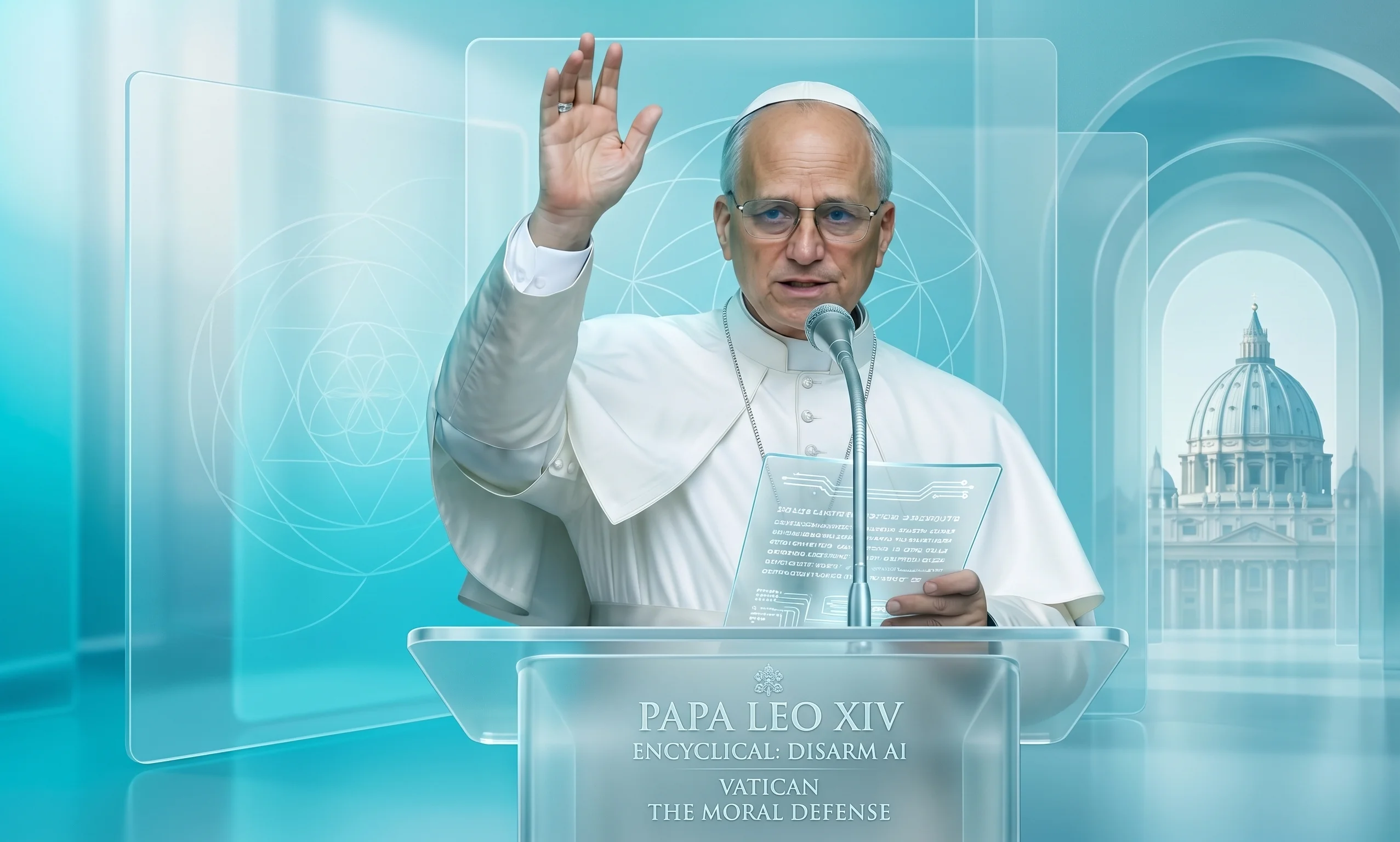
The First Encyclical of the Pontificate and the Critique of Algorithmic Governance
Pope Leo XIV has dedicated the first encyclical of his pontificate to a profound ethical analysis of digital technologies, explicitly calling for the disarmament of artificial intelligence. In this landmark doctrinal document, the Holy See demands the removal of autonomous algorithms from military and security sectors, where decisions regarding life and death are increasingly outsourced to software. The Pontiff stressed that the erosion of human oversight in technology presents an unprecedented threat to global stability and moral responsibility.
The Vatican conceptualizes AI not merely as a set of neutral software instruments, but as a structural force reshaping geopolitics, labor, and social justice. This new encyclical aligns with the rich tradition of Catholic social teaching, which prioritizes human dignity above technological and economic efficiency. According to Leo XIV, the unregulated militarization of algorithms represents a collective moral failure, where humanity risks abandoning its fundamental duties to technological automation.
Ethical Threats of Military and Commercial Algorithmic Systems
The encyclical provides a detailed critique of the systemic risks associated with automated decision-making frameworks. Pope Leo XIV observed that the predictive models utilized in modern weaponry lack the capacity for empathy, historical awareness, and the recognition of human sacredness. The Pontiff expressed deep concern over the trillions of USD invested globally by leading nations into autonomous combat systems and lethal algorithmic operations.
Beyond the battlefield, the text addresses the profound social harm driven by what it terms digital capitalism. The algorithms powering social media platforms, high-frequency financial markets, and corporate surveillance networks frequently reinforce discrimination, economic marginalization, and psychological manipulation. The Pope called for binding international legal frameworks to guarantee that technological advancements do not widen the gap between affluent societies and developing nations.
The Call for Algorithmic Disarmament and Global Governance
The central operational mandate of the encyclical is an immediate international commitment to AI disarmament. This framework requires an absolute global ban on the design, deployment, and operational execution of weapons systems that can select and engage targets without direct human intervention. The Vatican invites world leaders to formalize a comprehensive international treaty, comparable to historic non-proliferation agreements for nuclear and chemical weapons.
From the Vatican’s perspective, technological growth must be structurally subordinated to the common good. The encyclical proposes the establishment of an international oversight agency tasked with enforcing transparency in large language model training datasets, while preventing tech conglomerates from institutionalizing total digital surveillance mechanisms.
The Social Vision of Leo XIV’s Pontificate
This authoritative statement indicates that the Catholic Church aims to position itself at the forefront of the global movement for human-centric digital spaces. The Pontiff reminded the international community that industrial automation and algorithmic optimization must not lead to systemic unemployment or the dehumanization of the global workforce. Progress is only legitimate if it actively enhances the material and spiritual well-being of the human family rather than merely inflating corporate margins.
This encyclical serves as a vital signal for international diplomatic bodies, academic institutions, and software engineers. The Vatican has established that the ethical boundaries of artificial intelligence represent a central pillar of religious diplomacy in the modern era. The global community requires a new digital security architecture where human beings remain the sole subjects of ethical choice and legal accountability.




0 Comments