
Background and Initial Critic Reactions
The sci-fi action thriller The End of Oak Street has captured global cinema attention long before its theatrical release. Produced by Warner Bros. Pictures under the direction of David Robert Mitchell and producer J.J. Abrams, the project quickly became one of the most anticipated cinematic releases of the year. Following early private screenings, reactions from film critics highlight a seamless blend of classic eighties adventure tone with high-stakes modern suspense.
Reviewers particularly praised the creative direction regarding visual world-building. Rather than relying exclusively on digital rendering, the filmmakers utilized a hybrid combination of practical animatronics, constructed sets, and targeted visual effects. This structural choice brings a tangible weight to the prehistoric creatures juxtaposed against quiet American suburban architecture. Early coverage compares the atmospheric tension directly to classic Steven Spielberg productions.
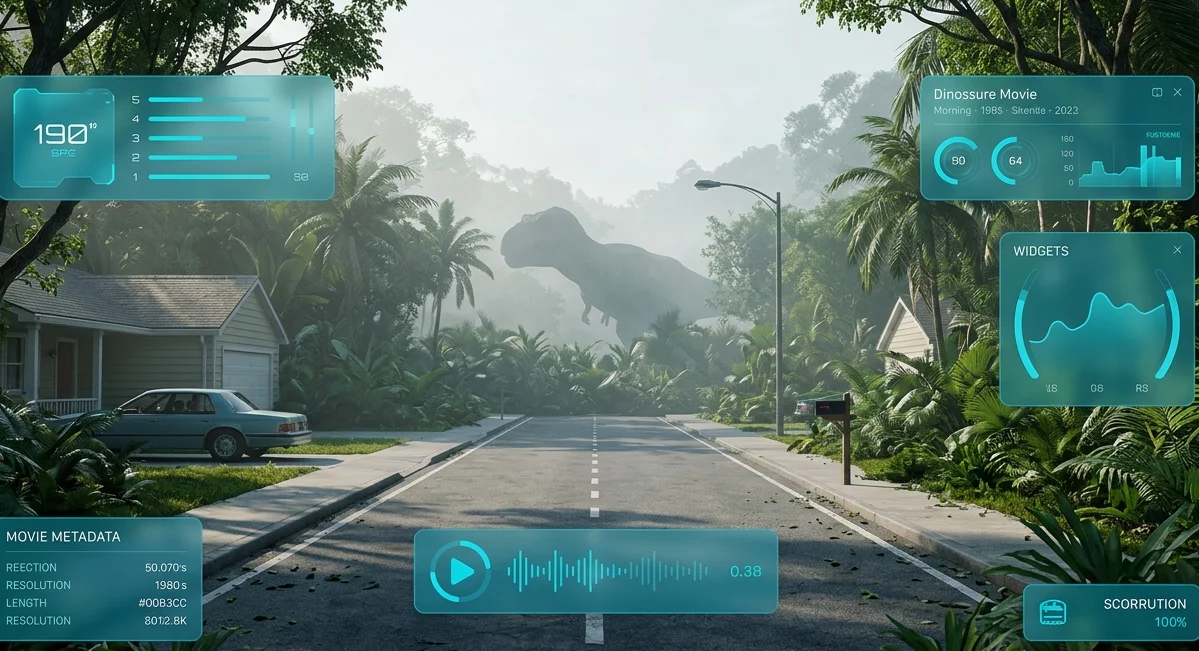
The core narrative focuses on a typical residential neighborhood on Oak Street, which experiences a sudden space-time displacement that severs it from modern civilization and shifts the entire block into a prehistoric era. The residents are forced into immediate survival mode as everyday homes and family vehicles become their primary defensive barriers against extinct predators.
Narrative Structure and Temporal Anomaly Concept
The narrative foundation rests on the stark contrast between suburban normalcy and the untamed wilderness of the Mesozoic era. The temporal distortion occurs without warning, isolating several residential blocks from external power grids, communications, and transport routes. Dense ancient jungle vegetation rapidly replaces manicured lawns and paved roads.
Starring Anne Hathaway and Ewan McGregor, the lead characters portray parents leading community defense efforts while protecting their family. The screenplay emphasizes psychological realism and pragmatic problem-solving over standard disaster movie tropes. Viewers watch a small suburban community adapt household machinery and tools into makeshift defenses and barricades.
Pacing remains consistently tight throughout the film’s 99-minute runtime. Threats escalate progressively, starting with small agile ancient reptiles and culminating in territorial encounters with massive theropods. The story maintains a balanced integration of family drama, survival tension, and speculative science fiction elements.
Cast Performances and Character Development
The lead ensemble represents one of the strongest elements of the production. Anne Hathaway delivers a grounded performance as a mother forced to assume leadership during crisis conditions. Her character arc transitions naturally from a suburban parent into a decisive community coordinator, bringing emotional depth to intense survival sequences.
Ewan McGregor portrays a mechanical engineer whose technical knowledge becomes vital for survival. His character leads efforts to modify cars and household generators for defense and resource management. The dynamic between the lead actors establishes a realistic family connection that anchors the film’s fantastical premise in human stakes.
Supporting characters receive distinct narrative attention rather than serving as simple background figures. Neighborhood dynamics highlight varying human reactions to crisis, ranging from panic to practical collaboration, showcasing how sudden environmental collapse affects a modern community.
Visual Effects and Cinematic Direction
Director David Robert Mitchell applies a distinct visual style characterized by long fluid tracking shots and deliberate camera positioning. This framing emphasizes the physical scale of prehistoric creatures within narrow suburban streets. The cinematography maintains continuous spatial clarity during action sequences.
The integration of physical animatronics for close up creature shots gives skin textures, muscle movements, and physical interactions a grounded quality. Digital animation was reserved for wide establishing shots and complex multi-creature sequences, ensuring visual consistency across all scenes.
Sound design plays an essential role in building suspense. Low frequency jungle ambiance, echoing suburban acoustics, and detailed creature vocalizations create an immersive soundscape. The musical score balances tension building cues with emotional thematic arrangements during quieter character moments.
Critical Analysis and Genre Legacy
Mainstream film critics have drawn favorable comparisons between The End of Oak Street and classic creature feature cinema. Reviews highlight the film’s refusal to rely on mindless CGI destruction, prioritizing structured storytelling and character decisions instead.
Critics also noted the efficiency of the 99-minute running time, avoiding unnecessary filler while maintaining continuous momentum. The balance between suspense, action, and human interaction renders the film accessible to diverse audiences.
The consensus across initial reactions frames the movie as one of the most compelling dinosaur featured releases of the decade, successfully recapturing a sense of wonder and threat in prehistoric cinema.


0 Comments