
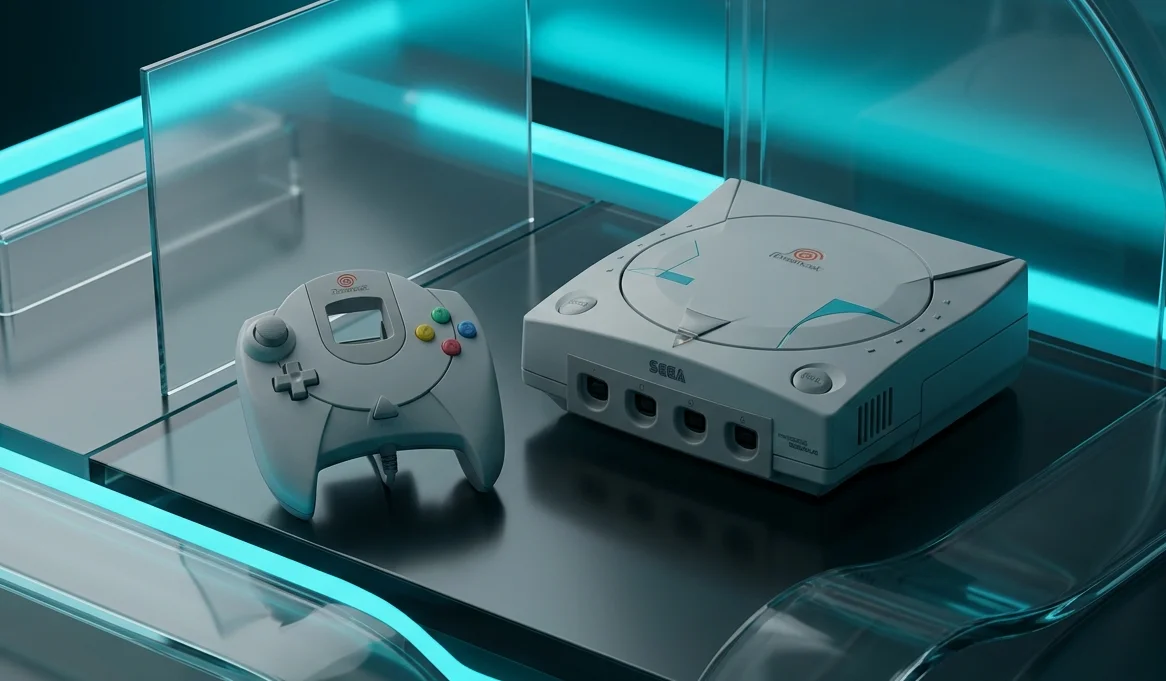
The Longevity Phenomenon of Sega’s 128-Bit Legend
The official discontinuation of the Sega Dreamcast console occurred in early 2001. For most hardware platforms, such a decision marks a gradual decline in interest, server shutdowns, and a transition into museum display territory. However, in the case of Sega’s 128-bit machine, history took a completely different path. Even a quarter-century after its official end of life, the platform remains an active hub for independent developers, publishers, and retro gaming enthusiasts.
In 2026, announcements and physical commercial releases on disc formats for the Dreamcast remain a regular occurrence. The development community continues to build original titles shipped on custom media with factory-style jewel cases and full-color manuals. This is not a fleeting nostalgic phase, but a stable niche market with established quality standards, global distribution, and a dedicated player base.
Why Dreamcast? Architecture and Lack of Barriers
The prolonged lifespan of the console is driven by several key architectural factors that significantly simplify the development process compared to competing hardware of the same generation.
- MIL-CD Support & DRM Absence: Early console revisions natively support the MIL-CD format. This allows bootable code to run directly from standard CD-R media without requiring modchips or hardware modifications.
- Accessible Hardware: Powered by a 200 MHz Hitachi SH-4 CPU and a 100 MHz PowerVR2 (CLX2) GPU, the machine features a straightforward memory structure (16 MB system RAM, 8 MB VRAM, 2 MB sound RAM). Unlike the complex architecture of the PlayStation 2, writing custom code for Dreamcast is notably more accessible.
- Mature SDK (KallistiOS): The open-source development environment KallistiOS (KOS) has been refined by the community for over two decades. It gives programmers low-level access to hardware capabilities without needing proprietary Sega SDKs.
2026 Game Releases – From Survival Horror to Arcades
The catalog of upcoming and recent titles spans various genres, emphasizing styles that defined the console’s golden era – arcade racers, shoot ’em ups, and 3D action titles with fixed cameras.
A prime example of modern Dreamcast software is White Creek, a survival horror title inspired by classic franchises like Resident Evil and D2. The game utilizes the full potential of 3D rendering, detailed textures, and offers interactive Visual Memory Unit (VMU) integration to display health and ammunition directly on the controller screen.
The Interactive Role of the VMU Memory Card
Peripherals play an equally important role in current projects. The Visual Memory Unit (VMU) was revolutionary in 1998, featuring a 48×32 pixel monochrome LCD, an 8-bit CPU, and a directional pad. Modern developers use the VMU not just for save files, but to host standalone mini-games that can be detached and played on the go.
Some development teams craft companion software running entirely on the VMU to supplement main campaign objectives. This creates a distinct multi-screen setup that remains engaging and difficult to replicate on modern platforms without external mobile applications.
Distribution Ecosystem and Technical Adaptation
Publishing physical titles on a legacy platform in 2026 involves technical compromises and logistics management. Since factory production of 1.2 GB GD-ROM discs ceased decades ago, publishers target standard 700 MB CD-ROMs. This setup requires asset optimization, audio compression, and efficient data streaming techniques.
Physical boxed editions typically range between 40 and 70 USD. Packages often include printed manuals, posters, and collectible goods. For players utilizing optical drive emulators like GDEMU or MODE, developers also release digital image files in CDI or GDI formats.
Why the Community Stays Loyal to Dreamcast
The Dreamcast stands as an icon of creative freedom in gaming history – a period marked by bold experimentation and arcade spirit. For indie teams, releasing a game on this platform serves as both a technical accomplishment and a way to reach an enthusiastic, dedicated audience outside noisy digital storefronts.
Hardware limitations encourage developers to focus on core mechanics, performance optimization, and strong artistic vision. This dedication ensures that the Sega Dreamcast remains active well into 2026 and beyond.



0 Comments