
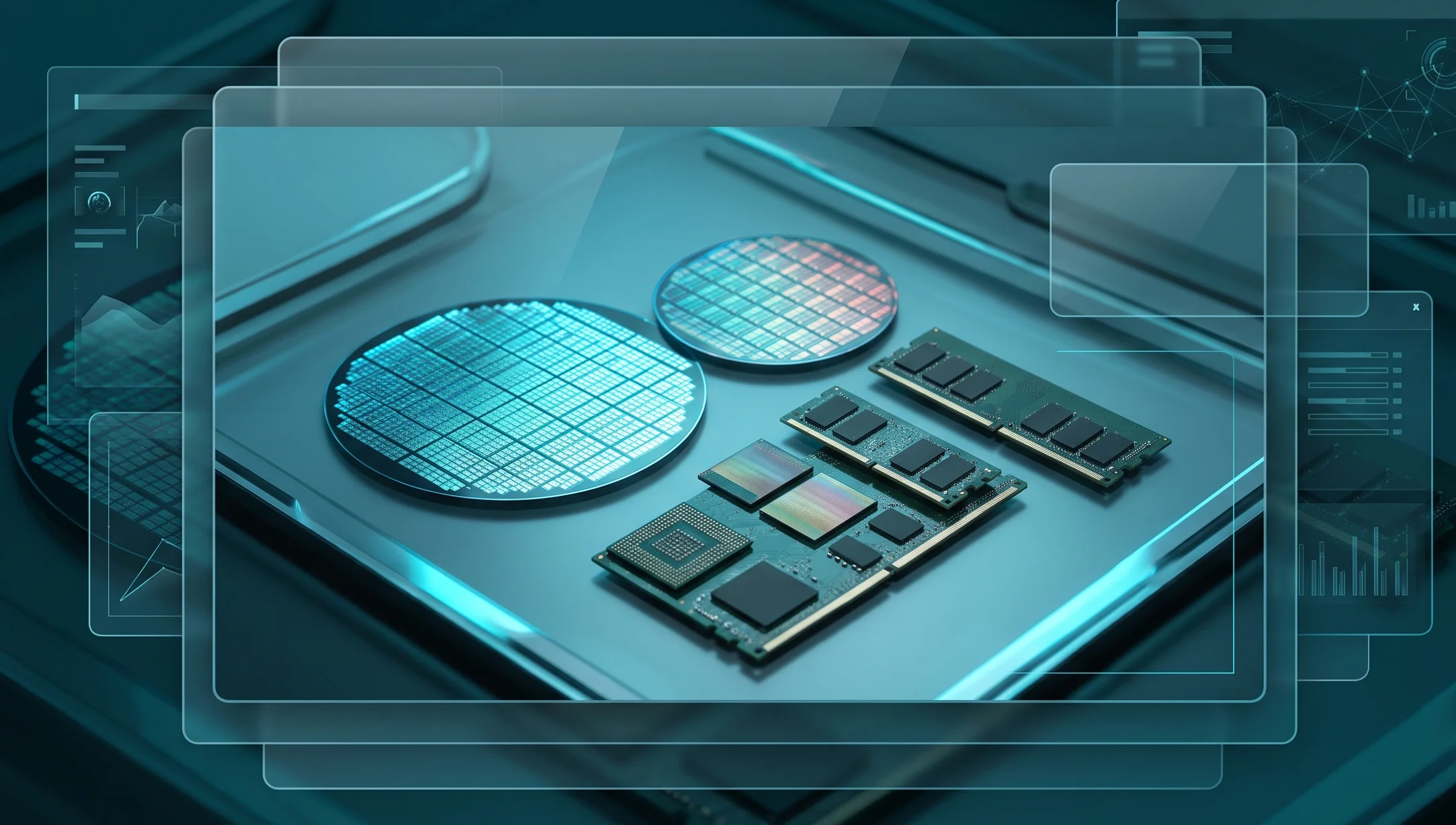
Challenges for the Semiconductor Industry
The head of the world’s leading memory chip manufacturer, SK Hynix, Kwak Noh-jung, made an analytical forecast regarding the situation in the semiconductor market in the coming years. The main focus was on the critical shortage of DRAM RAM, which, according to his estimates, will reach its peak in 2027. This statement caused a significant resonance in the technological community, as DRAM memory is a key component for a wide range of devices, from personal computers and smartphones to powerful servers and supercomputers.
SK Hynix’s forecast is based on a deep analysis of current market trends and the dynamics of supply and demand. The company, being one of the key players in this market, possesses unique information about orders from major tech giants and plans for commissioning new production capacities. Therefore, their estimates are considered among the most authoritative in the industry.
The current situation in the semiconductor market demonstrates a high sensitivity to any structural changes. Any fluctuations in supply chains or a sharp increase in demand in a specific segment instantly create a deficit on a global level. Experts emphasize that the memory market is cyclical, but the next crisis could be protracted due to the specifics of new technological solutions.
Impact of Artificial Intelligence on Demand
Meeting the Needs of Generative Models
The main driver of growth in demand for DRAM memory, according to the head of SK Hynix, is the rapid development and implementation of artificial intelligence (AI) technologies. Modern AI models, such as large language models (LLMs), require huge amounts of data for training and real-time operation. To ensure high speed and efficiency of data processing, a large amount of high-speed RAM is necessary. This applies not only to the servers on which AI models are deployed but also to end devices that use AI functions.
Artificial intelligence is becoming an integral part of many industries, including healthcare, finance, transportation, and manufacturing. This leads to an exponential growth in the volume of data requiring processing and, as a consequence, to a sharp increase in demand for components necessary for their storage and processing, primarily DRAM memory. The integration of AI algorithms into everyday software products creates additional pressure on the consumer segment of the market.
Furthermore, the development of generative artificial intelligence requires a transition to new memory standards, such as HBM (High Bandwidth Memory). Production lines that previously manufactured standard DRAM are now partially shifting towards more complex and expensive HBM. This automatically reduces the output volume of basic RAM for the mass market segment of computers and servers.
Technological Limitations and Production Complexity
In addition to growing demand, the semiconductor industry faces serious technological challenges. The manufacturing of memory chips is becoming an increasingly complex and expensive process. Transitioning to new technological processes requires significant investments in research and development, as well as the construction of new factories and the purchase of sophisticated equipment. Furthermore, each successive stage of reducing the size of transistors becomes increasingly difficult from a physical perspective.
The complexity of the manufacturing process also affects the time needed to ramp up production capacities. Building and launching a new semiconductor factory can take several years and cost billions of dollars. This limits manufacturers’ ability to react quickly to sudden changes in market demand. Upgrading existing lines also requires considerable time for equipment calibration.
An important factor is also the limited supply of extreme ultraviolet (EUV) lithography equipment, which is critical for creating modern microchips. Since the demand for such machines exceeds the capabilities of their single global manufacturer, the factory expansion schedules of SK Hynix and other chipmakers fully depend on global logistical chains.
Impact on Prices and Product Availability
The expected DRAM memory shortage will inevitably lead to an increase in prices for this component. This, in turn, will reflect on the cost of end products that use DRAM. Electronics manufacturers may be forced to raise prices for their devices or reduce the amount of RAM in base configurations. Supply delays are also possible due to component shortages.
For consumers, this could mean higher prices for computers, smartphones, and other equipment. Shortages of certain device models in the market are also possible. For businesses, the increase in DRAM prices could lead to increased costs for IT infrastructure and equipment. Companies engaged in building and expanding their own data centers will be the most affected.
Analysts note that the first signs of component price increases may appear long before the critical point. Large cloud service providers are already beginning to form strategic stockpiles of microchips, which additionally heats up market prices and creates an artificial shortage for smaller consumer electronics manufacturers.
Search for Alternative Solutions and Optimization
Shortage conditions force electronics manufacturers and software developers to look for alternative solutions and optimize DRAM usage. This may include the development of more efficient data processing algorithms, the use of data compression technologies, and expanded use of other memory types.
There may also be increased interest in technologies that allow reducing dependency on RAM, such as edge computing or the use of specialized hardware accelerators. Furthermore, companies may revise their component procurement strategies and enter into long-term contracts with suppliers to ensure supply stability.
Architectural changes at the software level will become critically important. Developers will have to move away from resource-intensive coding practices in favor of strict optimization. This could give a boost to the development of new programming languages and compilation tools focused on minimal hardware resource consumption.
SK Hynix’s forecast is a serious warning for the entire technological industry. Companies need to start adapting to future DRAM memory shortage conditions now, optimizing their products and procurement strategies. This will allow minimizing negative consequences and ensuring stable development in the future.
While the situation may seem difficult, it also opens up new opportunities for innovation and the development of new technologies. Companies that can effectively solve the memory shortage problem will gain a significant competitive advantage in the market.



0 Comments