
- A New Era in Mobile Computing – How Arm Architecture Reshapes the Laptop Market
- Architectural Deep Dive and the Integration of AMD Graphics Technology
- Artificial Intelligence Capabilities and Localized Machine Learning
- Comparative Analysis Against the Apple Silicon Ecosystem
- Market Implications and Strategic Future Outlook
A New Era in Mobile Computing – How Arm Architecture Reshapes the Laptop Market
The personal computer industry is undergoing a fundamental transformation that completely redefines the historical balance between processing power and energy efficiency. For decades, the dominance of x86 architecture remained absolute, but the rapid evolution of mobile silicon and the undeniable success of Arm-based designs have forced major manufacturers to completely rethink their roadmaps. The most prominent implementation of this concept was demonstrated by Apple, whose transition to custom M-series chips established a new benchmark for the entire ultraportable notebook market.
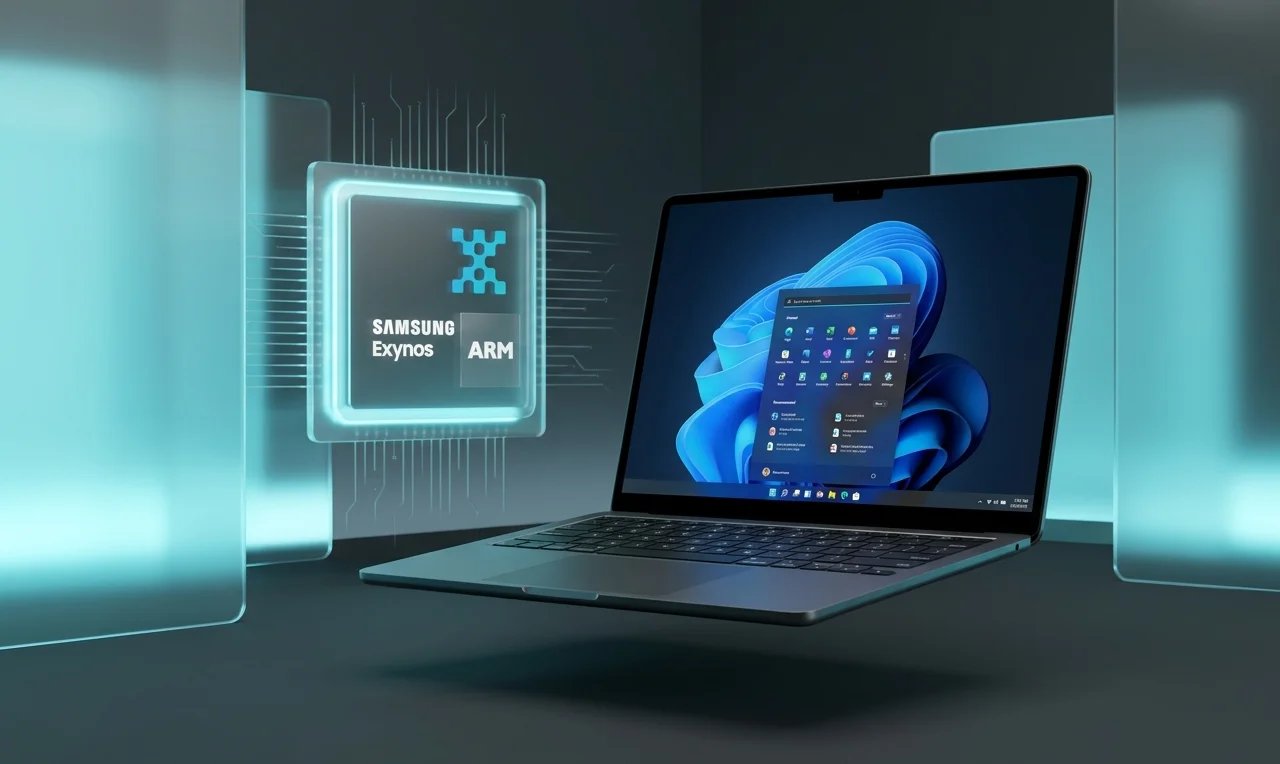
Today, a significant challenge to this status quo is emerging from Samsung, a conglomerate possessing massive vertical integration capabilities for semiconductor research, design, and fabrication. According to recent supply chain leaks and expert analysis, the South Korean tech giant is heavily investing in adapting its flagship Exynos mobile platform specifically for next-generation Chromebook form factors. This strategic maneuver could radically transform public perception of ChromeOS, elevating it from a budget platform into a serious environment for professional use and productivity.
Architectural Deep Dive and the Integration of AMD Graphics Technology
The primary bottleneck in previous attempts to build high-performance notebooks utilizing mobile Exynos chipsets was limited graphical throughput and heavy reliance on generic system architecture designs. However, in its upcoming specialized silicon variants, Samsung is executing an entirely different strategy. A deep engineering partnership with AMD has facilitated the integration of the modern RDNA graphics architecture directly into the mobile computing die, unleashing unprecedented capabilities for processing rich visual contents.
The synergy between RDNA computing units and the latest ARMv9 instruction set opens up horizons for ChromeOS hardware that were previously restricted to high-end workstations. This new silicon utilizes a sophisticated big-little core topology, enabling the system to dynamically distribute workloads between high-performance processing blocks and ultra-efficient computing clusters. This architecture minimizes energy draw during mundane background activities while instantly unleashing maximum performance whenever demanding tasks or heavy calculations are requested by the operating system.
Artificial Intelligence Capabilities and Localized Machine Learning
Modern application ecosystems require hardware platforms to offer far more than simple high clock speeds; they demand specialized silicon dedicated entirely to matrix math acceleration. The new laptop-class Exynos processor is engineered with a strict focus on ubiquitous artificial intelligence integration. The on-board Neural Processing Unit showcases exceptional metrics, allowing it to execute large language models and advanced computer vision algorithms locally without relying on remote cloud computing assets.
For ChromeOS users, this translates into automated productivity tools, enhanced real-time security layers, and smooth on-device professional media editing workflows. Google’s explicit optimization of its operating system kernel for the ARMv9 framework allows the platform to utilize the NPU to predict user behaviors and manage volatile memory allocations proactively. This guarantees interface fluidity and rapid application responsiveness even when the machine is subjected to intense multitasking scenarios.
Comparative Analysis Against the Apple Silicon Ecosystem
A direct comparison of upcoming premium Exynos-powered Chromebooks against the dominant MacBook Air lineup reveals that Samsung is focusing heavily on balanced market availability. While Apple M-series chips retain a noticeable lead in single-threaded benchmark results due to their custom wide-execution pipeline design, Samsung’s specialized silicon aims to outperform or match them in multi-threaded environments thanks to a flexible core configuration and higher operational frequencies of the AMD-developed graphics subsystems.
Thermal management is another critical factor where this new silicon shines. Exynos-driven laptops are designed from the ground up for fanless configurations, ensuring completely silent operation under sustained stress without experiencing severe thermal throttling. Samsung engineers achieved this by fine-tuning dynamic power management algorithms that prevent sudden power spikes, which would otherwise lead to excessive heat generation within the slim chassis of the portable computers.
The Pivotal Role of ChromeOS Kernel Optimization
Raw computing potential is meaningless without precise coordination at the operating system tier. Google is deeply involved in writing optimized device drivers and adapting the underlying Linux kernel architecture within ChromeOS to perfectly match the specifications of the new Exynos silicon. This collaborative effort ensures a high degree of hardware-software cohesion, mirroring how Apple fine-tunes macOS for its proprietary silicon. Laptops gain the capability to run demanding Android packages and Linux environments with minimal virtualization overhead.
These upcoming devices are poised to offer battery life metrics that easily span beyond a conventional working day. Early engineering validation indicates that under typical web browsing and document editing workloads, the platform sips power, enabling up to twenty hours of uninterrupted usage on a single charge. This qualifies the new hardware as an outstanding candidate for the corporate enterprise sector, where longevity away from power outlets represents a primary procurement factor.
Market Implications and Strategic Future Outlook
Samsung’s serious entry into the high-performance Arm notebook domain poses a clear competitive threat not just to Apple’s market share, but also to legacy x86 semiconductor giants such as Intel and AMD. The establishment of a truly premium Chromebook Plus tier driven by advanced Exynos processors satisfies the requirements of a vast user demographic seeking stable, rapid, and autonomous tools for professional tasks, educational endeavors, and multimedia entertainment. The market benefits from an alternative that fuses the advantages of mobile architecture with an efficient operating environment.
In conclusion, the integration of Samsung’s advanced hardware technologies into devices running ChromeOS lays the foundation for a brand new breed of personal computing devices. These products will deliver impressive computing speeds, sophisticated localized artificial intelligence features, and console-grade graphics at a much more competitive price point. As competition in the laptop market intensifies, the end consumer ultimately wins, gaining access to next-generation computing paradigms today.




0 Comments