
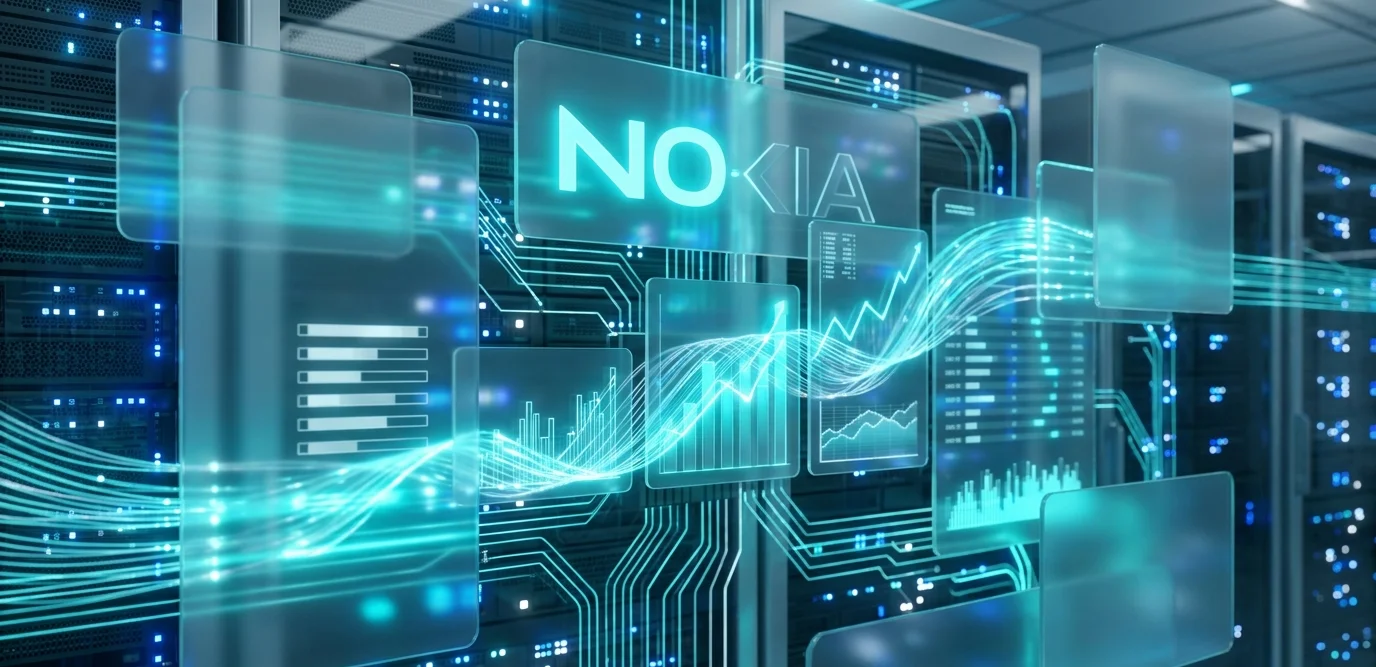
Tecom Giant Transformation into Data Center Supplier
Finnish technology provider Nokia has recorded a massive 140% surge in its stock price since the beginning of 2026. The main driver behind this rally is the unprecedented demand for optical networking equipment, which is critical for supporting large-scale artificial intelligence models. Following a prolonged period of stagnation in the 5G mobile network market, the company successfully redirected its core manufacturing capabilities toward servicing data center infrastructure. This strategic shift brought the brand’s market capitalization back to levels last seen nearly two decades ago.
Market experts point out that modern computing clusters used for training neural networks require fundamental upgrades in data transmission speeds between individual server racks. Traditional copper cables and legacy switch architectures introduce latency bottlenecks that limit overall GPU efficiency. Nokia addressed this by introducing high-speed optical architectures, enabling the company to secure substantial long-term contracts with major cloud service providers and hyperscalers.
Nvidia Partnership Extension and Infinera Acquisition as Growth Catalysts
The upward financial momentum gained additional velocity following the official expansion of Nokia’s partnership with Nvidia and the completed integration of recently acquired Infinera assets. The inclusion of Infinera’s technologies strengthened Nokia’s position in semiconductor optical components and dense wavelength division multiplexing systems. This enabled the development of turnkey next-generation data center architectures optimized for the extreme workloads characteristic of generative AI.
Through the ongoing collaboration with Nvidia, the Finnish manufacturer’s hardware is integrated directly into standard AI supercomputing clusters shipped to enterprise clients. This strategic move successfully elevated Nokia from a traditional cellular hardware supplier to a key infrastructure partner within the high-performance computing sector.
Financial Performance and Revenue Structural Shift in First Quarter 2026
According to the latest financial reports, Nokia’s network infrastructure and cloud services division posted a 49% increase in sales compared to the same period last year. This growth effectively offset declining revenues from legacy 5G base station deployments across European and Asian markets.
The structural transformation of revenue indicates that the enterprise has successfully diversified its market risks. Previously, Nokia’s financial health was entirely dependent on the capital expenditure cycles of major mobile telecom operators, many of whom have significantly scaled back network modernization spending. Today, cloud infrastructure providers have become the primary clients, with their expansion budgets showing continuous quarter-on-quarter growth.
Market Outlook and Capitalization Challenges
Despite the rapid appreciation in share value, the corporation faces several supply chain and manufacturing challenges. Investment analysts, including those at Bank of America, note that the current market valuation reflects exceptionally high expectations for long-term contract execution. To maintain this growth velocity, the manufacturer must continuously scale its production lines for high-speed optical transceivers and expand its component sourcing base.
Competition in this sector remains intense, as alternative telecom equipment vendors attempt to re-engineer their product portfolios for AI data center applications. However, Nokia’s proprietary optical chip patents and its deep integration with major GPU hardware ecosystems provide the Finnish brand with a stable competitive advantage for the coming quarters.


0 Comments