
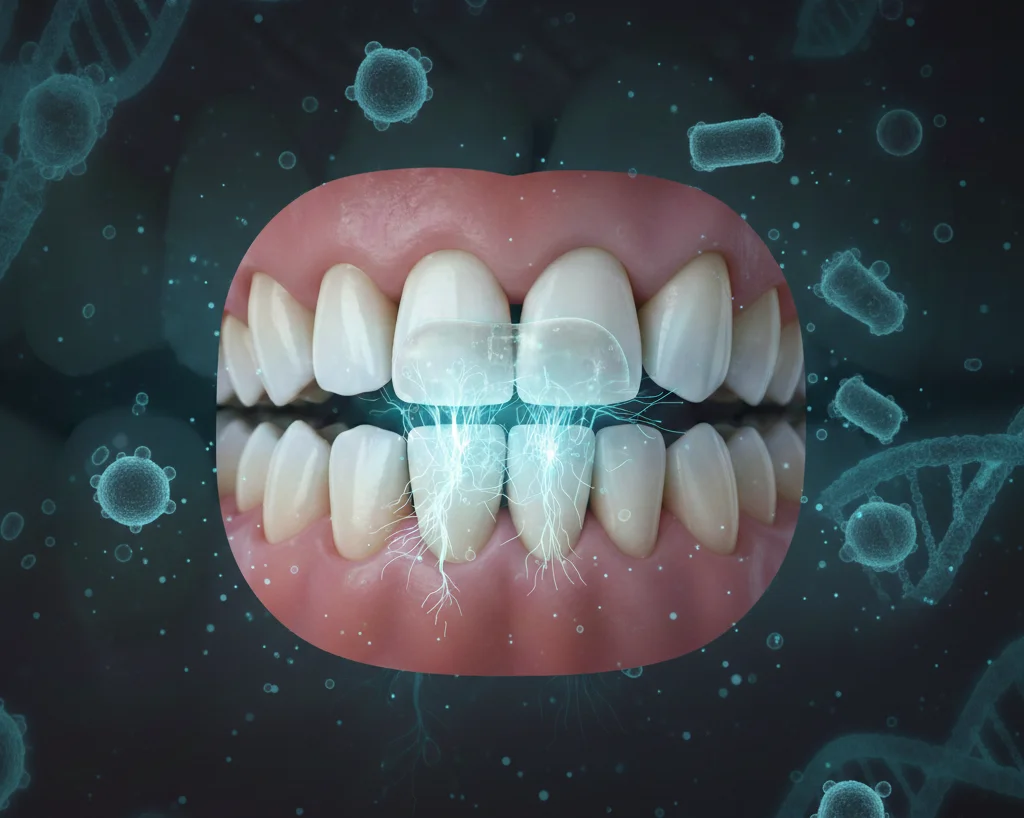
Learn how a new bio-plaster from South Korea allows you to grow your own teeth. The future of dentistry without implants and dentures is near.
Tooth regrowth becomes a reality thanks to Korean scientists
Dentistry is on the verge of the biggest transformation in history. South Korean researchers, working with international groups, have unveiled a technology that could make dentures and complex implant surgeries obsolete. It involves creating a special tool that stimulates the body to naturally regenerate lost teeth.
How bio-patch technology works
The development is based on a deep understanding of genetic mechanisms. Scientists have discovered that a specific protein, USAG-1, is responsible for limiting the number of teeth in humans. The Korean technology uses a special compound that acts as a “switch” for this protein. When the action of USAG-1 is stopped, activated stem cells in the gums begin to form a new tooth bud.
- Activation of dormant cells responsible for dentin growth;
- Formation of a full-fledged root system and enamel;
- Natural integration of the tooth into the jawbone.
Clinical trials and first results
The development has already been successfully tested on laboratory animals. Scientists confirmed that mice and ferrets, which have a jaw structure similar to humans, grew new teeth without side effects. The focus is currently on people with anodontia, a rare condition in which teeth do not grow from birth.
The total cost of the treatment course is expected to be high in the initial stages, but it is quite competitive compared to the classic all-on-4 implant, which costs around $10,000 or more.
Why is it better than implants?
Despite the high quality of modern titanium posts, they remain foreign objects in the body. AI analysis of long-term effects shows that natural teeth have much better biomechanics and sensory feedback.
- No risk of foreign body rejection;
- Complete restoration of chewing function and taste sensations;
- Natural appearance that is indistinguishable from neighboring teeth.
When will the technology appear in clinics?
The journey from the lab to the mass consumer takes time. The researchers plan to complete the main phases of human trials by 2028. If the results confirm the safety and effectiveness of the method, the technology could be available in leading dental centers around the world by 2030. This will open a new era where tooth loss will no longer be a tragedy, but just a temporary inconvenience that can be corrected with bio-therapy.


0 Comments