
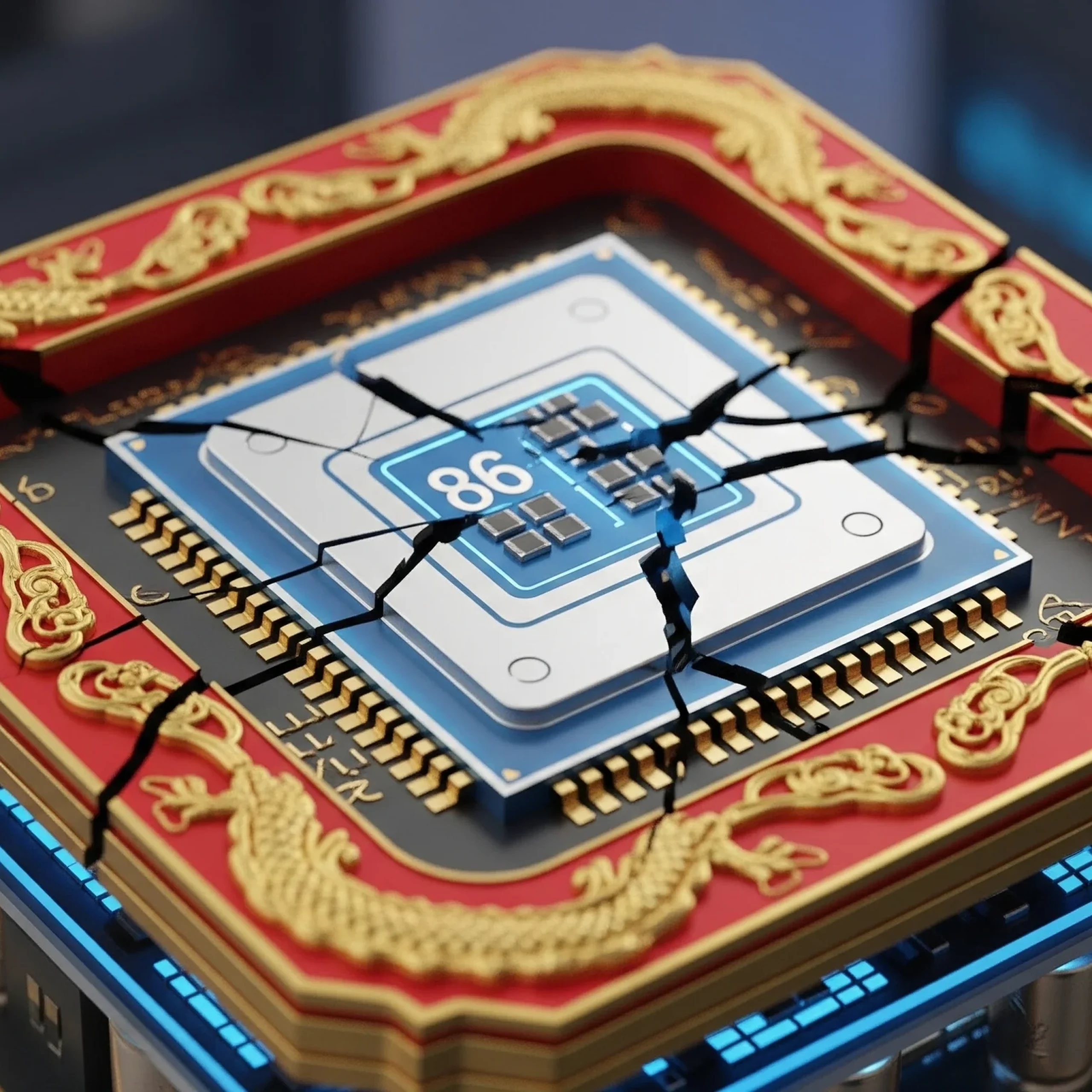
The tech world is accustomed to ambitious claims, especially when it comes to leadership in high-performance chip production. Recently, the Chinese company Montage Technology loudly claimed a “double breakthrough” with the introduction of the 86-core Jintai Performance Core (C6P) processors. This could have been a significant victory for China in its quest for technological independence. However, as it turns out, the grandiose claims concealed an old and well-known partnership rather than China’s own developments. This incident once again highlights the difficulty and lengthy path to self-sufficiency in a high-tech industry like semiconductor manufacturing.
Why is the “breakthrough” not Chinese?
Behind the much-hyped “double breakthrough” lies a simple but effective strategy. Montage Technology didn’t develop its processors from scratch. Their Jintai Performance Core line is based on Intel Xeon, the world’s most renowned server chips. Even on their official website, Montage Technology notes that Jintide® processors, which include the new model, are based on “standard Intel Xeon processor cores.” This confirms that the core of these 86-core processors is American. This isn’t a breakthrough in architectural design, but rather a demonstration of their ability to integrate foreign technologies.
Montage Technology and its strategy
Montage Technology’s collaboration with Intel is nothing new. The company has been working for years to Chineseize foreign technologies, adding their own security features. After adaptation, they sell these products domestically as “their own.” This approach has its advantages, as it allows for:
- Gain access to cutting-edge, proven technologies without having to invest billions of dollars in your own research.
- Offer products that are formally “Chinese”, which is in line with the state policy of import substitution.
- Circumvent certain restrictions related to the export of high-tech products, which creates workarounds for access to technology.
What processors are actually used?
According to an analysis of the technical specifications, the Jintai Performance Core is nothing more than a rebranded Intel Xeon Granite Rapids or Xeon 6P processor. These chips belong to the latest generation of Intel server processors, which only underscores Montage Technology’s deep dependence on the technology leader in this field. Despite the high-sounding name, this suggests that while Chinese companies can imitate designs and assemble complex components, they still lack the key technologies necessary to create processors from scratch. This is especially noticeable given the announcement that many Chinese developers are switching to RISC-V in an effort to create their own, independent architecture.
Technological independence: myth or reality?
This incident with Montage Technology is not uncommon. It is part of a larger picture: despite massive investments, China is still struggling to achieve complete technological independence. Dependence on foreign architectures, especially in critical segments like server processors, indicates a significant lag. A side effect is that domestic products may not be as reliable or efficient as the originals. The case of Jintai Performance Core confirms that the path to true technological sovereignty is long and difficult. It requires not just investment and imitation, but a genuine innovative breakthrough. For now, this breakthrough remains a myth, at least in the field of high-performance server processors.


0 Comments