
Technological leap: 1200V, 400A and minimal losses
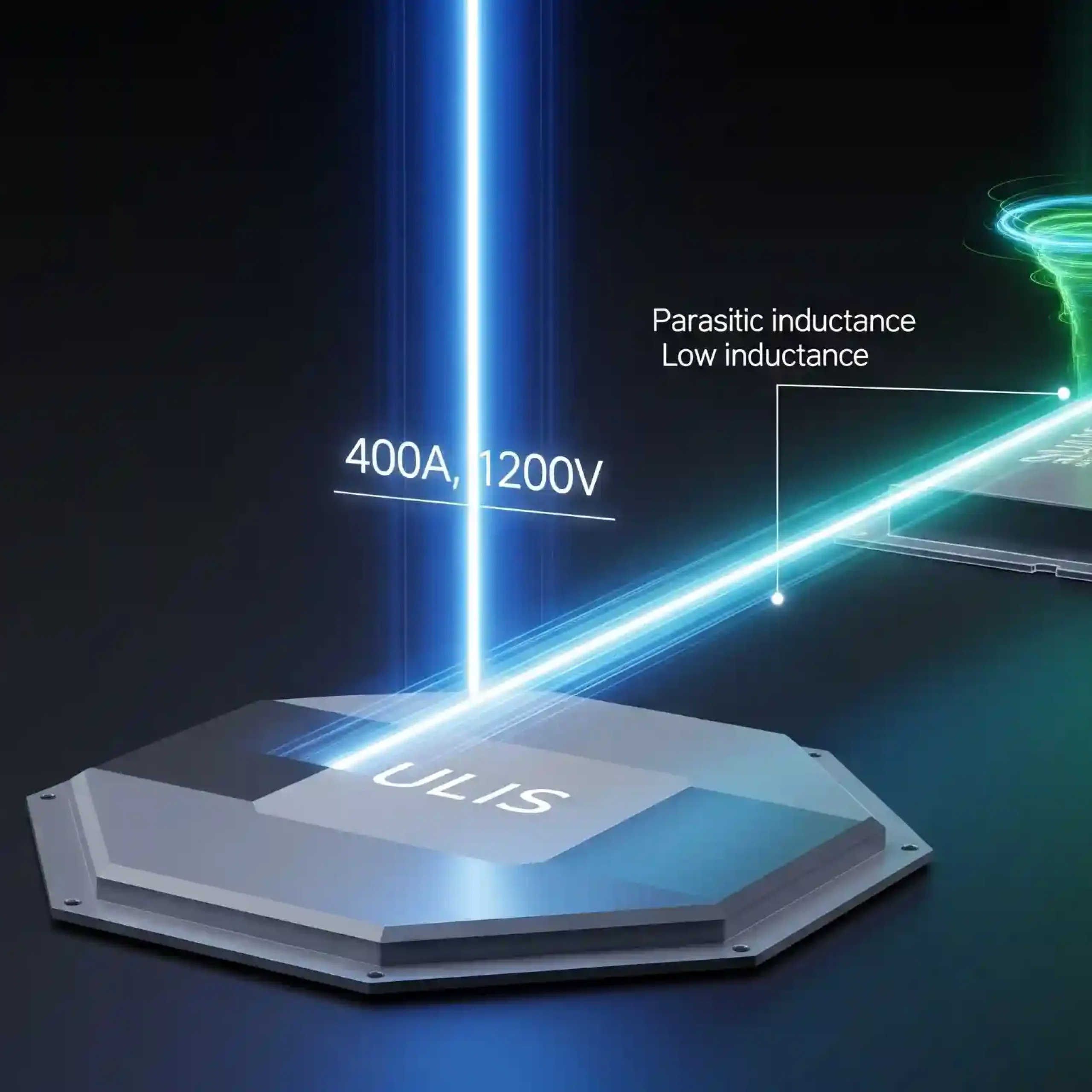
Experts from the US National Renewable Energy Laboratory (NREL) have unveiled the revolutionary ULIS (Ultra-Low Inductance Smart Power Module), which could radically change the way we design future energy systems. Built using silicon carbide (SiC) semiconductors, this development combines unprecedented compactness, high reliability, and characteristics previously considered unattainable for this class of devices. The module is rated for operation at voltages up to 1200 volts and currents up to 400 amperes, making it a versatile solution for high-power systems.
The NREL team’s key achievement is a fivefold increase in energy density compared to previous designs, while the module has a significantly smaller footprint. This operating range makes ULIS suitable for everything from large power grids and data centers to next-generation transportation, including heavy equipment and advanced military and aviation systems.
How ULIS Addresses the Main Limitation of Power Electronics
In power electronics, parasitic inductance has always been a major challenge. This effect creates resistance to current changes, leading to significant energy losses and system slowdowns. ULIS engineers have managed to reduce this parameter by 7-9 times compared to modern SiC modules.
- Minimal losses: Thanks to its ultra-low inductance, the device can switch electrical currents with minimal losses. This allows for more useful power to be extracted from the same source, increasing overall energy efficiency.
- Speed: The module provides ultra-fast current switching, which is critical for high-frequency and high-power converters.
The reduced inductance was made possible by an innovative approach to layout and materials. The architecture, developed by Shuofeng Zhao, compensates for magnetic flux, ensuring a clean electrical signal with minimal distortion.
Smart design and a wireless future
NREL developers abandoned the traditional “brick-like” shape typically used to house semiconductor components. Instead, they used a flat octagonal shape. This solution allowed them to fit more components into a smaller area, reduce weight, and significantly improve heat dissipation.
- New materials: Instead of a rigid ceramic base for heat dissipation, ULIS uses a flexible Temprion polymer bonded to copper. This material not only makes the design lighter and thinner, but also reduces manufacturing costs: the module costs hundreds of dollars, compared to thousands of dollars for similar modules.
- Failure prediction: The module is equipped with a monitoring system that can monitor its own condition and predict potential failures in advance. This built-in diagnostics is a key element of reliability, especially for mission-critical applications such as aviation or military equipment.
- Wireless Control: Engineer Sarwar Islam developed a low-latency wireless communication protocol that allows for control and monitoring of the module without cables. This modularity and wireless control make ULIS highly versatile for integration into a wide range of installations.
The combined synergy of these innovations-low inductance, high energy density, wireless control, and built-in diagnostics-makes ULIS not just a new model of power electronics, but a fundamental building block for next-generation energy systems. It promises to make energy converters more affordable, efficient, and compact, meeting the global demand for clean and reliable energy.



0 Comments