
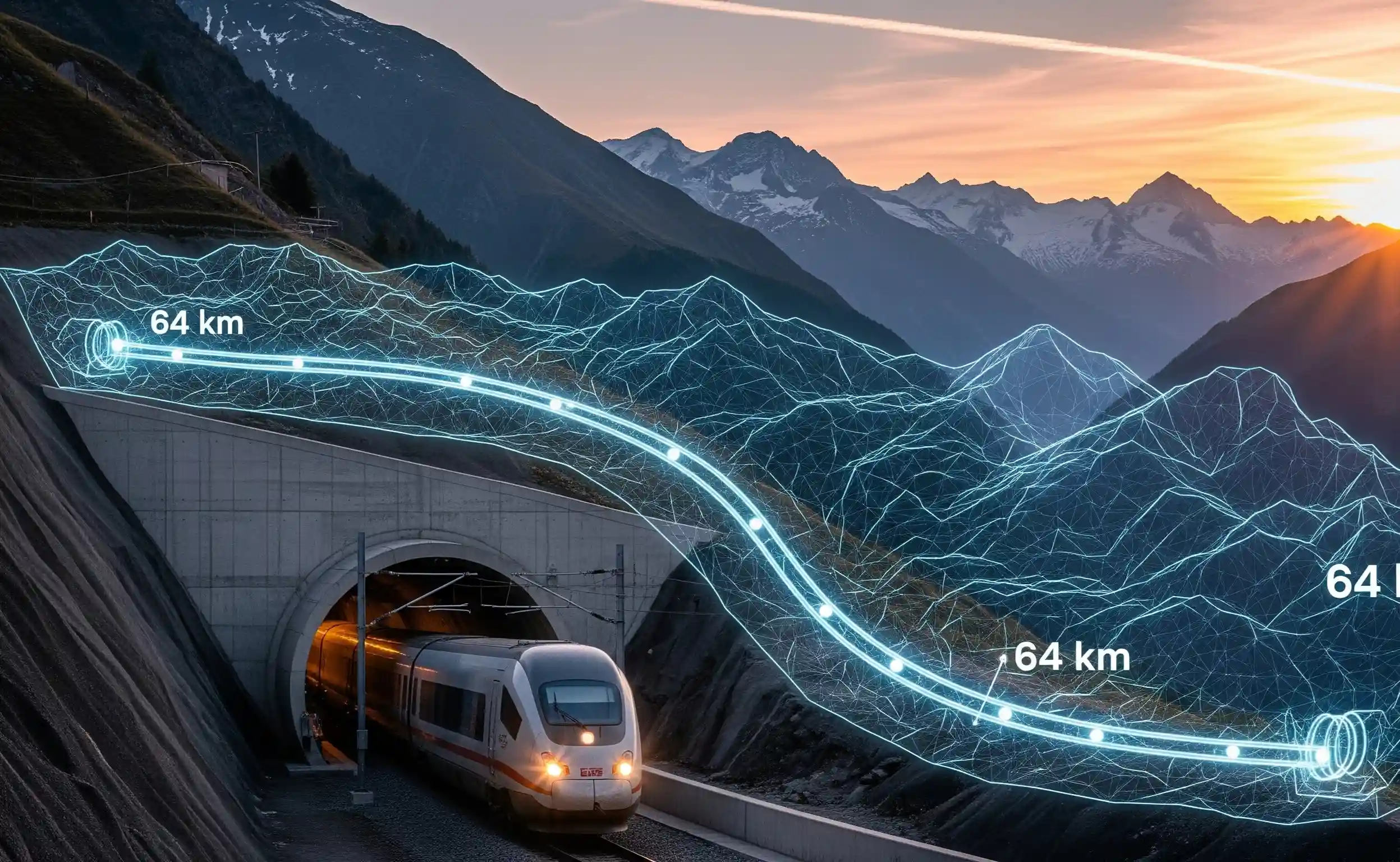
A momentous event has occurred in the history of European transport. Engineers have completed excavation of a key segment of the Brenner Basic Line (BBT), which runs deep beneath the Alps and connects Italy and Austria. This infrastructure project, one of the most ambitious in Europe, has become a symbol of engineering excellence and international cooperation. Thanks to it, the world will soon have the longest railway tunnel in the world.
Engineering Masterpiece: Record Length and Depth
The Brenner Base Tunnel itself is a twin tunnel, 55 kilometers long. However, when fully integrated with the existing Innsbruck Bypass Tunnel, the total length of the underground railway connection will reach 64 kilometers (almost 40 miles). This scale will allow the BBT to surpass the previous record holder, the Gotthard Base Tunnel in Switzerland, making it the longest underground railway connection in the world. The tunneling took place at an astonishing depth, in places reaching 1,400 meters beneath the Brenner Pass.
- The BBT project consists of two parallel single-track tunnels.
- To ensure maximum safety, the tunnels are connected by special emergency and service passages every 333 meters.
- This unique design provides high stability and the ability to quickly respond to unexpected situations.
Rebooting European Logistics and Green Benefits
The key goal of the Brenner Tunnel construction is to significantly relieve congestion on one of the busiest freight corridors in Europe. Currently, approximately 70% of freight traffic through the Brenner Pass is carried by road, resulting in significant air pollution, noise, and congestion.
The launch of the railway line will allow millions of tons of freight to be redirected to environmentally friendly rail transport. This is vital to achieving the European Union’s goals to reduce greenhouse gas emissions in the transport sector, promoting the development of green logistics and more sustainable connectivity across the continent.
Reducing Travel Time
In addition to freight transport, the BBT will radically transform passenger travel. Thanks to its nearly horizontal route, trains will be able to reach speeds of up to 250 km/h. As a result, travel time between Forzezza (Italy) and Innsbruck (Austria) will be reduced from the current 80 minutes to a minimum of 25 minutes, making rail travel faster and more competitive with air travel.
Strategic importance: Scandinavia-Mediterranean corridor
The Brenner Base Tunnel is more than just a two-way connection. It is a crucial link in the TEN-T (Trans-European Transport Network) initiative, specifically the Scandinavia-Mediterranean corridor. This ambitious project aims to create a single high-speed rail axis stretching from Helsinki to Palermo.
The integration of the BBT into the network will provide a direct, fast and reliable route across the Alps, eliminating one of the main bottlenecks in the European rail system and strengthening the continent’s economic connectivity.
Finance and Deadlines
The total cost of constructing this colossal project is estimated at approximately $10.5 billion. The project is being jointly financed by Italy, Austria, and the European Union, underscoring its strategic importance for the entire region. Despite the technical challenges faced in the Alps and minor delays related to logistics and financing, the Brenner Base Line is scheduled to be fully operational by 2032.
Joint success
The tunnel’s completion ceremony, attended by officials from both countries, symbolized not only an engineering achievement but also the triumph of years of international cooperation. The tunnel’s opening is expected to be a game-changer for freight transport, making travel between Northern and Southern Europe more efficient.
The Brenner Tunnel is more than just a railway line; it demonstrates how modern technology and collaborative efforts can overcome geographical barriers, paving the way to a greener and more integrated European future.



0 Comments