
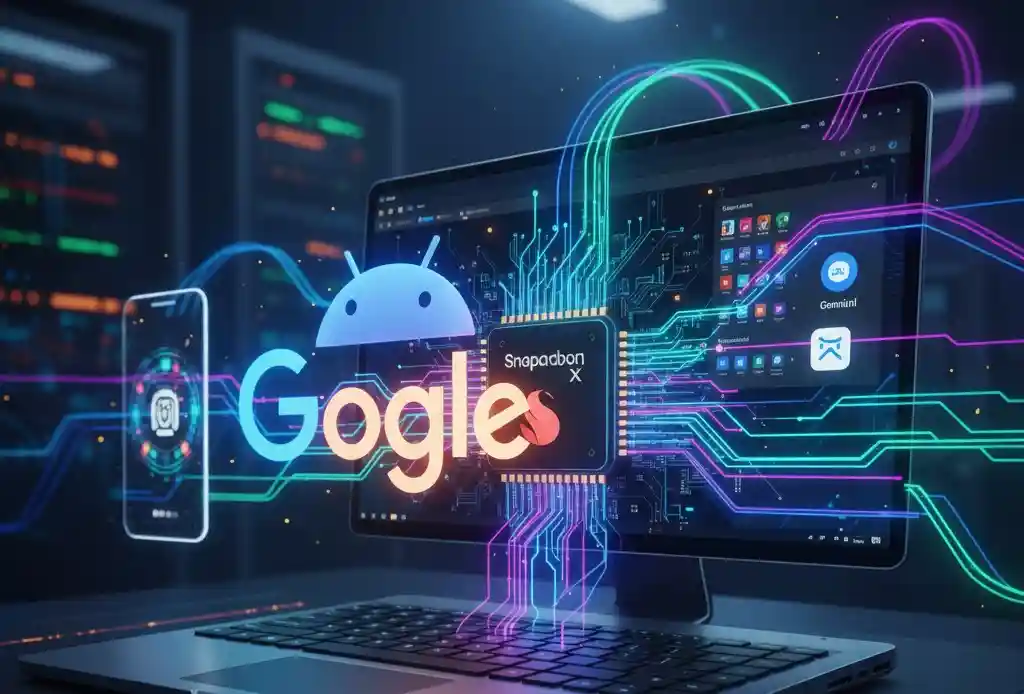
The personal computing industry is on the cusp of major changes. Google and Qualcomm have officially confirmed a strategic partnership to bring the Android operating system to PCs and laptops. This ambitious move could unite the vast mobile ecosystem with traditional desktop devices, directly challenging the dominant Windows operating system.
Why it matters: The end of fragmentation and a new ecosystem
For years, the PC market remained largely stagnant, dominated by Windows on x86 processors. Meanwhile, Android, with its billions of devices, remained limited to mobile devices. The goal of this initiative is to create a universal platform.
Essentially, Google and Qualcomm want to create a new category of devices-Android PCs-that combine the power of laptops with the accessibility and simplicity of a mobile OS. This will allow developers to create apps that run seamlessly on both smartphones and full-fledged computers.
Technical details: Snapdragon, ARM, and Gemini
The Role of Qualcomm and ARM
Qualcomm will be a key partner, providing its energy-efficient Snapdragon processors based on the ARM architecture. This will ensure long battery life and always-on connectivity, a weakness of traditional PCs. Using a unified architecture will also simplify app development and optimization.
Position at Google
In addition to porting the OS itself, Google plans to deeply integrate the capabilities of its Gemini AI assistant. This means that Gemini AI models can run locally on the device, not just through cloud services. Users will be able to perform complex tasks, such as text generation, data analysis, or image creation without lag and with complete privacy-a powerful advantage over existing solutions.
Competition with Windows and what will happen to Chrome OS
This move is a direct challenge to Microsoft, which has already attempted something similar. Microsoft recently shut down its Windows Subsystem for Android (WSA) project, which allowed Android apps to run on Windows, leaving an open niche that Google and Qualcomm now intend to fill.
As for Chrome OS, experts predict the new OS will be its logical successor, combining the advantages of Android (a large app library) and Chrome OS (lightweight, speed, and cloud integration). Google can be expected to allow existing Chromebooks to be ported to the new, more functional platform.
Prospects and challenges for the new platform
Even with its ambitions, the project faces many challenges. Chief among them is convincing users that Android can be a full-fledged Windows replacement for serious tasks. Android apps are optimized for touchscreens, and using them with a keyboard and mouse may require significant adaptations.
Potential benefits:
- Energy efficiency: Long battery life, which is especially important for mobile users.
- Affordability: The new OS could lead to a new generation of budget PCs that will be cheaper than traditional laptops.
- Seamless ecosystem: A single Google profile and access to all your data, apps, and services across all your devices.
Conclusions
Google and Qualcomm’s joint development is more than just another attempt to enter the PC market. It’s an attempt to create a unified converged ecosystem that will meet modern users’ needs for mobility, speed, and intelligence. While the road ahead will be challenging, this project could radically change the face of the PC market in the coming years.



0 Comments