
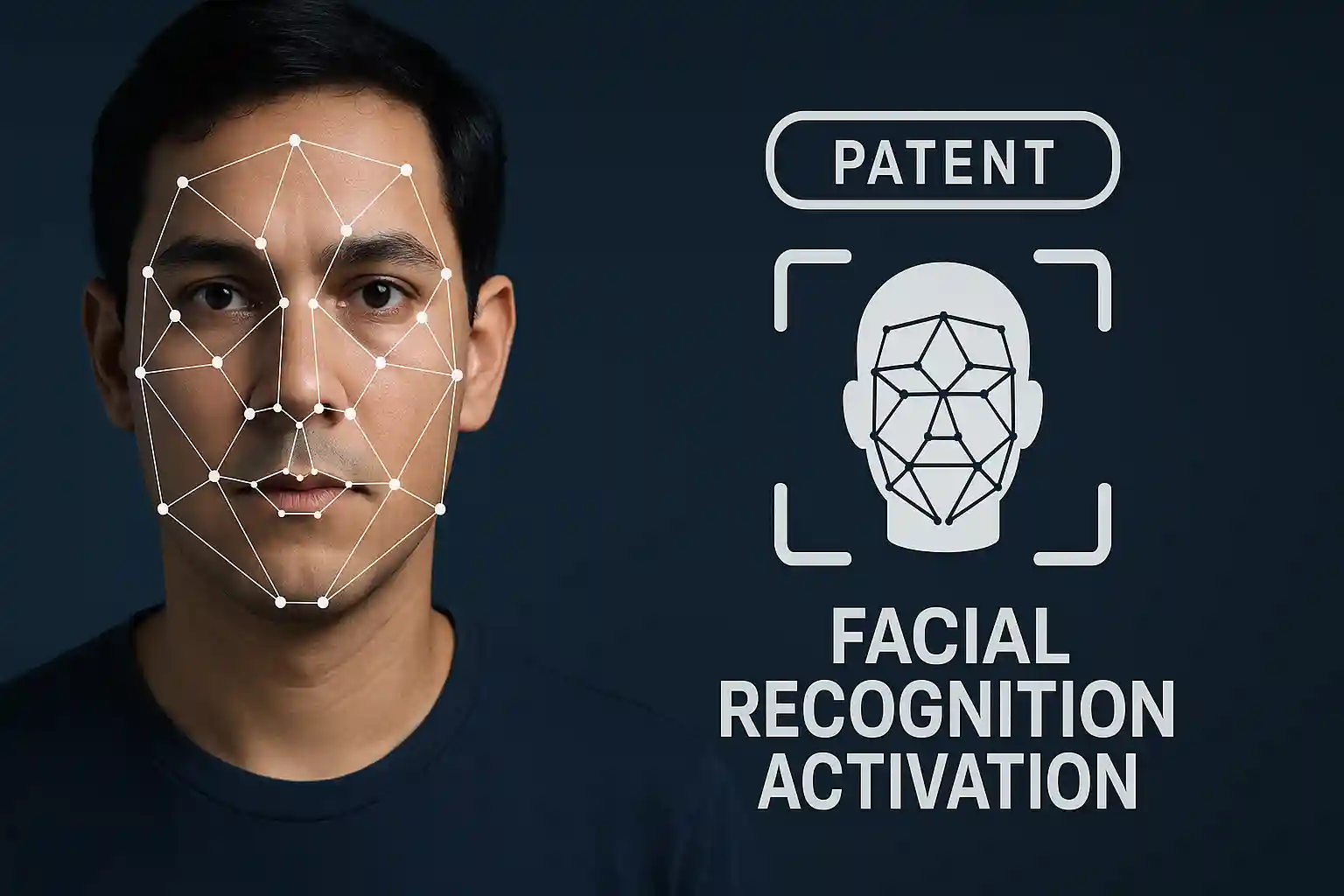
Google has taken a significant step toward creating a more intuitive and personalized interface for interacting with artificial intelligence. The company recently received a patent describing an innovative way to activate its Gemini AI assistant: by using facial recognition and facial expression analysis. This technology aims to create a truly hands-free experience, eliminating the need for voice commands (“Hey Google”) or physically pressing buttons, especially in situations where this is inconvenient.
Activation Mechanism: How Gemini Will “Read” Your Face
Visual trigger and context
The patent describes a system in which the front-facing camera of a device (whether a Pixel smartphone, tablet, or future AR/VR glasses) continuously monitors the user’s face. Gemini will be activated not only by facial recognition (as a biometric security method), but also by intent expressed through specific visual triggers.
Context-aware activation: If the device detects that the user is looking at the screen while their hands are occupied (for example, carrying heavy objects or preparing food), the system can interpret direct gaze as an activation request. Biometric gestures, such as a quick double blink, a head tilt, or even a brief squint, can also be used. This turns your facial expression into a multimodal command.
Benefits of new biometric interaction
Speed and privacy
Privacy: One of the main concerns with constantly activating AI assistants is the need for an “always-on” microphone. A visual trigger can be an effective solution, as the camera recognizes the user’s intent before turning on the microphone to listen for a voice command. Furthermore, activation can be tied to a specific owner, significantly enhancing Gemini’s security and personalization.
Hands-Free Operation: The biggest benefit is improved usability. In the car, in the kitchen, or when working with professional equipment, where physical or voice input is difficult, Gemini’s facial activation will become indispensable. This is also an important step in the development of interfaces for AR/VR devices, where gaze and gestures are the primary means of interaction.
The strategic importance of a patent
Patenting this method confirms Google’s investment in a future where interaction with artificial intelligence will be as intuitive and seamless as possible. Instead of forcing users to adapt to AI, the technology adapts to natural human behavior. This gives Google a competitive advantage over other tech giants also developing their own multimodal AI systems.
The rollout of this technology will likely begin with premium devices like the Google Pixel, which boast the latest facial recognition hardware and high-performance on-device processing. This brings us closer to an era when our devices truly understand our intentions even before we verbalize them.
Conclusions
Google’s patent for Gemini’s face activation is a significant indicator of how rapidly biometric interaction with AI is advancing. It not only enhances convenience by making Gemini hands-free, but also addresses privacy concerns by offering an alternative to always-on microphones. This is a technology that will directly impact how we interact with our devices in the near future.




0 Comments