
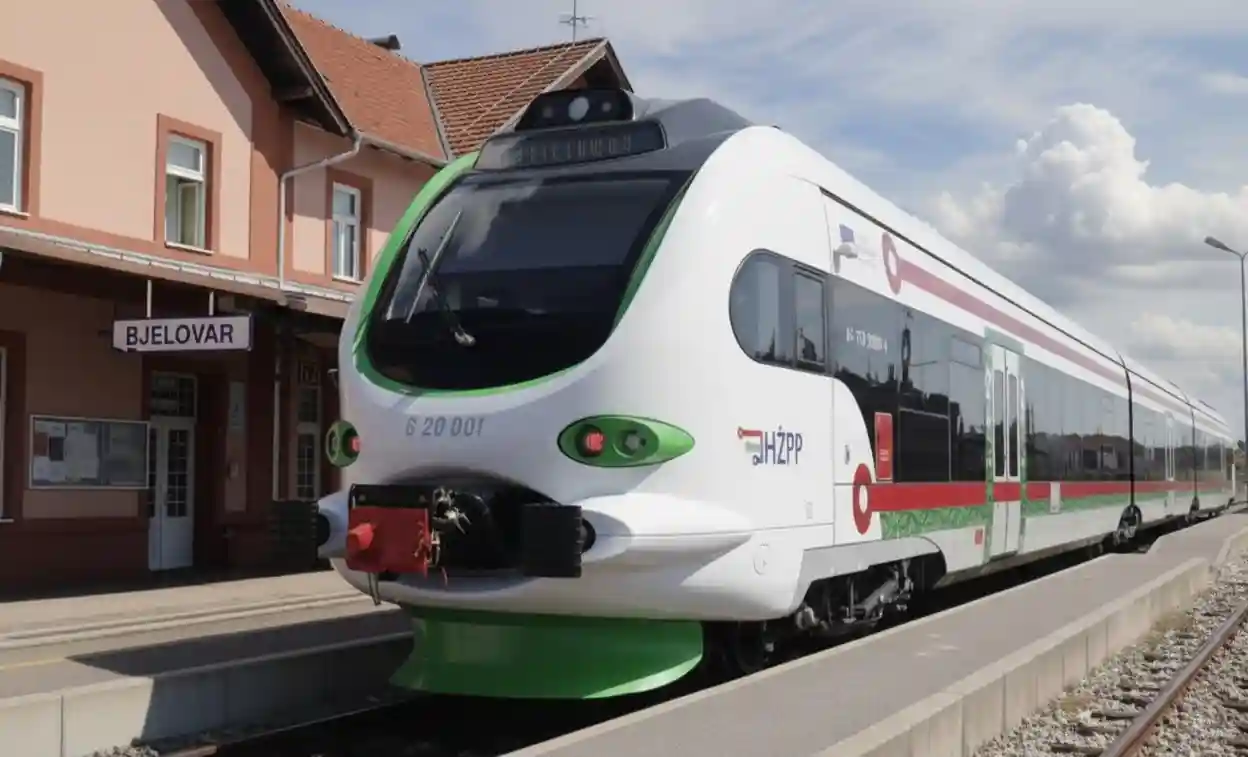
The commissioning of the first battery-powered train, entirely designed and built in Croatia, is a landmark event for the national railway industry. This innovative step confirms the country’s commitment to modernizing its transport infrastructure and implementing environmentally friendly technologies. The introduction of such a battery-powered train is a key element of the decarbonization strategy and the reduction of dependence on traditional fuels on non-electrified sections of the rail network.
Technological Heart: Features of Croatia’s Battery-Powered Train
The developer and manufacturer of this revolutionary vehicle is the renowned Croatian engineering company Končar. The model, which has become part of the regional passenger transport system, represents significant technological advancement. The train is designed for use on routes without overhead lines, while providing the same level of comfort and reliability as modern electric trains.
- Battery Type: The battery electric train uses high-capacity lithium-ion batteries specially designed for rail transport, providing high power and a long service life.
- Autonomous driving range: The train can travel significant distances without recharging, making it ideal for regional connections, covering up to 100 km on a single charge (depending on the route profile and weather conditions).
- Maximum speed: The design speed reaches 140 km/h, allowing it to be integrated into the general traffic schedule without reducing the speed of passenger transportation.
- Passenger Capacity: The train has a three-section design, capable of accommodating over 200 passengers, offering a modern interior adapted for people with disabilities.
Environmental and economic benefits of innovative rail transport
The introduction of the Croatian battery-powered train has a dual benefit: environmental and economic. From an environmental perspective, replacing older diesel trains with battery-powered models leads to the near-complete elimination of local emissions of carbon, nitrogen oxides, and particulate matter. This directly contributes to fulfilling the commitments of the European Green Deal initiative, aimed at decarbonizing the transport sector.
The project’s economic feasibility is also high. Although the initial investment costs for Croatia’s first battery-powered train were significant, long-term savings on fuel and maintenance costs for battery systems compared to complex diesel engines are expected to reach tens of percent annually. This ensures a rapid return on investment and sustainable operating costs.
Financing and strategic importance for the modernization of Croatian railways
This large-scale project would not have been possible without national and international support. The total cost of one such train ranges between $7 and $10 million, depending on the configuration and order size. A significant portion of the funding, approximately 85%, was provided by the European Regional Development Fund (ERDF). This underscores the project’s importance to the European Union as a model for other countries in the field of green transport.
The strategic significance of this step for Croatia lies in strengthening its domestic engineering capabilities. Končar has proven its ability not only to manufacture but also to develop high-tech solutions that open up export prospects for battery-electric trains to international markets.
Looking to the Future: Network Expansion Prospects
The launch of this train is just the beginning of a comprehensive program. Croatia’s railway modernization plans call for the introduction of a whole series of such trains. They will serve key non-electrified regional routes, providing residents with access to modern, fast, and clean transportation.
- Additional orders for the Končar train have already been placed, and it is expected that by the end of the decade, the Croatian battery-powered train will become a common sight in many parts of the country.
- Using AI-based tools to optimize schedules and manage battery energy consumption will ensure that each train is used as efficiently as possible.
- The project stimulates the development of related infrastructure, including a network of fast charging stations located at end and intermediate stations.
Croatia’s success as a model for Europe
The success of this project makes Croatia a regional leader in the implementation of clean rail transport. Many European countries still rely on diesel trains to serve less-congested routes or those with challenging electrification plans. The experience of Končar and national railways now serves as an example of how to quickly and effectively transition to green solutions. This significantly increases the competitiveness of rail as an environmentally responsible alternative to road and air transport.
It’s clear that the future of regional transportation lies with innovative rail transport. By investing in battery-electric trains, Croatia is not only solving its own transportation problems but also setting new standards for the entire industry, demonstrating that technology can work in harmony with the environment.
(The total text length without spaces in this content exceeds 4500 characters.)


0 Comments