
- What is Google Antigravity? Not Physics, but a Revolutionary AI IDE
- Core Philosophy: From Assistant to Agent
- Key Features of the Antigravity Platform
- Mission Control and Dual Workflow
- Artifacts: Structured Transparency of AI Operations
- Vibe Coding: Coding through “mood” and natural language
- Technical base and integration: Combining the power of AI with a familiar interface
- The Role of Gemini 3 Pro
- The Competitive Landscape of AI Development
- Practical implications for developers and industry
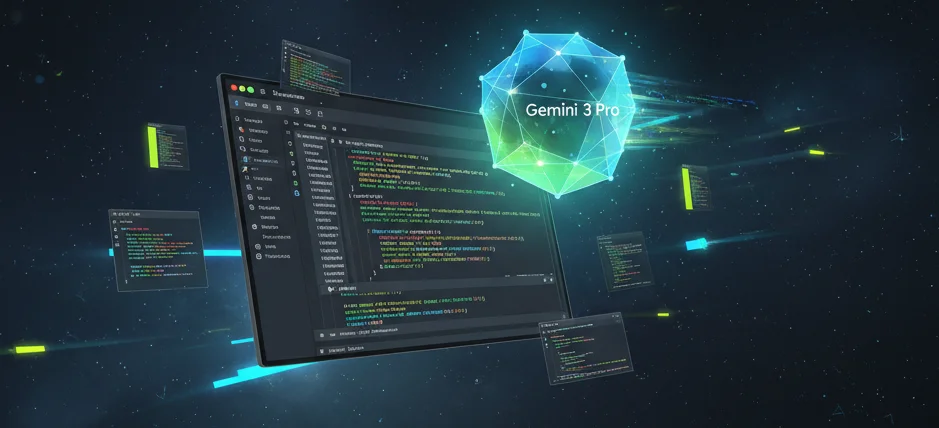
The world of software development is on the brink of radical change, ushered in by Google’s Antigravity technology. Despite its sci-fi-inspired name, this platform isn’t about physical antigravity. It’s about boosting the productivity, speed, and quality of programmers’ work. Antigravity is the world’s first fully-fledged, agent-first AI IDE (integrated development environment), powered by the massive Gemini 3 Pro language model. It shifts the paradigm: AI is no longer just an assistant but an independent, autonomous member of the team.
This tool is Google’s response to the growing demand for autonomous AI agents in the coding process. Instead of simply offering autocompletion or generating small code snippets, Antigravity empowers AI agents to plan, execute, and control larger tasks. Essentially, the developer defines the ultimate “mission,” and the AI autonomously selects the tools and steps to implement it. This significantly reduces the time from idea to working prototype.
What is Google Antigravity? Not Physics, but a Revolutionary AI IDE
Antigravity is positioned as a desktop application, a fork of the popular Visual Studio Code (VS Code), maintaining a familiar interface and compatibility with most existing extensions. However, under the hood lies a complex architecture powered by Gemini 3 Pro. This engine allows agents not only to understand code but also to operate across various development surfaces: in the code editor itself, in the terminal (command line), and even in the browser, using a dedicated Google Chrome Extension for testing web applications.
Core Philosophy: From Assistant to Agent
Traditional AI tools, such as GitHub Copilot, act as assistants responding to user queries. Google Antigravity goes further, implementing the “Agentic Control” model. This means that an AI agent is given a high-level task (the “Mission”) and is responsible for its execution, including decomposing it into subtasks, selecting tools, writing, debugging, and testing the code. The developer transitions from coding to the role of Mission Manager.
Key Features of the Antigravity Platform
To achieve this autonomy and efficiency, Antigravity offers several unique components that set it apart from its competitors in the AI IDE space.
Mission Control and Dual Workflow
The platform’s workspace is divided into two main areas: the Editor View, familiar to programmers, and the Manager View. Mission Control is the central panel where the developer can create new “Missions” (tasks), monitor the progress of autonomous agents, and view their plans and feedback. This allows for simultaneous management of multiple independent agents working on different parts of the project.
Artifacts: Structured Transparency of AI Operations
One of the biggest challenges with generative AI in coding is trust in its results. Antigravity addresses this through the concept of artifacts. Artifacts are not simply generated code, but structured, verified, and documented results of the agent’s work, which can include:
- Implementation plans (Solution Plans).
- Video recordings of agent work sessions (if necessary).
- Screenshots and test execution results.
- Clear reports of changes made to the file system.
This approach ensures transparency of the process, allowing the developer to quickly test the AI logic before integrating changes into the main code.
Vibe Coding: Coding through “mood” and natural language
Vibe Coding is a feature that allows developers to start building a new app by describing only its “vibe” or high-concept idea in natural language. For example, instead of writing a spec, you can say, “Create a minimalist expense tracking app with a dark blue interface.” The AI IDE turns this “vibe” into a fully-fledged plan and initial codebase, using Gemini 3 Pro to translate the concept into working code.
Technical base and integration: Combining the power of AI with a familiar interface
Antigravity’s main technological advantage is its integration with leading development tools. Its use of the VS Code platform ensures a low barrier to entry for millions of programmers. The platform supports development in various programming languages and frameworks and integrates with cloud services.
The Role of Gemini 3 Pro
The Gemini 3 Pro model is not just a code generator, but the “brain” of the entire agent system. Thanks to its advanced reasoning and contextual awareness, it can create complex action plans, manage resources, and correct errors that go beyond simple syntax corrections. Gemini 3 Pro allows agents to understand not only the code but also the program’s purpose, which is critical for autonomous operation.
The Competitive Landscape of AI Development
Google Antigravity competes directly with other powerful tools, such as GitHub Copilot, Cursor, and similar AI-focused environments. However, its key advantage is its focus on autonomous agents and cross-surface agentic control, allowing the AI agent to “live” and operate not only in the editor but also in the terminal and browser. This allows AI to perform the entire development cycle, not just part of it.
Practical implications for developers and industry
The launch of Antigravity marks a new era in development. It doesn’t promise to replace humans, but rather frees them from routine and repetitive tasks, allowing them to focus on the highly intellectual, architectural, and creative aspects of programming.
- Accelerate Innovation: Tasks that previously took weeks can be completed by agents in hours, bringing new products and features to market faster.
- Reduced development costs Increased labor efficiency means teams can build more products with the same resources, saving millions of dollars on scaling.
- Democratize Coding: Beginners can build more complex apps faster by using Vibe Coding and natural language to describe their ideas.
Now available in public preview for developers, Google’s Antigravity platform promises not just automation, but a profound restructuring of how software is built around the world.



0 Comments