
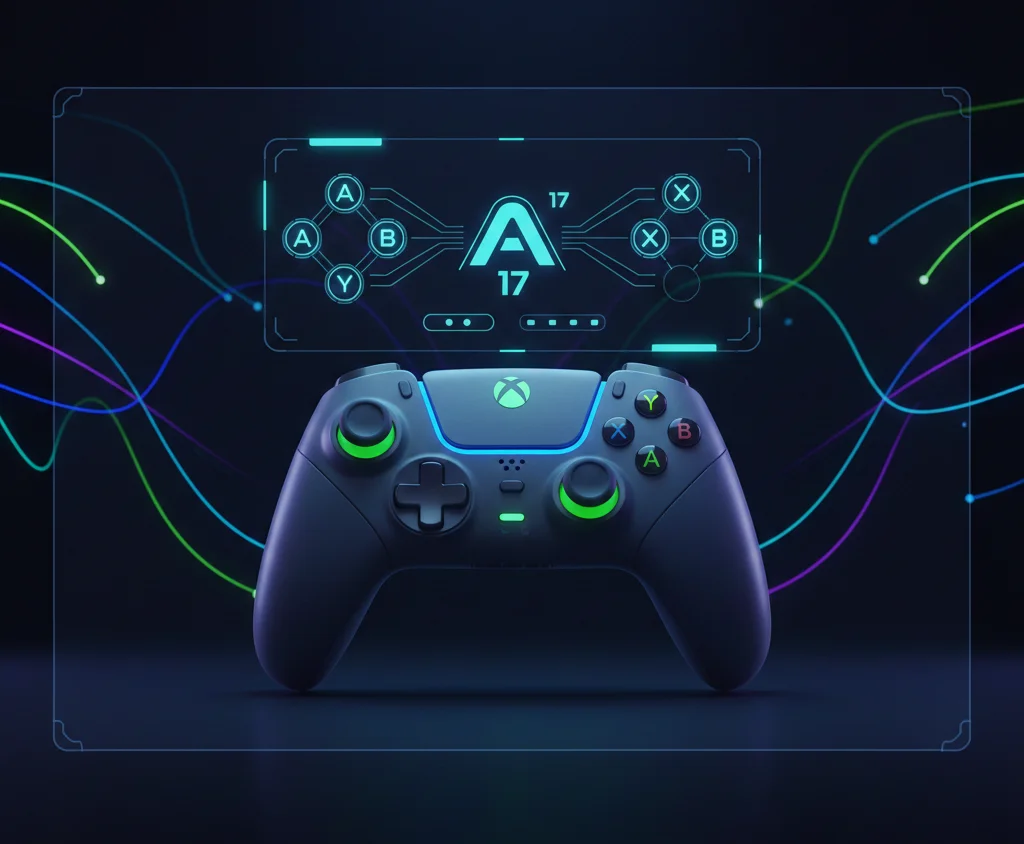
- Why is native gamepad button remapping a breakthrough?
- Technical implementation: New API for input unification
- Direct benefits for mobile gaming
- 1. Minimizing Input Latency
- 2. Perfect compatibility with popular models
- 3. Making it easier for emulators and retro games
- How does this affect game developers?
- Coming soon: Profiles and customization
- Conclusion: The Future of Mobile Gaming on Android
Learn about Android 17’s revolutionary feature – native gamepad button remapping. Improved controller compatibility, lower latency, and the benefits of mobile gaming.
Android 17: Revolutionizing Mobile Gaming with Native Gamepad Support
Android Canary builds always represent a window into the future of Google’s mobile operating system. Recent discoveries in the latest version’s code have confirmed the expectations of millions of gamers: Android 17 will feature native gamepad support with expanded capabilities, including button and stick remapping. This innovation promises to radically change the mobile gaming experience, making it more convenient and professional.
Why is native gamepad button remapping a breakthrough?
Until now, to fully customize gamepad buttons on Android or adapt the controller to games with limited support, users often had to rely on third-party software. These mapping apps had significant drawbacks: they often required complex settings, sometimes even root access, and, most importantly, they introduced a noticeable latency between button presses and on-screen actions.
- A native feature built into the Android OS itself will bypass these difficulties.
- It will allow users to quickly and easily create custom mapping profiles for any connected controller, whether it’s a PlayStation DualSense or an Xbox Series X controller.
- The keyword “Android 17 native controller support” means that the system will correctly recognize and process input, minimizing delays.
Technical implementation: New API for input unification
A breakthrough will likely come from an update or complete redesign of the Android Input System (A.I.S.). Sources suggest that Google is implementing a new unified API (Application Programming Interface), which will allow game developers to integrate gamepad support once, rather than worrying about compatibility with dozens of different controller models on the market.
This API will provide a standardized way to interpret signals from the DualSense, Xbox Controller, and other accessories, converting them into system commands. This will simplify the lives of developers, allowing them to release games with high-quality controller support faster. Furthermore, native gamepad button remapping will allow users to adapt games with a fixed layout.
Direct benefits for mobile gaming
OS-level integration offers a number of benefits that will directly impact the quality of gameplay and player comfort.
1. Minimizing Input Latency
The biggest problem with third-party cards is latency. Native support handles controller input directly, without additional software layers. This is critical for competitive games (such as shooters and fighting games).
2. Perfect compatibility with popular models
Android 17 will likely include built-in profiles for the most popular controllers: DualShock 4, PlayStation 5 DualSense, **Xbox Series X
3. Making it easier for emulators and retro games
Emulators of older consoles often require very precise input settings. With a new Android 17 feature, a gamepad becomes the perfect tool for retro gaming, allowing you to flexibly adjust the layout to classic button layouts.
How does this affect game developers?
The introduction of a standardized Input API is a significant step forward for the gaming industry. It lowers the barrier to entry for studios creating Android games, allowing them to be confident that their product will work correctly with most controllers on the market.
- Less testing time: Developers don’t need to spend resources testing compatibility with a large number of peripherals.
- Better user experience: Standardized input means gamers are less likely to encounter controller-related bugs.
- Incentive for AAA Projects High-quality native support makes Android a more attractive platform for porting high-budget games where controllers are a necessity.
Coming soon: Profiles and customization
The functionality is expected to go beyond simple mapping. Based on information from Android Canary, the gamepad feature may include:
- Layout Profiles: Ability to save custom button settings for different games.
- Stock Calibration: Native ability to calibrate analog stocks to correct drift and improve accuracy.
- Vibration/Haptics Settings: Control the intensity and type of vibration response.
Conclusion: The Future of Mobile Gaming on Android
Integrating advanced gamepad button customization into the Android core is a clear signal from Google that mobile gaming remains a priority. With this feature, Android 17 will make controller gaming as seamless and enjoyable as on dedicated gaming consoles. This will significantly improve Android’s competitiveness as a gaming platform against other mobile operating systems.
This new feature, brought to you by the Canary collection, sets the stage for the next generation of mobile games, where high-quality gameplay with a physical controller will be the standard, not the exception.



0 Comments