
Analysis of the Las Vegas Incident and Technical Reasons for the Recall
Zoox, an autonomous vehicle subsidiary owned by technology giant Amazon, has issued an official and voluntary software recall for its self-driving fleet. This decision affects 105 autonomous vehicles operating in testing and commercial deployment areas. The comprehensive safety analysis was triggered by an incident in Las Vegas, where a deployment vehicle drove into a thick cloud of smoke generated by an active fire, subsequently blocking the path of first responders.
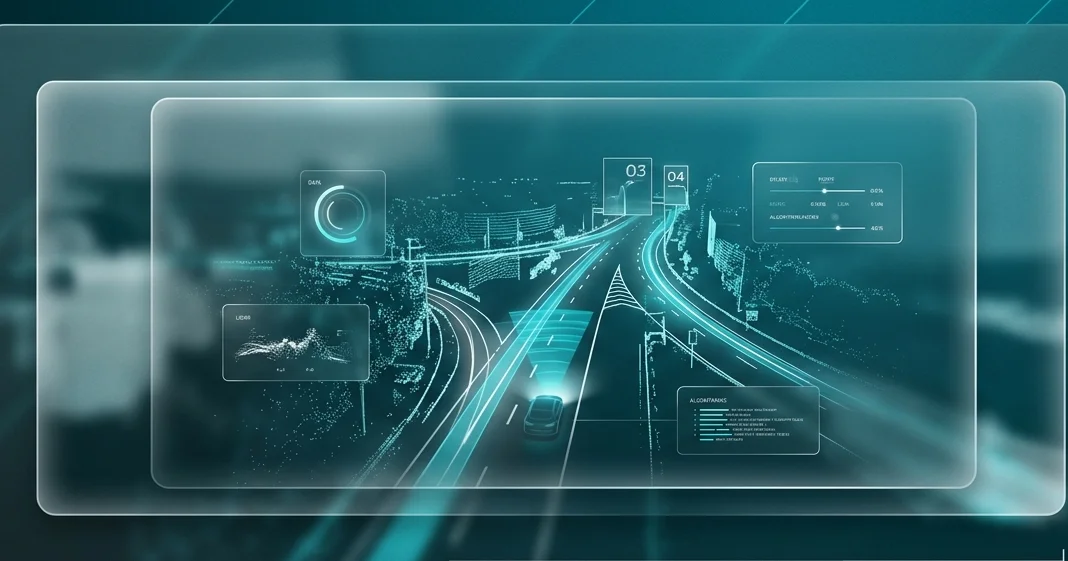
While operating in autonomous mode, the vehicle’s onboard sensor suite faced unprecedented environmental variables. The perception systems, driven by lidar, radar, and optical camera technologies, interpreted the dense smoke plume as a solid physical obstacle or a critical road anomaly. Rather than executing a safe turnaround maneuver or proceeding along a clear path, the driving software initiated an emergency stop. The robotaxi came to a complete halt in the middle of the roadway, obstructing fire engines and other emergency vehicles responding to the scene.
Challenges in Optical AI Recognition Under Non-Standard Environmental Conditions
This case highlights a fundamental vulnerability in modern autonomous driving stacks that heavily rely on machine learning and computer vision frameworks. Most AI perception algorithms are trained using standardized driving datasets, including pedestrians, surrounding vehicles, traffic signs, and lane markings. However, extreme environmental anomalies such as heavy fog, dust storms, or dense smoke from fires produce significant optical noise that can disorient the vehicle’s computing units.
When lidar laser pulses hit airborne particulates like ash and soot, they reflect back with high density. To the perception software, this feedback resembles a solid object situated directly in front of the vehicle’s bumper. Because these safety algorithms prioritize passenger protection and collision avoidance above all, the system selects the most conservative course of action: a full stop. The issue arises when such a stoppage occurs within an active emergency response zone, introducing secondary risks to public safety.
Regulatory Response and Technical Details of the Zoox Software Update
The National Highway Traffic Safety Administration (NHTSA) was promptly notified of the operational event. Given that autonomous technologies face rigorous oversight from regulatory bodies, Zoox took proactive steps by launching an official safety recall campaign. It is important to emphasize that this recall does not necessitate physical vehicle drop-offs at service centers. Instead, it is executed via an Over-the-Air (OTA) software update deployed directly to the fleet.
Within this technical update, Zoox engineers have refined the sensor data filtration algorithms. The new firmware enables the vehicle’s computer architecture to better differentiate between dense airborne particulates and actual physical hazards. Additionally, the updated control stack includes explicit operational instructions for handling active emergency signals. If the robotaxi detects emergency strobe lights or sirens combined with localized low visibility, it will attempt to pull over and clear the lane rather than halting in place.
Future Outlook and Amazon’s Scaled Autonomous Fleet Operations
Zoox continues to move forward with public road testing of its custom passenger shuttles and retrofitted vehicles across multiple US markets, including California and Nevada. Despite this technical obstacle, project leadership emphasizes that encountering uncommon edge cases is an essential element of mature autonomous training pipelines. Real-world traffic conditions present edge-case scenarios that remain difficult to recreate perfectly within virtual validation simulators.
Amazon’s long-term capital commitment to this domain remains stable, as autonomous driving frameworks are targeted for integration into both passenger transit networks and automated middle-mile logistics systems. The current software revision for 105 robotaxis marks an iterative progression toward more adaptive algorithms capable of safely interacting with fire and police personnel during critical emergency operations.


0 Comments