
Mobile application upgrade and enhanced media management control
Google is developing a major update for its popular cloud storage service, significantly expanding the tools available for managing multimedia compilations. According to code analysis of the latest application builds, the automated video creation feature is turning into a fully functional mobile editor. Users will be able to manually adjust the final output, which was previously entirely generated by artificial intelligence algorithms.
This decision reflects a broader trend across mobile platforms, where automation is coupled with deep manual customization options. Instead of static viewing of archived media, users are receiving a toolkit that mirrors the capabilities of dedicated short-form video editing software.
New timeline tools and advanced audio handling
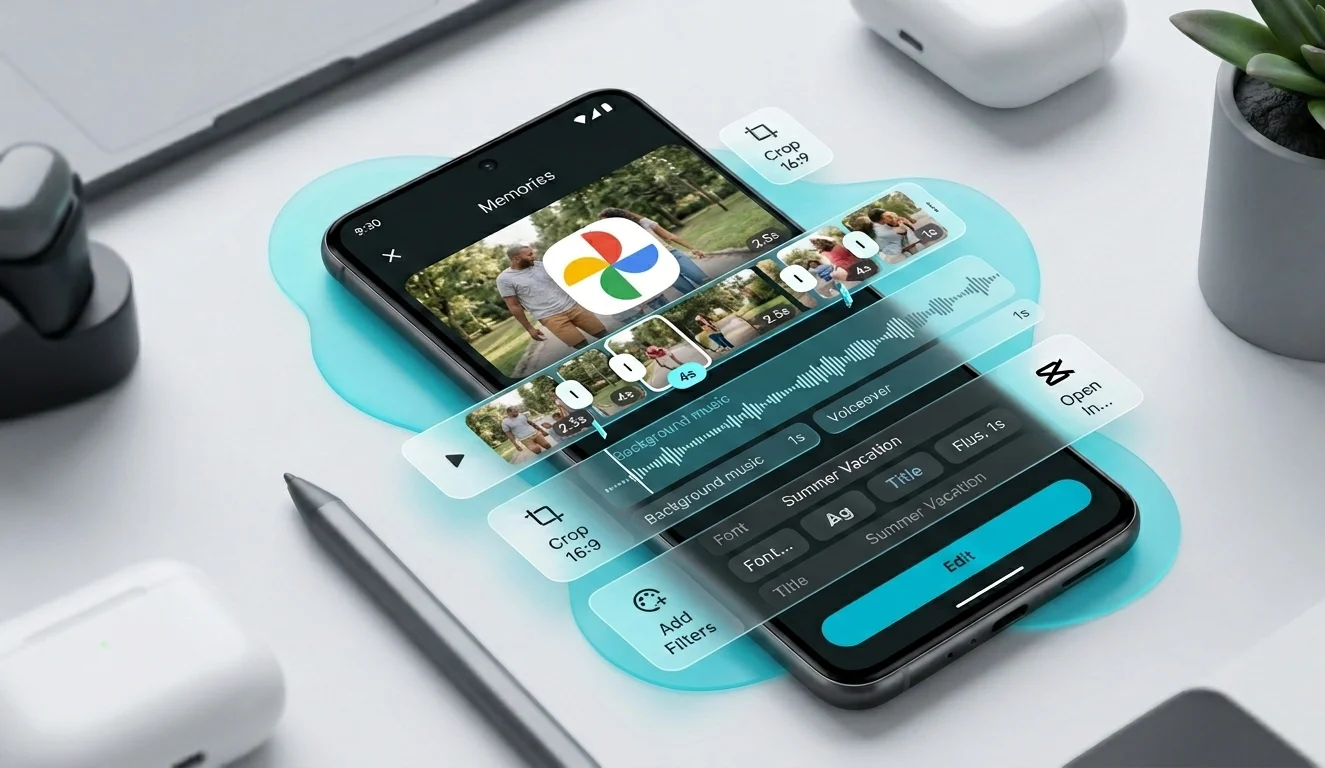
The primary modifications affect the internal interface that appears when tapping the edit button on an automatically generated video. Developers have implemented a multi-layered timeline where each compilation element is displayed as a separate segment. This fixes the issue where the algorithm allocated too much time to secondary frames or cropped critical moments.
The updated version introduces several technical capabilities:
- Manual frame duration control – the display time for each photo or video clip can now be adjusted with sub-second precision using simple on-screen sliders.
- Audio waveform visualization – an integrated system for displaying sound waves allows users to see the structure of background music or voiceovers, simplifying transitions between slides.
- Text overlay integration – users can create their own titles, text plates, and captions over the video sequence with a selection of basic fonts and alignment parameters.
- Aspect ratio cropping options – new tools have been added to quickly adapt horizontal images to the proportions of modern mobile device screens.
Integration with external video editing platforms
An interesting feature of the upcoming release is its openness to third-party software. The application code contains direct references to export mechanisms that transfer uncompleted projects to external mobile video editors, specifically the popular CapCut application. If the built-in Google Photos features are insufficient for a creative vision, users can export the entire timeline with a single tap, maintaining the sequence of frames in a more advanced application.
This method prevents cluttering the cloud storage interface with overly complex special effects while maintaining flexibility for users who professionally create content for social platforms.
Highlight Video enhancements and technical specifications
Changes will also affect the core highlight movie creation algorithm. Users will be able to apply color filters to specific media files on the timeline rather than the entire completed video clip. The cropping mechanism will receive distinct presets that allow flexible management of how wide-format media is adjusted to mobile display standards.
Technically, this functionality is already present within the application code of build version 7.78.0.920664585, though most user interface elements remain locked behind server-side flags. This is a standard development practice that allows checking component stability before a global product rollout.
Expected release timeline
The rollout of the updated editor will be gradual. Owners of Google Pixel smartphones and subscribers to Google One cloud storage tiers will be among the first to receive access to the new features. Broad deployment of the update for Android and iOS operating systems is scheduled for the second half of this year. This timeline allows the company to collect user feedback and optimize rendering speeds across mid-range mobile processors.




0 Comments