
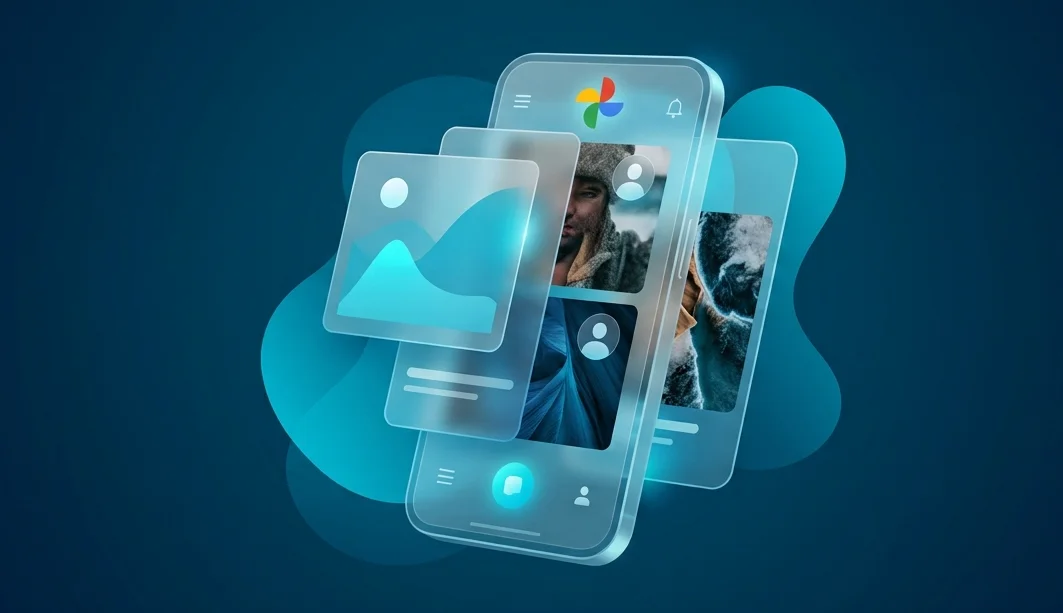
A New Stage in Visual Artificial Intelligence
Google has officially announced a major update to its proprietary Gemini application. The main innovation is the expansion of Personal Intelligence technology, which is now integrated directly into image creation tools. This step is designed to simplify the process of generating graphic content, making it more individual and contextual. Unlike standard neural networks that create images solely based on text descriptions, the updated system takes into account the user’s personal ecosystem with their consent.
The integration allows algorithms to understand specific visual preferences, frequent shooting subjects, and the author’s general style. This minimizes the need to write long prompts and detailed technical specifications to get the desired shot. By default, the feature is activated for users who have connected their accounts to related Google services, in particular, cloud media storage. At the initial stage of deployment, the update becomes available free of charge to the entire audience in the United States of America.
Technological Foundation and the Nano Banana 2 Model
At the core of the new functionality is the Nano Banana 2 mobile neural network. This model is optimized for local and cloud execution of tasks, which ensures high speed of request processing without overloading the hardware of smartphones. The main feature of Nano Banana 2 is its ability to conduct deep semantic analysis of images available in the user’s database without violating data privacy.
The model highlights key markers: color palettes that most often appear in pictures, types of lighting, favorite angles, and even item textures. When creating a new visual asset, the AI automatically applies these markers as hidden layers of stylization. Thus, the generated content looks not like a random picture from the Internet, but like a natural extension of the user’s personal gallery.
Deep Integration with Google Photos Service
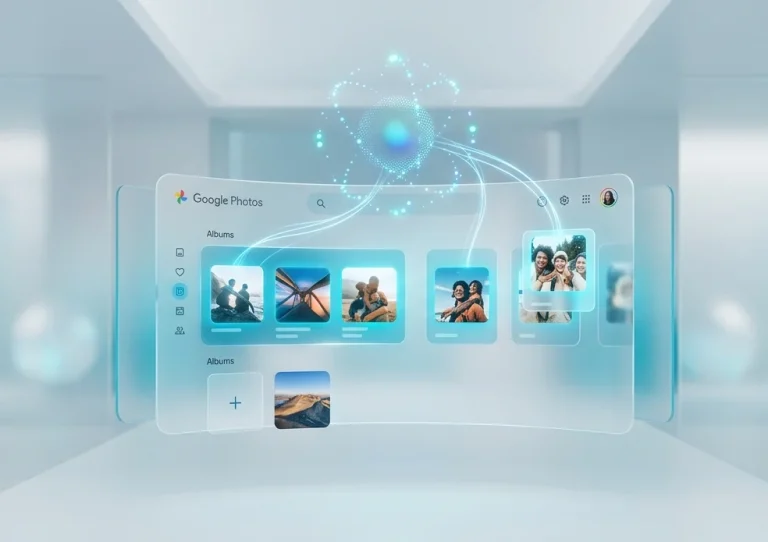
Google Photos has become a key source of context for personalized artificial intelligence. The system received the ability to safely scan the media library to form a local profile of visual preferences. The user no longer needs to upload reference photos or try to describe in words the specific details of their everyday surroundings.
For example, if a person often takes pictures of their desk, a pet, or specific cityscapes, Gemini will take these objects into account when processing abstract requests. A request like ‘workspace in the evening’ will automatically generate an interior as close as possible to the user’s real office, taking into account the specifics of lighting and hardware placement. The user retains full control over this process: in the privacy settings, you can clearly specify which albums or folders the neural network is allowed to analyze and which should be completely excluded from the training process.
Security Rules and Age Restrictions
The introduction of personalized artificial intelligence technologies requires strict moderation tools and access control. Google has set clear age limits for using the new tools in the Gemini app. Access to the full range of generation functions based on personal media files is open exclusively to adult users who have reached the age of 18. This is due to the need to protect personal data and prevent accidental processing of sensitive content of teenagers.
For users aged 13 to 17, a limited version of the tool is available. It allows using the basic capabilities of the Nano Banana 2 model to create drawings based on text descriptions, but the function of direct synchronization with the private Google Photos gallery is completely blocked for them. In addition, all generated images undergo automatic filtering using built-in security algorithms that block the creation of inappropriate content, images of real public figures without their consent, and copyrighted trademarks.
Market Impact and Update Availability
The decision to make the feature free for the US market is a strategic move by Google in the competitive struggle with other tech giants that offer paid generation tools by subscription. Providing free access to millions of active users will allow the company to collect a huge amount of anonymized analytical data for further improvement of mobile AI models.
Market experts note that this approach significantly lowers the entry barrier for ordinary users who previously did not use neural networks due to the difficulty of forming precise requests. It is expected that after the completion of the test period in the US region and the optimization of algorithm interaction with cloud infrastructure, the availability geography of Personal Intelligence technology will be expanded to European and Asian countries in the coming months.
Privacy Setup Instructions
For those who plan to use the new features, developers recommend preparing their account in advance. Open the settings menu in the Gemini app, go to the Personal Intelligence data management section, and check the list of allowed sources. Users can independently create special folders in the cloud that will serve as the only safe source of inspiration for artificial intelligence, ensuring that personal or family photos remain untouched.


0 Comments