
- MAI-Image-1: Key benefits of the new model
- Integration into the Copilot and Microsoft Designer ecosystem
- Copilot та Bing Image Creator
- Microsoft Designer: More than just generation
- AI Art and Competition in the Generative Model Market
- DALL-E 3 vs. Microsoft AI: Who Will Win?
- The Art of Prompting: How to Get the Best Results
- Potential for creativity and business
- The Future of AI Generation: What’s Next?
A significant event has occurred in the world of generative AI: tech giant Microsoft unveiled its first fully in-house AI image generator, the MAI-Image-1 model. This tool is positioned as a direct competitor to market leaders like Midjourney and Stability AI and represents the company’s strategic move to reduce its reliance on partner technologies, particularly OpenAI. The company’s claims are impressive: its cutting-edge neural network creates images with such a level of detail that they are difficult to distinguish from real photographs, demonstrating a truly photorealistic AI generator.
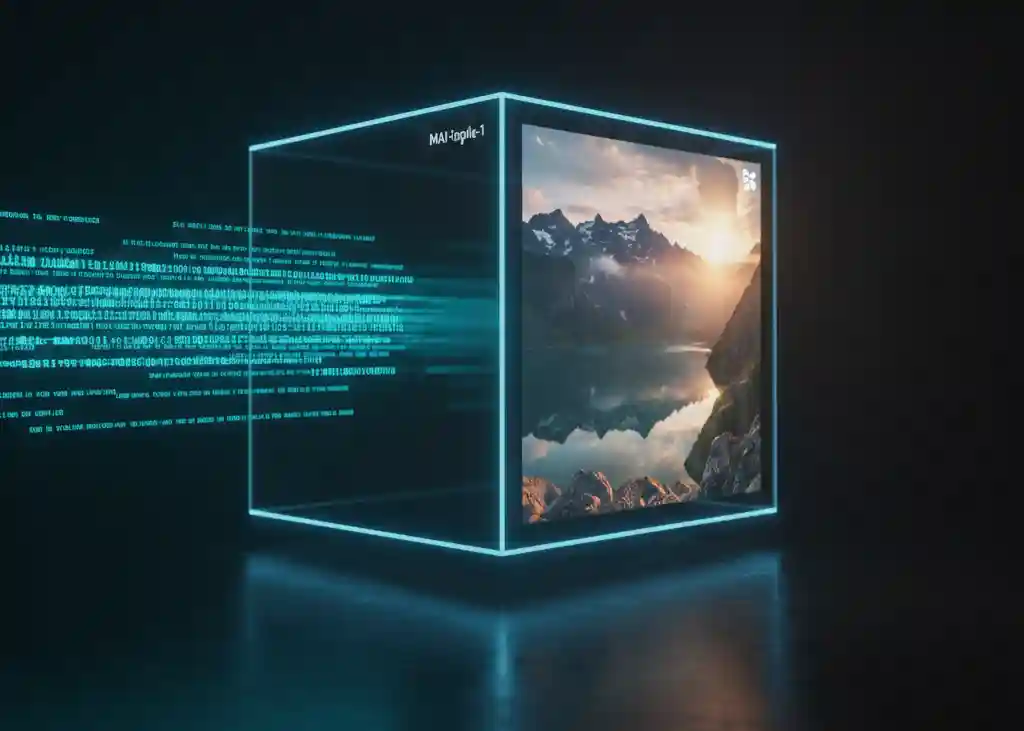
MAI-Image-1: Key benefits of the new model
- Unparalleled photorealism: The model was specifically trained to reproduce complex visual effects such as natural lighting, reflections, subtle textures, and detailed landscapes. This allows for the creation of AI images that are more realistic than ever before.
- High generation speed: According to the developers, the MAI-Image-1 works significantly faster than “larger and slower” competing models, which is critical for professional and everyday work.
- Independence and optimization: Creating our own generator allows Microsoft to deeply integrate it into the software ecosystem, providing better optimization and control over functionality.
These characteristics allowed MAI-Image-1 to quickly enter the top 10 of LMArena, an independent platform for comparing and evaluating the quality of AI visual models. This recognition demonstrates Microsoft’s commitment to AI art.
Integration into the Copilot and Microsoft Designer ecosystem
For millions of users, the most important question is how to create an image in Copilot and where the new technology will be available. Microsoft plans to integrate MAI-Image-1 into key products as quickly as possible, thereby making the powerful AI image generator widely available. Currently, image generation is performed using Designer, built into Copilot and Bing Image Creator, and uses the DALL-E 3 model. However, MAI-Image-1 is expected to replace or supplement this functionality.
Copilot та Bing Image Creator
Users can use Microsoft Copilot Designer to create unique images simply by entering text descriptions. Copilot works as an intelligent assistant in Word, PowerPoint, and other Microsoft 365 applications. For example, in Word, you can ask Copilot to “Create an image of a modern office with colorful furniture,” and it will generate a visualization. Access to the tool is free with a Microsoft account, which unlocks the ability to create a free AI image generator for personal use.
Microsoft Designer: More than just generation
The Microsoft Designer platform, a graphics editor with AI capabilities, will be the primary interface for working with the MAI-Image-1 neural network. Designer not only allows you to create images from text (text-to-image), but also offers built-in tools for further editing, a significant advantage:
- Crop and resize an image.
- Color and filter correction.
- Removing background and individual elements.
This comprehensive approach makes the Microsoft Designer AI generator a complete tool for marketers and designers looking to quickly transform ideas into finished visual content.
AI Art and Competition in the Generative Model Market
Before introducing its own model, Microsoft actively used OpenAI’s DALL-E 3, known for its ability to generate contextually accurate and detailed images. The introduction of MAI-Image-1 signals a new era of competition. The company is striving for autonomy, as reliance on external partners can limit the speed of innovation and the flexibility of integration.
DALL-E 3 vs. Microsoft AI: Who Will Win?
DALL-E 3 vs. Microsoft AI – this battle will be key in the coming months. DALL-E 3 has already proven itself thanks to its exceptional accuracy in understanding complex, multi-component queries. Microsoft claims that its new Microsoft Image Generator outperforms competitors in speed and photorealism. For the end user, this means only one thing: further reduction in service prices and an increase in the overall quality of AI images.
The Art of Prompting: How to Get the Best Results
Whether you use MAI-Image-1 or other models, the quality of the final image depends on your text query or prompt. To get the most out of text-based image generation, follow these guidelines:
- Be as detailed as possible: Instead of “cat,” write “Scottish Fold cat sitting on a window in soft sunlight, high-resolution photo.”
- Specify style: Use keywords like “digital art,” “watercolor,” “neon punk,” “photorealistic,” or “cinematic quality.”
- Define atmosphere and lighting: Add details about emotion, weather conditions, time of day, or type of lighting (e.g., “cool light,” “golden hour”).
Potential for creativity and business
The introduction of powerful tools like MAI-Image-1 democratizes the process of visual content creation. This allows small businesses and individual creators to generate high-quality graphics for social media, presentations, or advertising materials without spending thousands of dollars on stock images or design services. Estimates suggest that the cost of creating a single unique image can be tens, if not hundreds, of times less than purchasing a stock photo license. This represents a true breakthrough in accessible AI art from Microsoft.
The Future of AI Generation: What’s Next?
The launch of its model is only the first step in Microsoft’s long-term strategy. While the model focuses on static images, the development of generative technologies will inevitably lead to improvements in AI video. The technological race between major companies, where the image quality of MAI-Image-1 already sets a new high standard, guarantees that we will see even more impressive and faster AI tools in the near future. Users can expect additional features, such as the generation of animated magnifiers and high-quality 3D models. This confirms that the era when AI creates images at a level comparable to a professional photographer has already arrived.
MAI-Image-1 is more than just another AI image generator. It’s a testament to Microsoft’s technological independence, a new standard for photorealistic quality, and a powerful tool that will soon become an integral part of the workflows of millions of people worldwide thanks to its integration with Copilot and Bing Image Creator.


0 Comments