
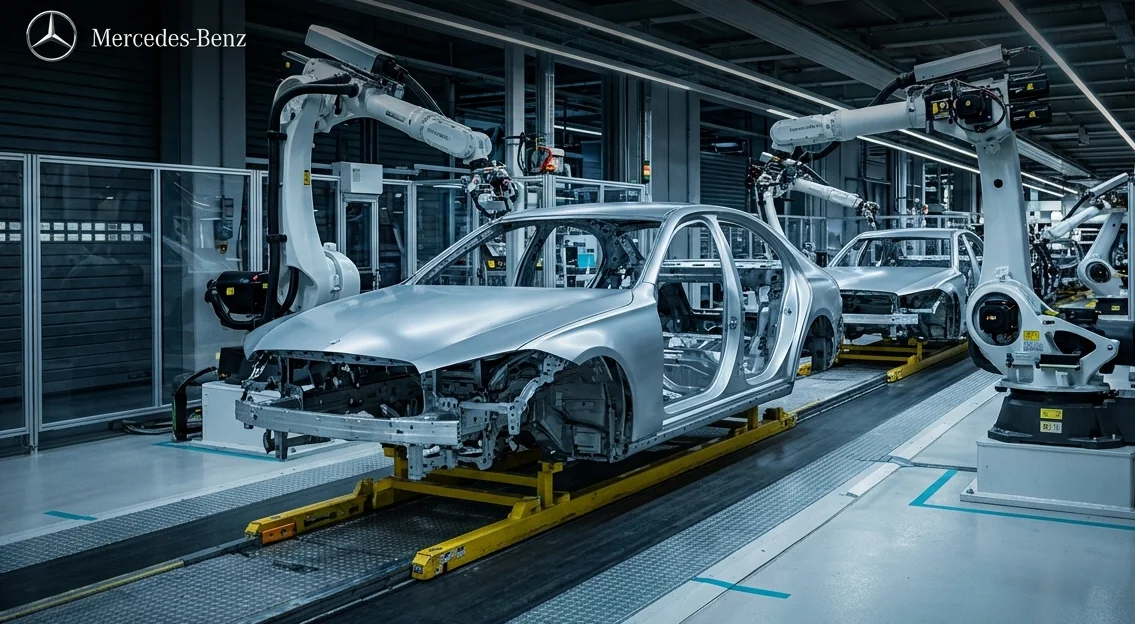
Systemic Pressure on German Manufacturing Facilities
German automotive giant Mercedes-Benz is facing the necessity of a radical revision of its European production footprint. Company management has issued official warnings to works councils and trade unions regarding the potential closure of a key manufacturing plant in Germany and the relocation of assembly lines to Eastern Europe. The primary catalysts for this decision include surging operational expenses, high industrial electricity tariffs, and intense competition from Chinese vehicle manufacturers across key global markets.
Industry analysts emphasize that the current situation is not an isolated event, but rather reflects a deep structural crisis within the entire German automotive sector. To preserve operating margins while transitioning to next-generation electric vehicle platforms, the corporation is compelled to seek multi-billion-dollar fixed-cost reductions. If trade unions refuse to adjust current labor agreements, capacity relocation will become an inevitable step in the coming years.
Drivers of Restructuring and Key Risk Factors
The core driver behind this optimization strategy is the substantial cost gap in vehicle assembly between domestic German facilities and plants in neighboring countries. The average hourly labor rate in Germany’s industrial sector remains among the highest globally, significantly eroding the competitiveness of both mass-market and premium segment vehicles.
- High labor costs – Hourly compensation rates in Germany far exceed those in Poland or Hungary.
- Energy price volatility – Industrial electricity costs have risen noticeably following European energy market restructuring, inflating body stamping and welding expenses.
- Weakening Asian demand – Declining sales volumes for flagship premium models in China have reduced a traditional source of high profit margins.
- Capital for EA platforms – Substantial investments required for developing new electric architectures necessitate freeing up capital from operations.
Comparative Analysis of Manufacturing Conditions
To understand the underlying economic rationale for shifting production lines, it is essential to evaluate the key performance indicators of German facilities against Eastern European manufacturing hubs.
Alternative Locations for Assembly Relocation
Primary target locations for potential capacity relocation include existing and expanding manufacturing sites in Poland and Hungary. Specifically, the facility in Kecskemet, Hungary, has consistently demonstrated high operational efficiency in producing compact and mid-size vehicles. Expanding this site would enable the automaker to maintain stringent quality standards while drastically lowering per-unit production costs.
In Poland, management is evaluating options to scale up the Jawor engine and battery manufacturing plant, transforming it into a full-scale assembly complex for commercial electric vans. This strategic step would streamline supply chains and reduce logistics overhead for critical powertrain components.
Conflict with IG Metall Union and Works Councils
The executive statements triggered an immediate pushback from the influential IG Metall trade union and factory employee representatives. Union leaders demand firm employment guarantees and firmly reject proposals aimed at extending weekly working hours without proportional pay increases.
- Organizing warning strikes across primary manufacturing hubs in Stuttgart and Sindelfingen.
- Demanding long-term allocation commitments for future electric vehicle production on German soil.
- Proposing alternative cost-saving plans focused on reducing corporate executive management overhead.
Potential Scenarios and Industry Impact
At present, both parties remain locked in intensive negotiations. If an agreement to reduce labor-related operational expenses by 15-20% cannot be reached, the Mercedes-Benz Board of Management may approve a structured plan to phase out vehicle assembly in Germany between 2026 and 2028. Such a decision would mark a historic shift in the European automotive landscape.



0 Comments