
- New Development Stage of Apple Smart Glasses and Associated Challenges
- Cupertino’s Engineering Solutions for Privacy Protection
- The Role of Visual Intelligence and Artificial Intelligence Systems
- Regulatory Barriers in the European Union and Global Markets
- Market Release Outlook and Future of Project N50
New Development Stage of Apple Smart Glasses and Associated Challenges
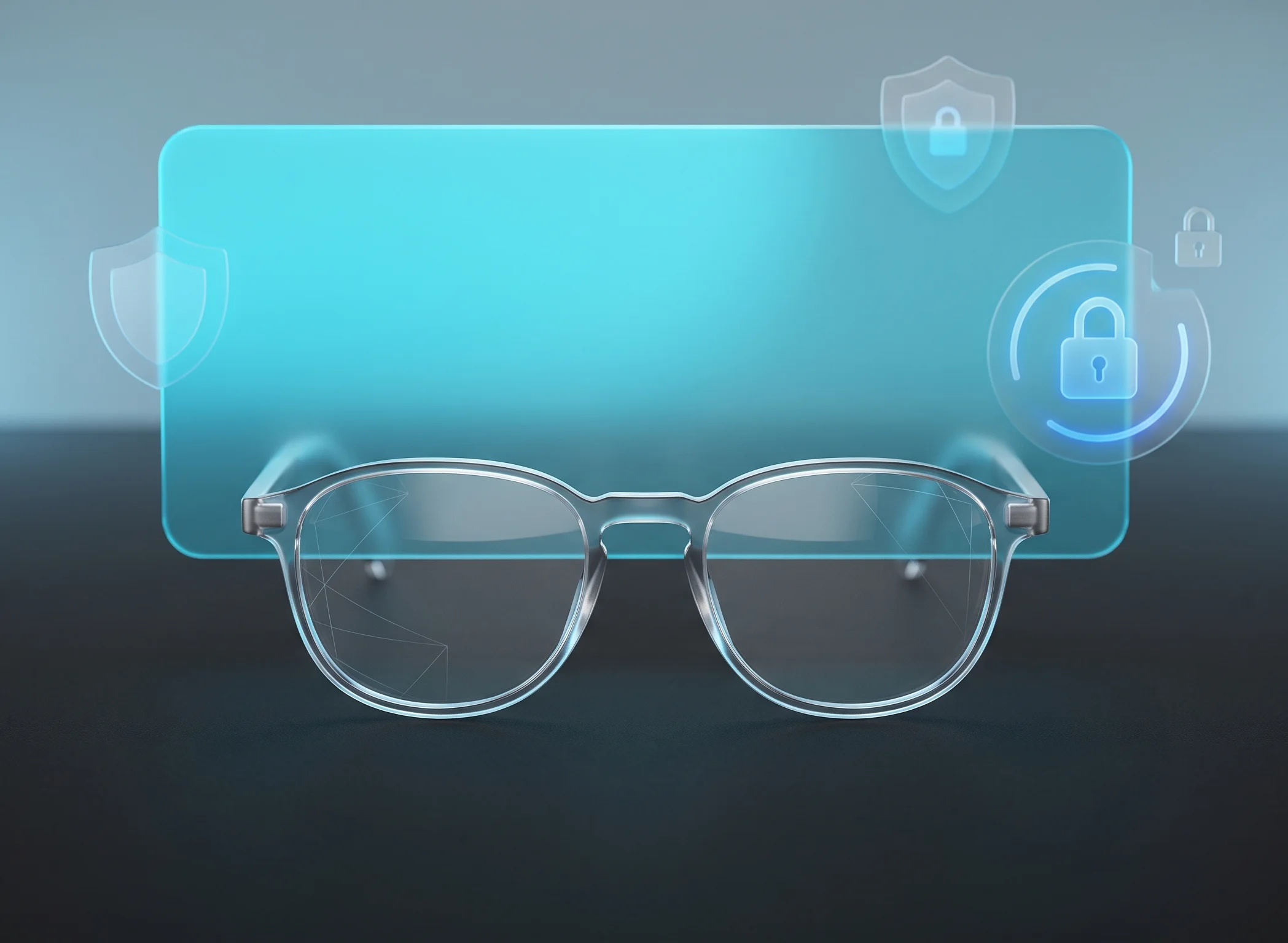
The development of wearable smart devices by Apple remains one of the most discussed topics in the tech industry. Following the release of the Vision Pro headset, Cupertino engineers shifted focus toward a significantly more compact wearable. Known internally as Project N50, this effort aims to build classic glasses powered by artificial intelligence and augmented reality features. However, according to recent supply chain reports, the release of this device has been delayed until at least late 2027.
The primary reason for the delay is not hardware constraints or optical component complexity, but critical privacy concerns. Cupertino has long maintained user privacy as a cornerstone of its corporate philosophy. Creating a device that continuously captures the surrounding environment via integrated cameras introduces massive privacy risks for both the wearer and the public.
2>Why Competitors’ Experience Forced Apple to Pause
The smart glasses market is currently dominated by Meta in partnership with Ray-Ban. While their joint product achieved commercial traction, it faced significant backlash from regulators and privacy advocates. Built-in cameras allow discreet photo and video capture in public spaces, sparking widespread public anxiety.
Recording indicator LEDs on Ray-Ban Meta glasses are frequently overlooked or purposefully obstructed with stickers or paint. Apple cannot afford such compromises, as any public controversy regarding covert surveillance would inflict billions of dollars in brand equity damage.
Cupertino’s Engineering Solutions for Privacy Protection
Apple’s hardware team is evaluating several conceptual scenarios to resolve this issue. The first approach involves a dedicated hardware security module that physically disconnects the camera power circuit if the status LED is disabled or covered by foreign objects. Specialized infrared sensors could monitor LED lens clarity to prevent covert capture.
A second, more radical approach considers completely eliminating standard photo and video cameras. Instead, low-frequency spatial sensors would be deployed. These sensors cannot render high-resolution facial features or text documents but provide sufficient data for Visual Intelligence algorithms and spatial mapping.
The Role of Visual Intelligence and Artificial Intelligence Systems
A core feature of Apple’s upcoming smart glasses will be seamless integration with Siri and Apple Intelligence. The device must analyze what the user is looking at and deliver real-time contextual information. Crucially, this workflow does not require storing or transmitting full video streams to external servers.
Engineers are designing local pipeline processing where visual streams are processed directly inside custom M-series or A-series chips without committing frames to persistent storage. Metadata is analyzed instantly and flushed from RAM, eliminating data leakage risks even under physical device compromise.
Regulatory Barriers in the European Union and Global Markets
An additional hurdle for Apple stems from stringent data protection laws, particularly the EU General Data Protection Regulation (GDPR). European regulators have raised concerns over wearable devices recording biometric or environmental data in public spaces without explicit consent.
If a wearable device captures personal data without public awareness, it risks regulatory bans across EU member states. For Apple, this represents significant commercial risk in a vital region. Consequently, engineering teams must spend additional development cycles ensuring full compliance with international privacy mandates.
Market Release Outlook and Future of Project N50
Project N50 is currently undergoing comprehensive concept restructuring. Pushing the targeted launch window to 2027 grants Apple engineers sufficient time to construct reliable privacy protection architecture. Consumers expect a secure, ethical product that respects personal boundaries rather than just another camera-equipped accessory.
The delay highlights Apple’s cautious strategy regarding user safety and data privacy. Transforming wearable electronics into everyday tools requires balancing technical capabilities with societal standards. Apple aims to establish a new benchmark for the smart optics industry.




0 Comments