
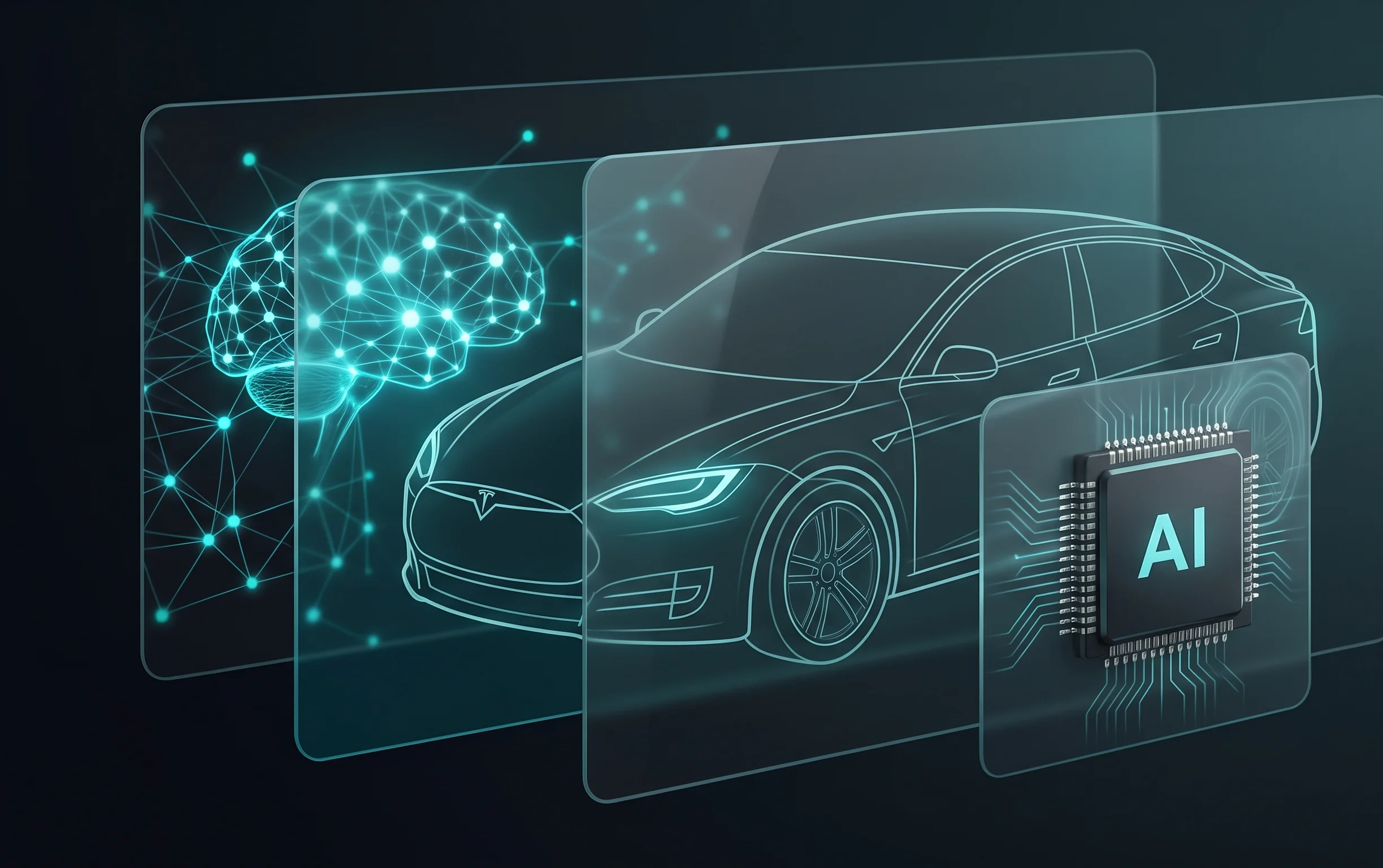
- Internal Competition for Compute Infrastructure within Nvidia
- Key Differences Between Nvidia and Tesla Automated Architectures
- Alpamayo Cluster and Telemetry Processing Frameworks
- Transition Towards End-to-End Deep Learning Architectures
- Regulatory Frameworks and Level 4 Autonomous Milestones
- Future Integration and Automotive Revenue Structures
- Engineering Challenges of Hardware Power Allocations
Internal Competition for Compute Infrastructure within Nvidia
The advancement of autonomous vehicle platforms has encountered an unexpected bottleneck within Nvidia itself. Xinzhou Wu, the head of the company’s automotive division, revealed that his team must actively compete with other departments for access to graphics processing units. The vast majority of computing infrastructure is currently dedicated to training large language models, limiting available resources for the automotive sector.
Despite being the leading global hardware provider for artificial intelligence, Nvidia’s internal development teams experience chip scarcity. This highlights a broader industry challenge where autonomous driving progress correlates directly with the scale of available compute. Training neural networks capable of operating vehicles in real-time requires thousands of highly specialized accelerators.
Key Differences Between Nvidia and Tesla Automated Architectures
The automated vehicle market remains divided by distinct technical philosophies. Nvidia’s core strategy differs significantly from Tesla’s approach. While Tesla relies exclusively on optical cameras and its Vision processing pipeline, Nvidia integrates a broader range of hardware sensors to maintain maximum operational safety margins.
The Nvidia DRIVE Hyperion framework utilizes a multi-layered sensor suite consisting of cameras, radars, and ultrasonic devices. This structural redundancy establishes comprehensive environmental awareness. If a particular sensor experiences degraded performance due to extreme weather or debris, complementary inputs mitigate data loss, preventing critical navigation errors.
Alpamayo Cluster and Telemetry Processing Frameworks
To process large telemetry datasets generated by test vehicle fleets, Nvidia deploys its specialized Alpamayo compute cluster. This infrastructure is tailored for simulating complex traffic environments and training driving-specific deep learning models. Every hour of on-road operations yields terabytes of data that must be sorted, labeled, and ingested into training pipelines.
Xinzhou Wu indicated that software algorithm efficiency depends heavily on storage substrate performance, not just total GPU allocation. Transporting vast telemetry fields from physical vehicles to remote data centers demands highly optimized data pipelines. Engineers continuously refine data reduction techniques to maintain spatial clarity for faint roadside geometry or erratic pedestrian paths.
Transition Towards End-to-End Deep Learning Architectures
A notable industry shift involves adopting end-to-end neural network designs. Within this architecture, sensor telemetry maps directly to vehicle control vectors like steering angles, acceleration percentages, and braking pressure. This replaces legacy configurations where discrete software layers handled localized object detection and trajectory planning independently.
However, this structural shift presents significant engineering risks. The primary drawback stems from the black box nature of deep neural networks, making it difficult to isolate why an algorithm selected a specific trajectory under critical operating conditions. To counteract this vulnerability, Nvidia’s automotive group implements parallel safety verification runtimes that validate AI path planning outputs against deterministic rules before execution.
Regulatory Frameworks and Level 4 Autonomous Milestones
The technical deployment readiness of the DRIVE Hyperion platform does not translate directly to immediate commercial access on public roads. Autonomous driving integration faces complex regulatory restrictions across international jurisdictions. Level 4 autonomy denotes that a platform operates completely independently within specified geographical boundaries without human intervention.
To secure operational clearance, vehicle manufacturers must demonstrate statistically superior driving performance compared to typical human baseline operators. This metric demands billions of driven miles achieved within virtual simulation environments. Because physical on-road evaluation remains resource-prohibitive, Nvidia emphasizes high-fidelity digital twins of metropolitan centers where AI entities train continuously through critical edge cases.
Future Integration and Automotive Revenue Structures
Currently, the automotive business unit generates a smaller percentage of Nvidia’s total revenue compared to massive data center enterprise solutions. However, executive leadership positions this segment as a vital foundation for the corporation’s long-term product diversification. The broader automotive marketplace is transitioning toward software-defined platform architectures.
Strategic alignment with automotive brands allows Nvidia to implement processors directly within vehicle manufacturing assembly pipelines. Future commercial revenue models will transition from simple hardware unit sales toward software stack licensing and recurring subscription frameworks for autonomous platform updates. This ensures a predictable capital stream for continuous research initiatives.
Engineering Challenges of Hardware Power Allocations
Integrating a high-throughput compute platform into a vehicle chassis introduces substantial thermal and electrical engineering hurdles. Computing hardware managing Level 4 autonomy tasks consumes hundreds of watts of continuous electrical power. In electric vehicles, this structural parasitic draw impacts the high-voltage battery system, reducing driving range by several percentage points.
Nvidia hardware engineers focus on refining system architecture parameters to maximize compute performance per watt metrics. Deploying purpose-built Tensor cores accelerates the specific tensor operations required by deep neural network layers. Additionally, liquid cooling loops integrated with the vehicle’s thermal management subsystem remain necessary to regulate on-board computer temperatures.
Cybersecurity protocols represent another crucial vector for autonomous driving compute nodes. Since modern vehicles connect to external networks for high-definition map data and over-the-air firmware deployments, they introduce attack surfaces. Nvidia utilizes hardware-enforced isolation techniques to separate mission-critical vehicle control systems from non-critical infotainment and telemetry networks.


0 Comments