
A New Era of Corporate Automation by Anthropic
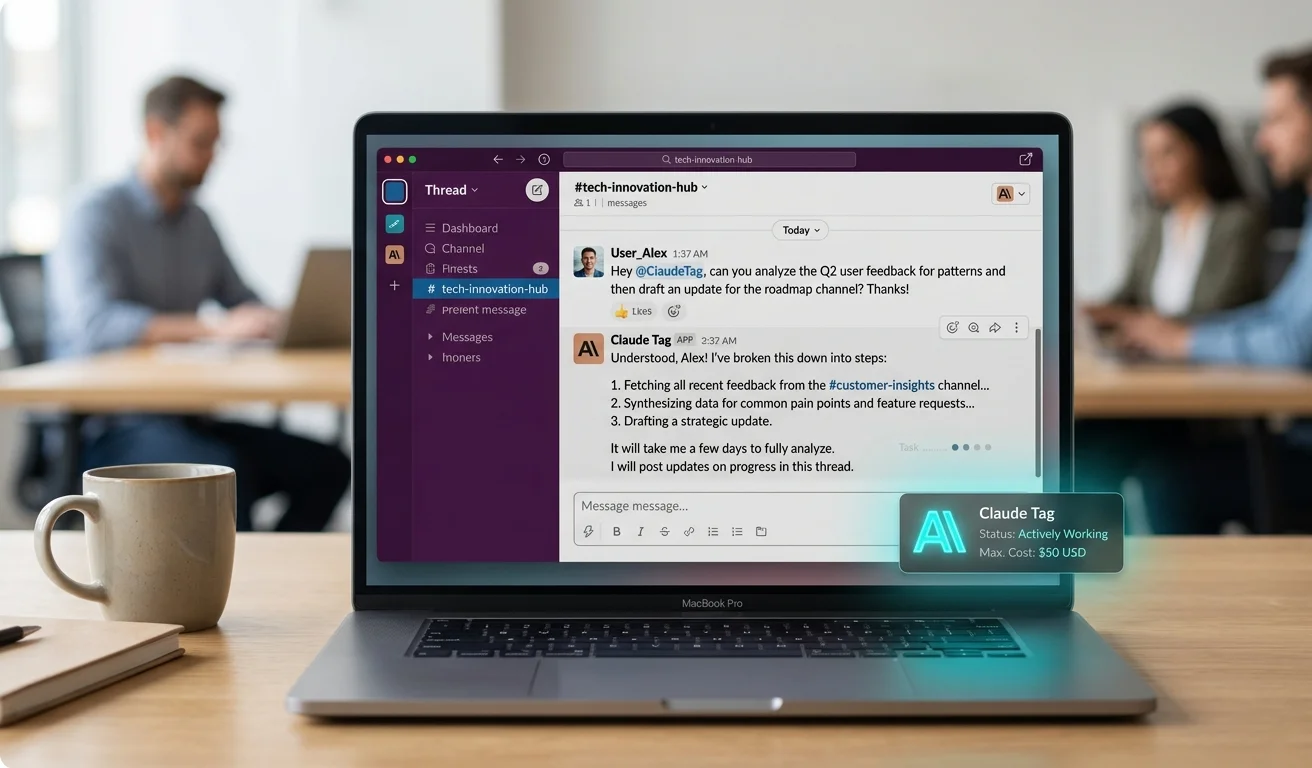
Anthropic has officially introduced Claude Tag, a next-generation tool designed for deep integration of artificial intelligence within the Slack workspace. Unlike traditional chat applications that operate strictly on a prompt-response basis, this assistant is engineered as an autonomous digital coworker. It remains constantly active in designated channels, analyzes discussion context in real time, and executes long-term, multi-step assignments.
The fundamental shift with Claude Tag lies in the concept of agentic AI. Instead of generating immediate text answers based on short prompts, the system receives high-level directives, breaks them down into logical phases, schedules resources, and works autonomously for several hours or even days. Team members do not need to constantly monitor the process, as the AI proactively posts progress reports within the relevant comment threads.
Technical Specifications and Integration Architecture
Claude Tag is powered by the updated Claude 4.8 Opus model, which is highly optimized for long-range planning and minimizing errors during sequential operations. The tool operates within an isolated, secure sandbox environment, allowing it to interact across internal Slack channels without compromising sensitive data security outside the corporate perimeter.
An essential feature of this release is the budget management capability. Because autonomous agents utilize a significant volume of tokens during iterative self-correction and intermediate step validation, team administrators can establish strict cost boundaries, such as a 50 USD cap per complex operation. If the budget limit is reached before the task is finalized, Claude Tag pauses execution and requests user authorization to proceed, ensuring complete financial predictability over API costs.
How the Autonomous AI Teammate Operates
The operational workflow with Claude Tag initiates with a simple mention in a workspace chat. A user states a requirement, which might involve parsing vast amounts of user feedback, aggregating internal data, or drafting comprehensive reports. The AI agent then deploys its internal orchestration workflow consisting of several standard procedures.
Planning and Decomposition
Upon receiving the request, Claude Tag evaluates the core objective and publicly posts a structured, step-by-step action plan within the Slack thread. This provides immediate visibility to the team, allowing human colleagues to review the approach and apply necessary adjustments before the operational phase begins.
Autonomous Data Gathering and Processing
The agent autonomously navigates through provided links, reviews historical communication across permitted channels, synthesizes software documentation, and categorizes feedback trends. This entire operation occurs seamlessly in the background, keeping human workers free from tedious data compilation.
Synthesis and Final Reporting
Once all scheduled steps are completed, Claude Tag assembles the final deliverable or analytical summary. The outcome is delivered directly into the original Slack thread where the task was initiated. This maintains total transparency and preserves a permanent historical log of project decisions within the enterprise platform.
Strategic Value for Engineering and Project Management
For software development and project management units, implementing this technology streamlines daily administrative overhead. For instance, Claude Tag can monitor channels dedicated to bug reports. The AI does not merely log incoming issues; it categorizes them by severity, detects recurring code anomalies, and prepares actionable tasks for engineers without requiring manual project manager intervention.
This approach effectively eliminates fragmentation of focus. Employees no longer spend hours collecting data from dozens of fragmented message threads, as the autonomous companion handles information routing in parallel, ensuring high execution accuracy driven by Anthropic advanced architecture.

0 Comments