
A New Era of Real-Time AI Translation
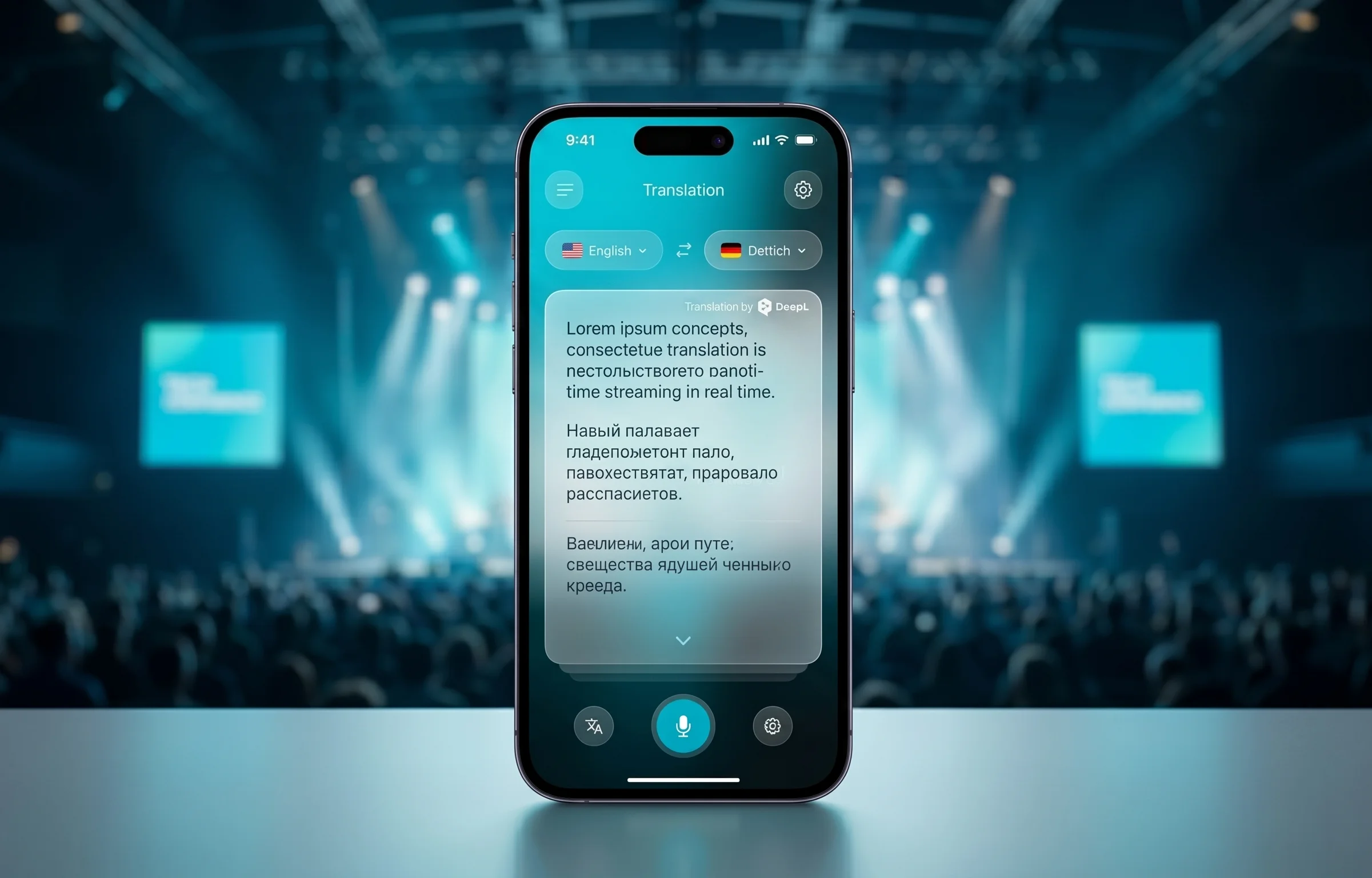
German AI translation giant DeepL has announced the acquisition of American startup Mixhalo. This strategic move aims to integrate advanced language models into the live audio and event streaming industry. Until now, DeepL focused primarily on text translation, document processing, and basic voice input tools. The acquisition of a specialized audio platform signals the company’s intention to compete in the live interpretation market for corporate conferences, concerts, and major sporting events.
Mixhalo gained recognition for its advanced wireless audio delivery technology designed for large venues. The main challenge of massive live events has always been high latency and network congestion over local Wi-Fi or cellular networks. Mixhalo engineers developed an architecture that streams high-quality audio to thousands of users simultaneously with minimal latency measured in milliseconds. These technical capabilities will now be combined with DeepL’s artificial intelligence algorithms.
How the Integrated Technology Works
The speech processing and delivery workflow will be fully automated. A speaker on stage talks into a microphone, and the audio stream is instantly routed to a local or cloud-based processing server. The system then executes several sequential operations:
- Speech recognition and converting the audio signal into a text format.
- Contextual analysis by DeepL’s AI to ensure accurate terminology translation.
- Instant machine translation into the languages selected by users.
- Natural voice synthesis and streaming the final audio to the mobile app.
Users only need a smartphone and their own headphones. In a dedicated application, they can select their preferred language track. Thanks to Mixhalo’s optimized data packet delivery, listeners will not experience noticeable desynchronization between the speaker’s lip movements on stage and the audio in their ears.
Comparing Traditional and AI Live Interpretation
Implementing automated systems will significantly reduce the cost of organizing international events. The traditional approach requires substantial financial and logistical resources. Below is a comparison between the classic method and the new solution from DeepL:
Economic Impact and Business Scalability
Organizers of large-scale events spend thousands of USD renting interpretation equipment and paying professional fees. Adopting an AI platform will cut these expenses significantly. Because the system operates via cloud infrastructure and local access points, the listener count can scale from dozens to tens of thousands without purchasing extra hardware receivers. Every attendee uses their own device, which also eliminates hygiene concerns and equipment loss risks.
For the corporate sector, this translates into the ability to host global product launches or internal training sessions for international branches with minimal budgets. A speaker can present in English while employees worldwide or in the main hall listen to adapted speech in real time. DeepL also plans to introduce automated post-event text transcripts, simplifying report creation and documentation.
Technical Challenges and Solutions
Despite its vast potential, automated live audio translation faces several complex technical hurdles. The foremost challenge is accurately recognizing specialized industry terms, accents, and varying speech speeds. Speakers frequently pause, self-correct mid-sentence, or use professional jargon. DeepL’s language models undergo continuous training on massive datasets to minimize errors in such real-world conditions.
Another vital factor is wireless connection stability. At stadiums or large convention centers, cellular networks often degrade due to device density. This is where Mixhalo’s architecture becomes critical. Their proprietary data transmission protocols are designed to handle congested wireless traffic, ensuring audio packet prioritization and preventing packet loss. Combining a stable connection channel with rapid text processing keeps total latency at a highly comfortable level for listeners.
Future of the AI Translation Market
The acquisition of Mixhalo demonstrates a broader trend in the artificial intelligence market, where software developers acquire infrastructure and hardware startups to deliver end-to-end products. Competition in this sector is intensifying as tech giants deploy their own live translation features. However, DeepL’s deep specialization in language processing combined with Mixhalo’s field-tested streaming technology gives the new partnership a strong competitive edge in the B2B services market.

0 Comments