
- A new era of desktop computing powered by Qualcomm architecture
- Technological capabilities of the Snapdragon X Plus processor
- Chassis architecture and absolute fanless passive thermal design
- Display qualities and integrated desktop multimedia
- Physical connectivity options and next generation wireless networks
- Operating system software and Copilot+ PC tools deployment
- Market positioning and corporate retail pricing strategy
A new era of desktop computing powered by Qualcomm architecture
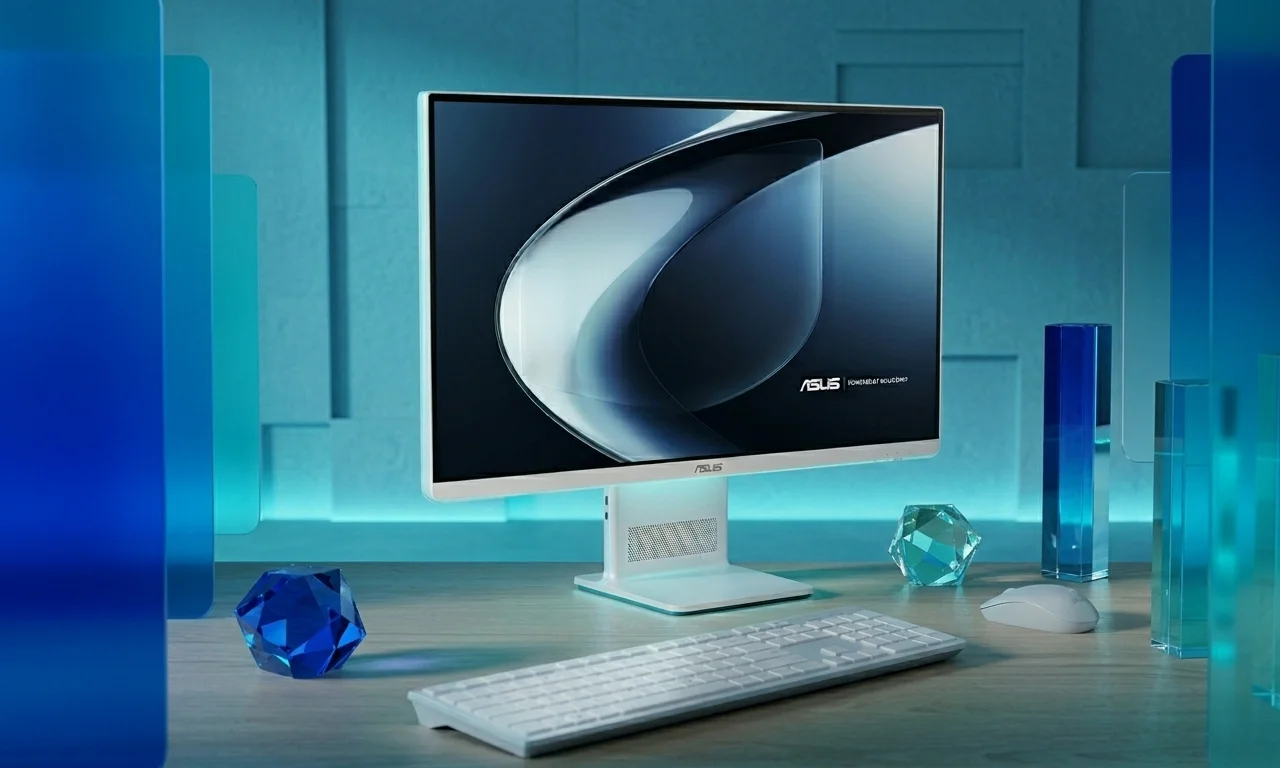
The global personal computer market is undergoing a massive transformation driven by the transition to energy-efficient architectures. ASUS has officially unveiled the VM441 model, which is also designated as the V400 AiO in specific regional markets. This device represents the world first desktop all-in-one computer running on the Qualcomm Snapdragon X Plus mobile platform. This release marks the definitive expansion of ARM processors beyond the portable laptop segment into full-fledged stationary solutions for homes and offices. The development focuses on delivering maximum energy efficiency, absolute silence, and high local performance during artificial intelligence tasks.
Technological capabilities of the Snapdragon X Plus processor
At the core of the ASUS VM441 hardware platform is the Qualcomm Snapdragon X Plus processor (specifically the X1P-42-100 modification). This chip features 8 Oryon computing cores built on a advanced 4-nanometer process technology. The processor clock speed reaches 3.2 GHz in multi-threaded workflows, and with dynamic boost technology, a single core can temporarily elevate its operating frequency up to 3.4 GHz. The main characteristic of this platform is the complete removal of traditional x86 architecture components, which radically minimizes heat output and optimizes overall electrical power draw.
The primary element responsible for fulfilling the demanding Copilot+ PC specification standards is the integrated Qualcomm Hexagon NPU. Its raw performance is rated at 45 TOPS (trillions of operations per second). This capability permits the device to execute complex machine learning matrix calculations, natural language processing, and automated graphical media generation locally. Users do not need to rely on remote cloud computing clusters, which guarantees instant responsiveness for integrated AI experiences inside Windows 11.
Chassis architecture and absolute fanless passive thermal design
Transitioning to a mobile energy-efficient platform allowed ASUS design engineers to completely re-engineer the internal layout of the all-in-one system. The VM441 incorporates an entirely passive cooling mechanism. There are no spinning hardware fans inside the chassis. Thermal energy from the processor assembly and motherboard tracks is dissipated using a massive copper heat pipe linked to a cooling element that occupies a substantial portion of the interior space. The absence of cooling fans completely removes operational acoustic noise, ensuring silent operation even during sustained processing loads.
This design direction has also yielded significant benefits for the aesthetic profile of the computer. The thickness of the main display housing measures only a few millimeters at its slimmest section, mimicking a high-end monitor rather than a traditional desktop computer tower. The exterior chassis is constructed using premium matte white polycarbonate attached to an elegant aluminum structural stand with an adjustable tilt hinge. Protective border fields around the perimeter minimize glass impact risks when repositioning the device.
Display qualities and integrated desktop multimedia
The system features a contemporary wide-aspect display with a diagonal measurement of 23.8 inches. The underlying panel utilizes premium IPS matrix technology with a native resolution of Full HD (1920×1080 pixels). The refresh rate is configured at 60 Hz, and the peak brightness level hits 250 nits. The screen surface features an anti-glare matte coating, protecting usability when working under intense overhead lighting or natural sunlight windows. Color spectrum accuracy covers 100 percent of the sRGB space, rendering the device suitable for standard photo editing, streaming high-definition cinema, and general office tasks.
The built-in media system features a dual-speaker array with a combined maximum output of 6 W. The audio setup relies on proprietary ASUS SonicMaster engineering combined with Dolby Atmos spatial rendering algorithms. To facilitate business communication during corporate video conferences, a Full HD webcam is positioned into the upper frame bezel. It includes a physical privacy privacy shutter and supports secure Windows Hello biometric facial sign-in using infrared depth tracking. An array of integrated digital microphones applies artificial intelligence noise reduction to isolate background room echoes.
Physical connectivity options and next generation wireless networks
Despite its exceptionally slim profile, the ASUS VM441 provides an array of physical connection ports. The majority of input and output interfaces are situated on the rear panel of the system to simplify clean desktop wire organization. A single high-speed USB Type-C port and a standard 3.5 mm combination headset audio jack are located on the lateral edge for quick convenience. The rear connector zone features multiple USB Type-A ports spanning separate technology generations, a full-sized gigabit RJ45 Ethernet socket, and standard HDMI outputs for connecting an external display monitor or television.
Wireless networking capabilities are anchored by an advanced controller chip implementing the recent Wi-Fi 7 technical specification. This ensures minimal data packets delays and elevated transfer throughput, which is vital for operating modern wireless peripherals and high-resolution streaming video platforms. Additionally, the onboard Bluetooth 5.4 transmitter lets users connect multiple remote accessories simultaneously, including the companion wireless input mouse and keyboard included in retail packaging within certain markets.
Operating system software and Copilot+ PC tools deployment
The desktop computer operates using the Windows 11 Home or Pro operating system, compiled specifically to run natively on ARM instruction sets. The most notable advantage of this software environment is the close integration of Microsoft Copilot artificial intelligence algorithms. Users gain instant access to innovative capabilities like Live Captions with real-time translation across dozens of international languages, advanced camera enhancements via Windows Studio Effects (including automated centering, background blurring, and eye gaze tracking), and local text-to-image synthesis using Cocreator in Paint.
Leveraging the updated Prism emulation layer, the operating system delivers extensive application cross-compatibility with legacy software written for old x86 processor environments. The vast majority of standard enterprise applications, such as Microsoft 365 suites, modern internet web browsers, team messengers, and remote access clients, function natively or execute with high efficiency via translation. This degree of software flexibility makes the product a capable tool for academic studies, remote work routines, and general household usage.
Market positioning and corporate retail pricing strategy
Retail distribution for the ASUS VM441 initiated across India and select Asia-Pacific markets before expanding into European regions and North American storefronts. The base hardware configuration carries an entry retail price of 775 USD. For this price, consumers receive a balanced hardware configuration containing 16 GB of integrated memory and 512 GB of high-speed solid-state storage. Upgraded iterations featuring 32 GB of system RAM paired with a 1 TB NVMe SSD demand a higher price point but deliver increased future-proofing for heavy processing tasks.
Primary market competitors include traditional budget and mid-tier all-in-one desktop models utilizing conventional Intel Core or AMD Ryzen processing chips. The competitive edge for the ASUS design lies in its uncommon pairing of fanless silent operation, minimized electrical utility costs, and a powerful onboard neural accelerator for local artificial intelligence models execution. These factors establish this computer as a practical option for tech-conscious buyers looking for an elegant, space-saving, and quiet system for daily computing workloads.



0 Comments