
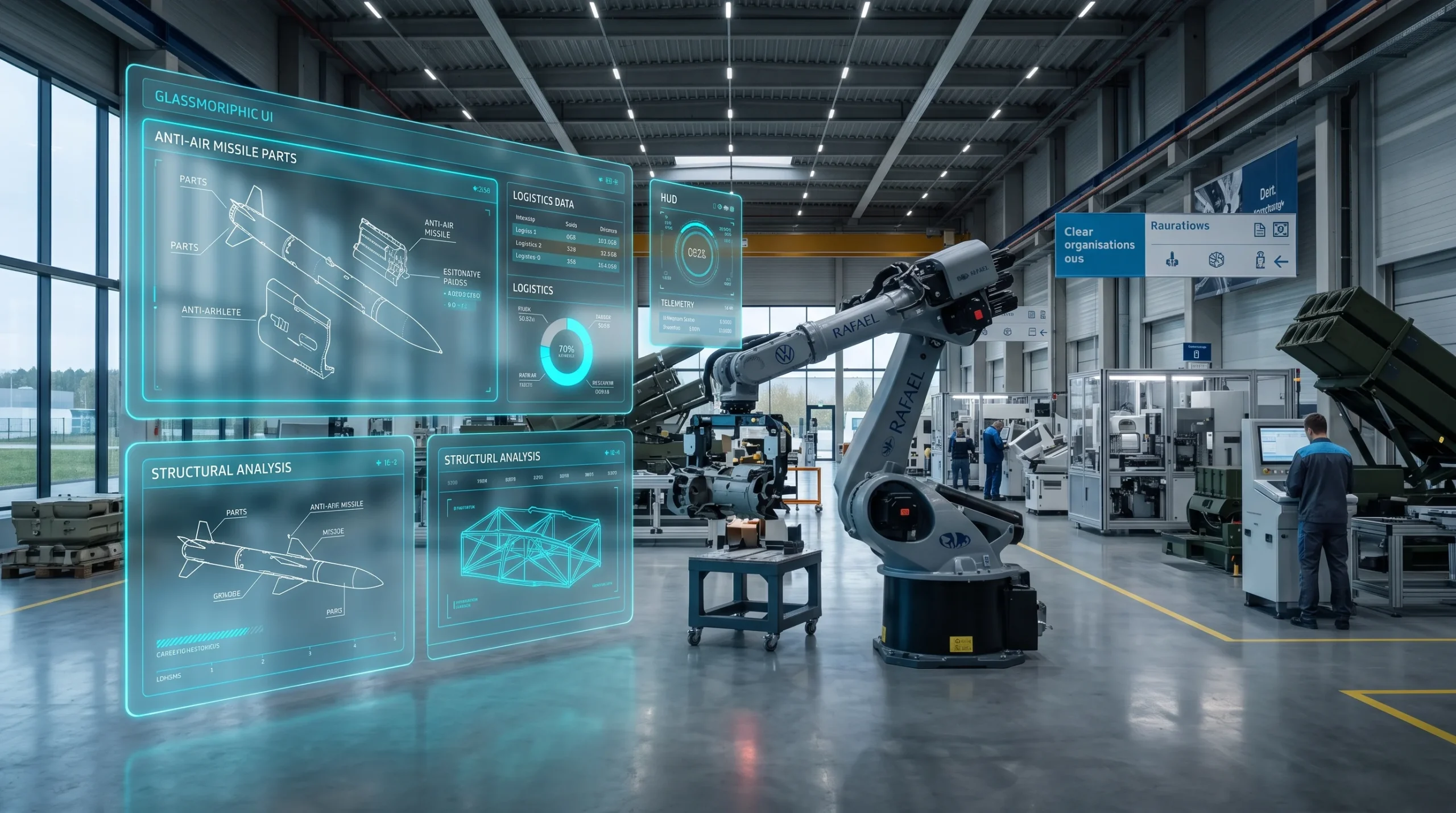
Automotive Conversion for European Defense Needs
German automotive giant Volkswagen, in collaboration with Israeli defense contractor Rafael Advanced Defense Systems, has finalized an outline agreement to repurpose its manufacturing facility in Osnabruck. The factory, which has historically produced limited-run passenger vehicles and convertibles, is scheduled to end civilian vehicle production by 2027. Following this phase-out, the site will be retooled to assemble and validate advanced air defense hardware components.
This initiative represents the first instance in modern German history where an operational automotive plant is repurposed for military manufacturing. The structural shift is driven by sluggish demand across the European passenger car segment, increasing operating costs, and expansive defense procurement packages across NATO member states.
Drivers of the Facility Restructuring
The Osnabruck site has traditionally fulfilled a flexible, niche role within the Volkswagen Group ecosystem. Unlike the massive volume plants in Wolfsburg or Zwickau, it operated on adaptive short-run models. Shifts in macroeconomic conditions and regulatory environments rendered continued automotive manufacturing at the site uneconomical.
- End of passenger vehicle lifecycles: Assembly lines for models such as the T-Roc Cabriolet and contract assembly work for Porsche will conclude between 2026 and 2027 without immediate automotive replacements.
- Electric transition capital constraints: Heavy capital requirements for battery-electric platform rollouts pushed corporate leadership to reduce idle capacity and consolidate vehicle assembly elsewhere.
- Workforce retention: Over 2,300 specialized engineers, toolmakers, and line operators work at the plant. Preserving these roles is critical for regional economic stability in Lower Saxony.
- Expanded European defense budgets: Multibillion-dollar defense budgets funded across European states demand rapid on-continent scaling of defense supply chains.
Strategic Alignment with Rafael
Rafael, globally recognized for developing specialized interceptors and electronic defense systems, gains a significant manufacturing foothold inside the European Union. Establishing operational capability in Germany allows the defense firm to streamline defense hardware logistics and bypass external supply bottlenecks.
The transformation involves a complete technological overhaul. Sheet-metal stamping units and anti-corrosion dipping lines will be dismantled to make room for cleanroom assembly cells, multi-axis precision CNC machines, and specialized testing chambers for radar and telemetry packages.
Workforce Retraining and Security Overhauls
Retraining automotive technicians to meet defense quality verification standards presents distinct operational challenges. Military aerospace hardware requires micro-level component tolerances, zero-defect traceability, and compliance with stringent NATO STANAG criteria. Assembly technicians will complete multi-month cross-training modules focusing on high-spec electronics and precision mechanical fitting.
Workplace unions have supported the conversion plan, noting that the alternative was complete site closure. The overhaul will require over 350 million USD in facility modernization and physical security infrastructure, funded partly through private capital and state-backed supply initiatives. The plant will also implement top-tier perimeter control, encrypted communications networks, and cyber defenses to mitigate industrial espionage risks.
Implications for Continental Defense Autonomy
Historically, Germany maintained a clear boundary between civilian passenger vehicle manufacturing and heavy defense manufacturing. However, shifting security dynamics in Europe have necessitated pragmatic infrastructure adjustments. The Osnabruck factory is positioned to become a reliable node for European air and missile defense replenishment.
A successful transition at Osnabruck could provide a template for similar operations in other European markets, such as France and Italy, where automotive excess capacity coincides with prolonged defense hardware backlogs.




0 Comments