
- A New Paradigm in Lightweight Electric Vehicle Engineering
- Integrated Photovoltaics and Energy Balance
- Key Technical Efficiency Factors
- Structural Architecture and Weight Reduction
- Aerodynamic Profile and Drag Reduction
- Technical Specifications Overview
- Industry Applications and Future Prospects
- Solar Energy Integration Outlook
A New Paradigm in Lightweight Electric Vehicle Engineering
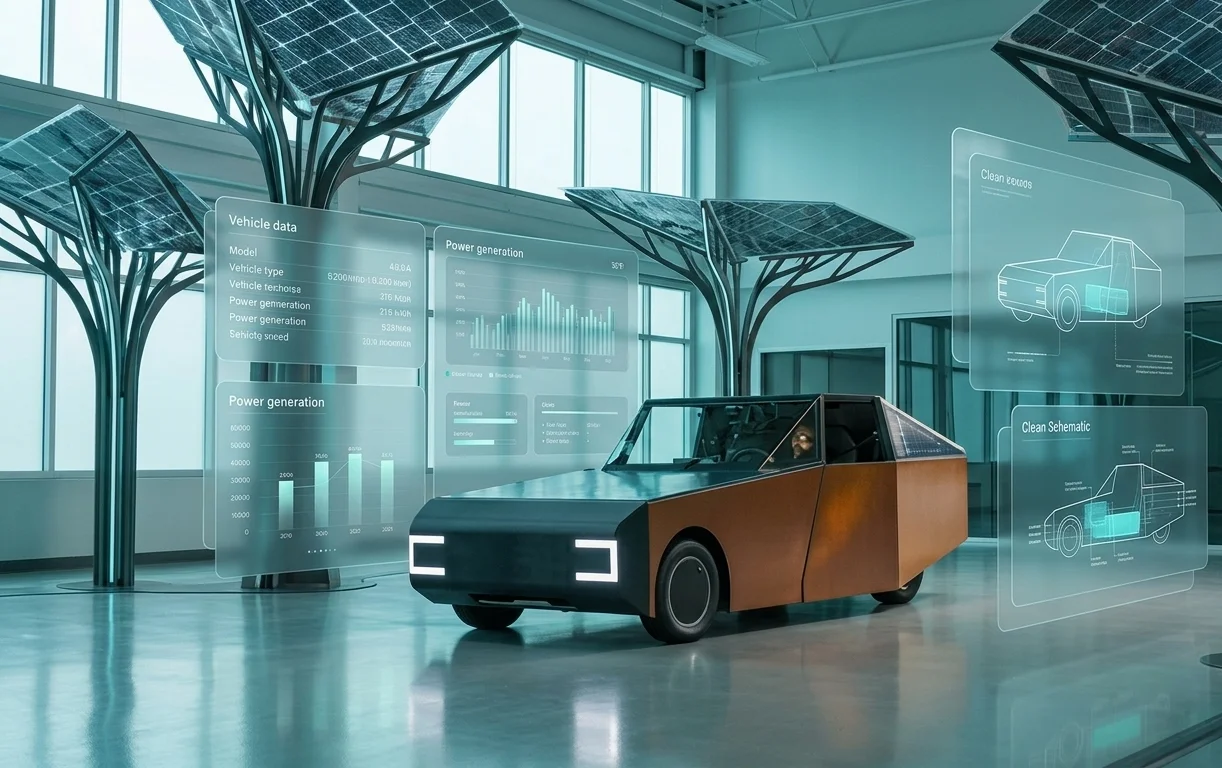
A joint engineering team from Clemson University International Center for Automotive Research (CU-ICAR) and BMW Group has unveiled a functional solar-powered electric vehicle prototype named Deep Orange 17, also known as Luminetta. The core objective of the project is to challenge the current automotive trend of constantly expanding battery pack capacity, which inevitably increases total vehicle mass and reduces overall energy efficiency.
Rather than relying on heavy high-capacity batteries, the engineering team focused on drastic weight reduction, aerodynamic refinement, and the integration of photovoltaic solar cells into the body exterior. The resulting prototype is a compact two-seater coupe designed to generate a substantial portion of its daily operating power directly from sunlight.
Integrated Photovoltaics and Energy Balance
The exterior bodywork of the Deep Orange 17 incorporates over 1,700 individual solar cells engineered in collaboration with advanced materials researchers. These cells are embedded into the hood, roof, door panels, and rear tail section. This approach forms a continuous light-harvesting surface without compromising structural safety or aesthetic integration.
Under typical daylight conditions, the integrated solar array generates sufficient energy to offset the power consumption of routine urban driving. Testing data indicates that the system can add up to 50 km (31 miles) of driving range per day purely from solar power, reducing reliance on external grid charging.
Key Technical Efficiency Factors
- Multi-angle cell placement – positioning solar elements along varying body contours optimizes sunlight capture throughout changing sun angles.
- Distributed power management – individual microcontrollers manage dedicated cell clusters to prevent localized shading from degrading total system output.
- Low internal resistance wiring – specialized conductive interconnections minimize thermal energy losses during high-yield solar exposure.
Structural Architecture and Weight Reduction
To maximize the operational gains provided by the solar panels, the engineering team reduced the vehicle kerb weight to 550 kg (1,212 lbs). The structural foundation utilizes a hybrid spaceframe composed of structural aluminum alloys and carbon fiber reinforced polymers.
In comparison to standard production urban electric vehicles that weigh between 1,200 kg and 1,800 kg, the lower mass of the Deep Orange 17 requires significantly less energy to overcome rolling resistance and inertial momentum during acceleration.
Aerodynamic Profile and Drag Reduction
The aerodynamic body shaping of the Deep Orange 17 features a tapered rear cross-section and enclosed rear wheel fairings to reduce air turbulence. The overall drag coefficient is noticeably lower than that of conventional compact passenger cars, lowering overall energy draw at speeds above 50 km/h.
Technical Specifications Overview
The structural and operational specifications of the Deep Orange 17 Luminetta concept are outlined in the table below.
Industry Applications and Future Prospects
The Deep Orange 17 project is intended as a technology testbed rather than a direct pre-production model. The research output generated by Clemson University and BMW Group provides valuable data regarding thin-film solar panel durability and power management efficiency in real-world driving environments.
Integrating flexible solar panels into production vehicle roofs and glass surfaces could assist in powering onboard auxiliary electronics, HVAC systems, and battery thermal management, thereby decreasing overall energy draw on the primary traction battery.
Solar Energy Integration Outlook
Advancements in solar cell efficiency and composite manufacturing methods offer clear pathways toward lighter, more efficient electric vehicles. Projects such as the Deep Orange 17 demonstrate that energy-positive micro-mobility platforms represent a viable approach toward reducing total energy consumption in future urban transportation networks.


0 Comments