
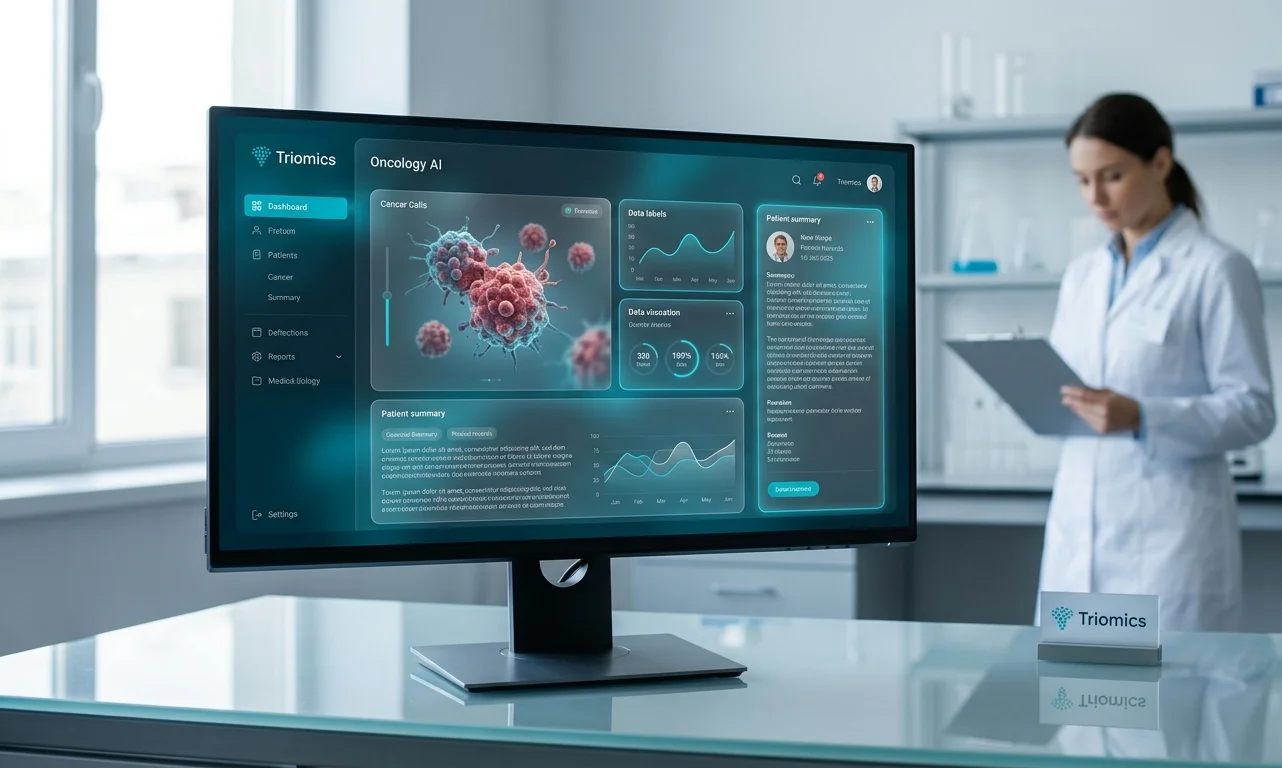
The Challenge of Unstructured Data in Oncology Practice
Modern oncology faces a significant challenge in processing vast amounts of information. Approximately 80% of oncology patient records are stored as unstructured text. This includes detailed pathology reports, genomic sequencing results, post-operative summaries, and clinical notes. Traditional large language models often struggle with these highly specific documents because medical terminology demands absolute precision.
Triomics has introduced an alternative approach by developing a specialized platform called OncoLLM. This system is designed exclusively for the oncology sector and trained on relevant clinical data. The new 22 million dollars funding round will enable the company to expand integration capabilities and accelerate deployment across major US healthcare institutions.
How OncoLLM Works and the Benefits of Specialized Models
Instead of relying on general purpose AI systems, the developers built an architecture that focuses on the nuances of oncology nomenclature. The software automatically extracts key clinical factors from patient charts, structures disease timelines, and analyzes tumor staging without requiring additional human resources.
The main integration areas for the AI system include the following processes:
- Automated chart screening to identify specific patient biomarkers.
- Automated generation and pre-filling of internal and regulatory cancer registry reports.
- Instant data structuring to prepare patient profiles for tumor board reviews.
- Reduction of administrative burdens on clinical staff.
By maintaining this specialized focus, the system processing accuracy for complex terminology significantly outperforms general LLMs, minimizing the risk of AI hallucinations in clinical documentation.
Optimizing Clinical Trials and Patient Matching
One of the most resource intensive tasks in cancer centers is recruiting patients for clinical trials. Typically, research coordinators manually review thousands of pages of medical records to find matches for strict inclusion and exclusion criteria. This process can take weeks, often causing patients to miss opportunities for innovative therapies.
Implementing OncoLLM reduces the initial chart screening time to a few minutes. The system identifies candidates who meet the requirements of specific research protocols and flags them for physician review. This accelerates enrollment speeds and helps clinical trials start on schedule.
Partnerships with Leading Institutions and Growth Plans
Triomics technology is already being deployed at several prestigious healthcare institutions, including Memorial Sloan Kettering Cancer Center and Yale Cancer Center. Early deployment data indicates that optimizing administrative workflows allows clinical staff to spend more time on direct patient interaction.
The Series B investment will be used to enhance data security compliance under HIPAA regulations, improve integration with popular Electronic Health Record (EHR) systems, and scale the engineering team. The company also plans to adapt its models to analyze rare oncological pathologies that require even deeper algorithmic specialization.


0 Comments