
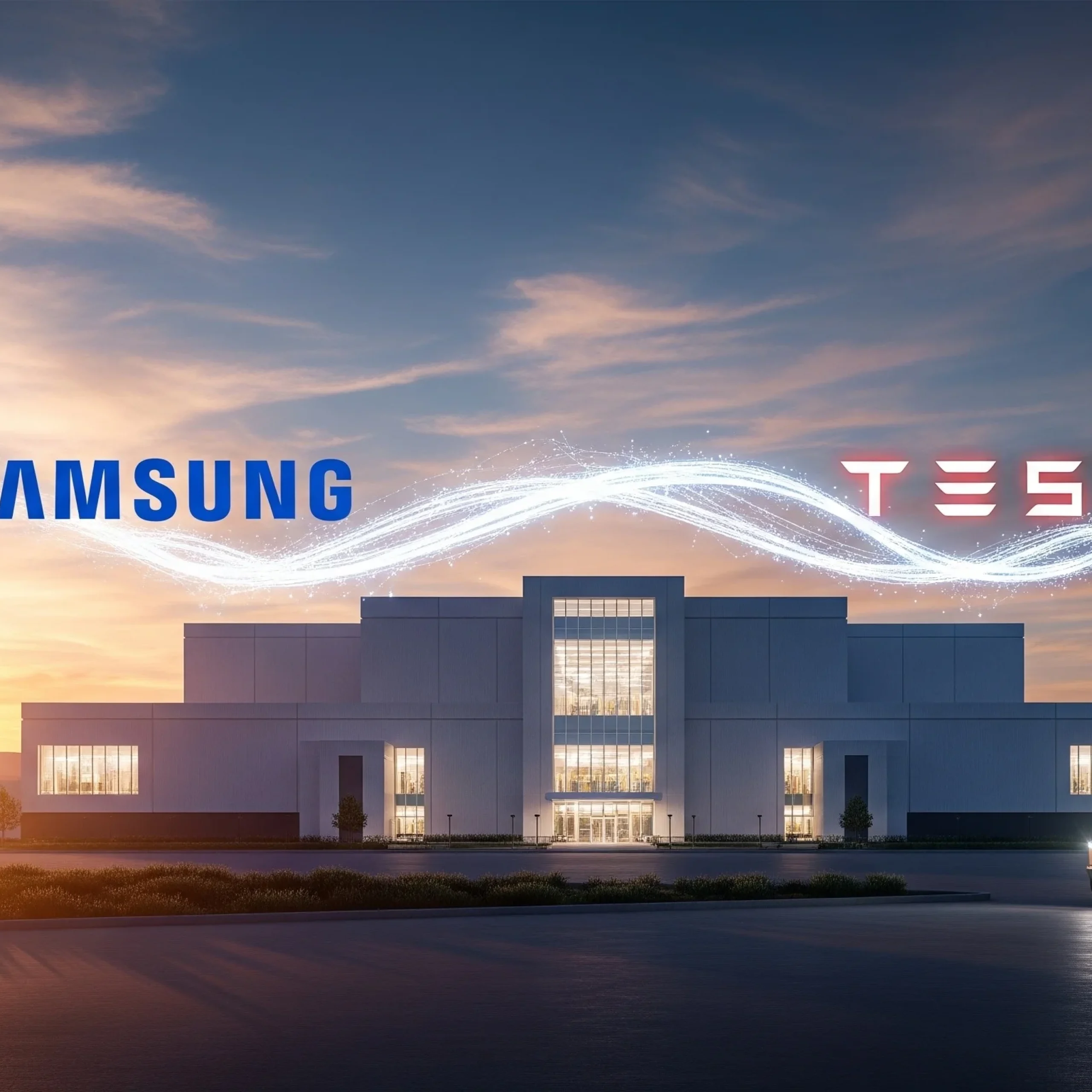
The construction of Samsung’s multi-billion-dollar chip factory in Texas was one of the most anticipated projects in the tech industry. However, after work began, construction was partially suspended due to global economic fluctuations and uncertainty. Today, significant news emerged: work has fully resumed, following the signing of a key contract with automotive giant Tesla. This event underscores not only the critical importance of the collaboration between the two technology leaders but also the strategic importance of expanding U.S. manufacturing capacity.
Landmark contract with Tesla
The agreement between Samsung and Tesla is a key factor in giving new impetus to the project. This contract covers the supply of next-generation chips that will be used in autopilot systems, artificial intelligence, and other high-tech components that will form the basis of future Tesla electric vehicle models. Due to the growing demand for advanced chips for electric vehicles, Tesla needed a reliable partner capable of ensuring large-scale and stable production. Samsung, with its cutting-edge technology, was the ideal choice. This partnership provides Samsung with a guaranteed market, and Tesla with a reliable supply source, critical in today’s competitive environment.
Resumption of construction and strategic importance
The suspension of work at the Taylor, Texas, plant was not due to technical issues, but rather to economic factors and the need to reassess investment risks. However, the contract with Tesla gave Samsung sufficient confidence to continue with the project at full capacity.
- Investment scale: The plant is part of Samsung’s global strategy to expand its production capacity. The total cost of the project is estimated at tens of billions of dollars. Its launch will create thousands of high-paying jobs.
- Geographic diversification: Building a chip plant in the US allows Samsung to reduce its dependence on manufacturing concentrated in Asia. This is in line with the global trend toward strengthening local supply chains and increasing resilience to geopolitical risks.
- Government support: The resumption of construction was also made possible by government support, particularly US legislation subsidizing semiconductor production. This makes investment in American manufacturing more attractive and profitable.
The broader implications of cooperation
The collaboration between Samsung and Tesla has far-reaching implications beyond their respective companies. It symbolizes the convergence of previously separate industries.
- For Samsung, this deal is a testament to the company’s advanced technology and its ability to compete in the advanced auto chip market. It opens up new opportunities and revenue streams for the company.
- For Tesla: Ensuring stable access to high-quality chips will allow Tesla to accelerate the development and deployment of new technologies. This will strengthen its leading position in the electric vehicle and autonomous driving market.
- For the market, this contract demonstrates that the era when the automotive industry was secondary to chip makers is a thing of the past. Cars are becoming increasingly dependent on advanced computing power, making this segment one of the most profitable in the industry.
The resumption of construction on Samsung’s chip plant in Texas isn’t just news about another economic project. It’s a vivid illustration of how strategic partnerships, technological innovation, and the changing geopolitical landscape are impacting the global industry. This collaboration between Samsung and Tesla is mutually beneficial, highlighting the growing importance of sustainable supply chains and investing in the future.


0 Comments