
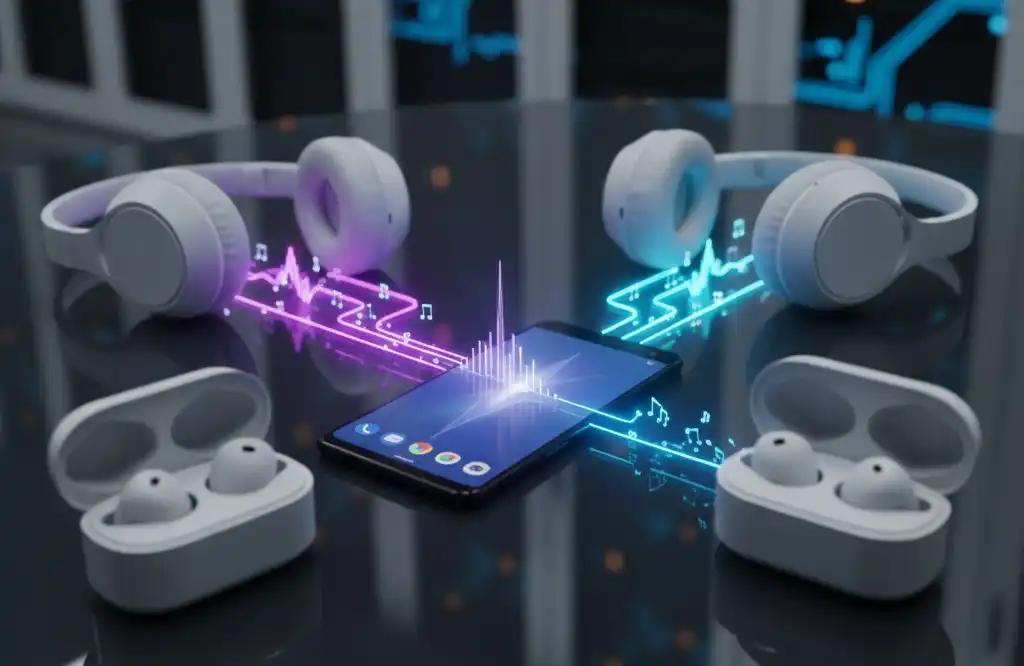
Long commutes, workouts, or just relaxing in the evening-sometimes you want to share your favorite track with a friend, but Bluetooth limitations prevent you from streaming audio to multiple devices simultaneously. Pixel smartphones lacked this feature at launch, while competitors have long offered a similar solution. However, in 2025, the situation finally changed. Google Pixel users can stream music to multiple headphones simultaneously. This innovation significantly expands the smartphone’s capabilities and meets the expectations of many users. However, it also highlights Google’s tendency to implement technologies that its competitors have mastered for years.
New feature on Pixel: Bluetooth LE Audio audio sharing
A new feature called “Audio Sharing” became available with the Android 16 QPR1 update and the Pixel Feature Drop in September 2025. This feature relies on modern Bluetooth LE Audio and Auracast standards, which provide high-quality sound with low power consumption. To use this feature, users must connect the first pair of headphones through standard Bluetooth settings and then add the second pair. Auracast technology even allows audio streaming, allowing other devices to connect to the phone like a radio station. This makes sharing music intuitive and convenient. Importantly, both devices (smartphone and headphones) must support Bluetooth LE Audio for the feature to work.
Samsung Dual Audio: Years Ahead
While this is a new feature for Pixel phones, it’s a long-standing tradition for Samsung users. Samsung smartphones have offered Dual Audio since 2018, starting with the Galaxy S9. This feature allows you to connect two pairs of headphones or speakers and play music simultaneously. Unlike Google’s implementation, Dual Audio on Samsung relies on an older version of Bluetooth. To use this feature, users need to go to the Quick Settings panel, select “Output Media,” and turn on both connected devices. While Samsung’s technology isn’t as new as Bluetooth LE Audio, it serves the same purpose and has been doing so for years, demonstrating the company’s forward-thinking approach.
Technological Comparison: Old-Fashioned Method vs. New Standards
While Pixel and Samsung achieved the same goal, they took different paths. Each technology has its own advantages and disadvantages:
- Pixel (Bluetooth LE Audio): Using the new standard provides higher sound quality, lower latency, and more efficient power use, which improves battery life. However, compatibility is limited as the market for Auracast-enabled devices is still developing.
- Samsung (old Bluetooth): Dual Audio works with almost any Bluetooth device, making it very convenient and versatile. However, it can result in a slight delay in audio transmission and increased power consumption, which can be noticeable when listening to music.
The smartphone market’s impact and the future of audio
The arrival of this feature on the Pixel is an important step. On the one hand, Google is finally closing the gap that existed between its flagships and competitors. On the other hand, it shows that Google is continuing to implement features that have long been standard for other manufacturers, such as Samsung. This could encourage other smartphone makers to adopt new standards, as Google supports future technologies. It could also encourage headphone makers to more quickly implement Bluetooth LE Audio in their products.
In summary, while Pixel was late to the music streaming game, it did so using cutting-edge technology. This sets it apart from older, but much more common, solutions. This new feature isn’t just a convenient tool; it’s also an important signal for the entire industry. It demonstrates Google’s commitment to improving the music listening experience through innovation, while Samsung confirms its leadership in implementing intuitive features that users have come to appreciate for years.


0 Comments